The Southeastern Pennsylvania Transportation Authority’s partnership with a technology provider will boost the system’s paratransit and microtransit services to improve access and accessibility.


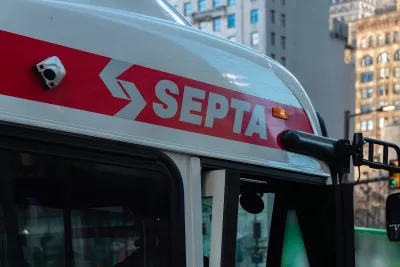
The Southeastern Pennsylvania Transportation Authority (SEPTA) “is partnering with RideCo to adapt the agency's paratransit and microtransit services,” reports Mass Transit Magazine, creating the nation’s largest on-demand transit system.
According to Prem Gururajan, co-founder and CEO at RideCo, “Through this partnership, SEPTA will completely change how they operate their paratransit services; utilizing industry-leading technology to offer a convenient rider-app, more timely service, become more efficient, productive and thus save cost.”
The move is part of SEPTA’s Bus Revolution, a plan to redesign its bus network to better serve the needs of all riders. “Through SEPTA’s implementation of a large-scale on-demand transit system, agencies across the country will have a preeminent example for how both modernized paratransit and microtransit services can increase mobility within their own communities.”
SEPTA’s paratransit fleet includes 411 vehicles, and the agency plans to add a 48-vehicle microtransit fleet.
FULL STORY: SEPTA partners with RideCo to adapt agency's paratransit and microtransit services

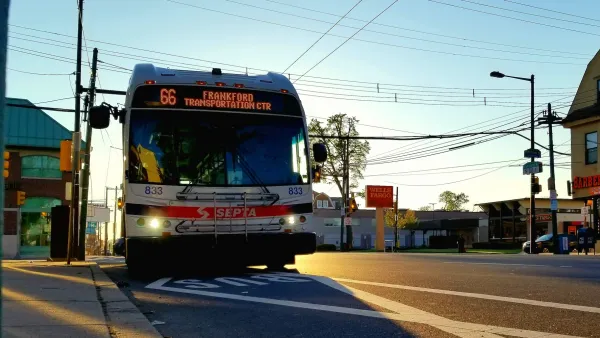
SEPTA's bus-mounted lane enforcement cameras cut travel times by up to 6%
The AI-assisted cameras have issued nearly 200,000 citations to drivers blocking bus lanes.
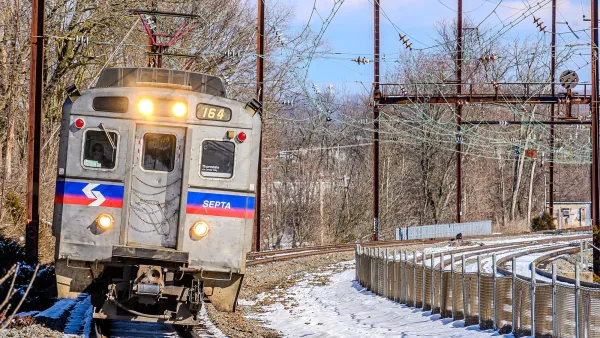
SEPTA Borrows Maryland's Rail Cars to Replace Fleet That Kept Catching Fire
The agency’s efforts to repair its Silverliner fleet is being hampered by supply chain delays.

SEPTA Narrowly Avoids Strike, Walkout Still Possible
Negotiations continue this week between SEPTA officials and union leaders.

The state-sanctioned urbicide of Austin
People don’t kill cities. Freeways do.

US to reduce Colorado River water deliveries to Mexico
A new Colorado Treaty amendment reduces Mexico’s Colorado River water allocation by 250,000 acre feet.

New Jersey’s second-largest city bans standalone data centers
Jersey City will continue to allow co-location facilities, such as those meant for research institutions that store their own data.

Amtrak not solely to blame for New Jersey commuter rail's unreliability, report finds
A new study from the Garden State Initiative found that NJ Transit’s budget grew 20% across a 4 year period, but reliability declined significantly over the same period.

EPA erases limits on planet-warming pollution from power plants
Under Monday’s plan, power plants would still have some limits on how much mercury, arsenic and other contaminants they can emit.

Phoenix announces new on-demand transit service, more frequent RAPID buses
Both new services will launch in October, and are part of Phoenix's Project Effective Access Solutions for Easing Congestion.

FREE Course: Walkable City 1: Why Walkability?
After describing his path towards focusing on walkability as the essence of good planning, Jeff Speck marches through his five principal reasons for making more walkable places.
Reinventing Malls: Planning Alchemy—Turning Gray Fields Into Gold
The course focuses on the opportunities and imperatives that shape reinvention of mall sites.

Eagle County Government
Harvard University Graduate School of Design
Nashville Planning Department
The Architects Foundation
University of Cincinnati Online
The Pocatello Development Authority
The Urban Renewal Agency of the City of Pocatello
Journal of the American Planning Association