During his keynote speech on September 11 at the National Conservatism Conference in Miami, Florida Governor Ron DeSantis describes the demographic shifts in America since he became governor in 2019 in what he calls the 'Great American Exodus.'


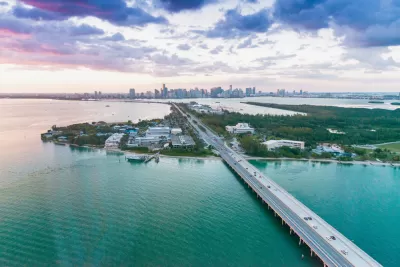
If you do an internet search for “Ron DeSantis + Migration,” you'll find pages of articles centering on Martha's Vineyard, the Massachusetts island where Florida's first term Republican governor sent two planes carrying about 50 Venezuelan immigrants from Texas without advance notice on September 14. What you won't find is the governor's keynote speech on September 11 to the 3-day National Conservatism Conference held in Miami.
The Wall Street Journal editorial board annotated a 5-minute video based on the one hour keynote by Gov. DeSantis to “more than 1,000 attendees over its three-day run, the most ever,” wrote Jesse Scheckner for Florida Politics who reported on the conference on September 12.
Wall Street Journal
“Since the beginning of the pandemic, he said, 'there’s been more adjusted income moved into the state of Florida than has ever moved into any one state in a similar time period' in American history,” reported Jarrett Stepman for The Daily Signal, a conservative news platform operated by The Heritage Foundation, on the event.
DeSantis pointed to the contrast with states “hemorrhaging” wealth and people, such as California, Illinois, New York, and New Jersey.
Wall Street Journal opinion columnist, Daniel Henninger, awarded DeSantis a ‘hit’ on the closing segment of the “Journal Editorial Report” on Fox News on September 18. “My hit goes to Gov. Ron DeSantis who gave a speech this week to a conference of conservatives in which he identified something he called the great American exodus,” said Henninger.
“He's talking about the movement of population from blue states like California, Illinois, New York and New Jersey into the red states in the West and South like Arizona, Texas and Florida. He cited Florida's low taxes.”
“I've written about this migration before and I have to give Gov. DeSantis credit for identifying what could be a major historical population movement in the U.S.”
As to the effect of the massive domestic migration on Florida's voting roles, DeSantis was quick to take credit for the change, reported Scheckner of Florida Politics.
“He discussed Florida’s surge in registered Republican voters, noting that when he won the governorship in 2018 that there were close to 300,000 more registered Democrats in Florida than Republicans.”
“The latest numbers, he said, show registered GOP voters outnumber Democratic voters by a 271,000-person margin. (The state elections website shows Republicans with a roughly 231,000-voter lead.)”
By no means is it a new phenomenon. Almost a decade ago, a Wall Street Journal op-ed (posted here) observed the domestic migration pattern of blue-to-red governed states, attributing it largely to the states' economic policies.
Related in Planetizen:
- Measuring the Urban Exodus, September 11, 2022
- Analysis: Pandemic Pressed Fast Forward on U.S. Migration Trends, September 4, 2022
- Pandemic-Era Big City Population Loss More Dramatic Than We Thought, July 13, 2022
- The Pandemic Population Picture Comes Into Focus, May 29, 2022
- Census: Big Cities Lost Population During the Pandemic, April 17, 2022
- Why Americans Are Moving from Blue to Red States, April 5, 2013
-
South and West are Hot Destinations as Migration Resumes, March 14, 2013
Related Reading:
- Al Jazeera: Opinion: The Democratic exodus to blue states solidifies Republican power, Aug. 9, 2022 [Describing the reverse flow from red-to-blue].
- Newsweek: Since Pandemic, Democrat-Run States Losing Residents to Red Ones, Survey Finds, Feb. 1, 2022
- WSJ editorial: The Great Pandemic Migration: Census data reveal huge shifts out of the most locked-down states, Dec. 28, 2021
FULL STORY: WSJ Opinion: Ron DeSantis's 'Great American Exodus' to Florida

Pandemic-Era Big City Population Loss More Dramatic Than We Thought
A new analysis indicates that many big cities saw their biggest population declines in at least a decade, with suburbs also showing a slowdown in growth.
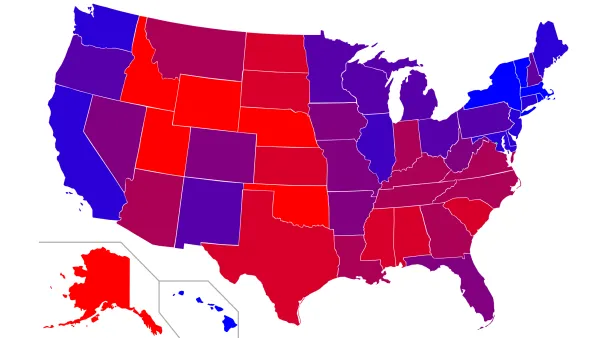
Why Americans Are Moving from Blue to Red States
In this op-ed, Arthur B. Laffer and Stephen Moore analyze the recent Census findings showing renewed migration from the Northeast and Midwest to the South and Southwest. They note the movement is clearly from blue states to red, and explain why.
US Population Growth Slowest Since 2020 Due to Declining Immigration
Net international migration dropped from 2.7 million to 1.3 million in the year spanning July 2024 to July 2025.

The state-sanctioned urbicide of Austin
People don’t kill cities. Freeways do.

US to reduce Colorado River water deliveries to Mexico
A new Colorado Treaty amendment reduces Mexico’s Colorado River water allocation by 250,000 acre feet.

New Jersey’s second-largest city bans standalone data centers
Jersey City will continue to allow co-location facilities, such as those meant for research institutions that store their own data.

Amtrak not solely to blame for New Jersey commuter rail's unreliability, report finds
A new study from the Garden State Initiative found that NJ Transit’s budget grew 20% across a 4 year period, but reliability declined significantly over the same period.

EPA erases limits on planet-warming pollution from power plants
Under Monday’s plan, power plants would still have some limits on how much mercury, arsenic and other contaminants they can emit.

Phoenix announces new on-demand transit service, more frequent RAPID buses
Both new services will launch in October, and are part of Phoenix's Project Effective Access Solutions for Easing Congestion.

FREE Course: Walkable City 1: Why Walkability?
After describing his path towards focusing on walkability as the essence of good planning, Jeff Speck marches through his five principal reasons for making more walkable places.
Reinventing Malls: Planning Alchemy—Turning Gray Fields Into Gold
The course focuses on the opportunities and imperatives that shape reinvention of mall sites.

Eagle County Government
Harvard University Graduate School of Design
Nashville Planning Department
The Architects Foundation
University of Cincinnati Online
The Pocatello Development Authority
The Urban Renewal Agency of the City of Pocatello
Journal of the American Planning Association