A proposal in the city council could bring the ‘superblock’ model to Los Angeles, opening up neighborhood streets to more biking, walking, and public amenities.


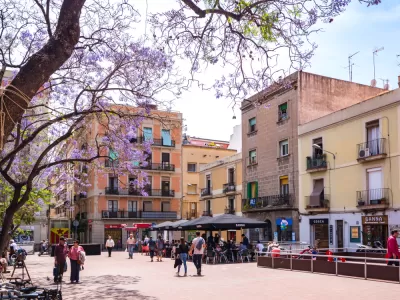
Inspired by Barcelona’s “superblocks,” Los Angeles City Councilman Kevin de León is proposing a similar concept for his city, according to an article in The Real Deal. If approved by the council, the “Park Blocks” pilot program would close some streets to cars to encourage more walking and biking and reduce pollution.
“In Barcelona, Spain, superblocks were created in 2016 by blocking off traffic within a multi-block area to allow as much as 70 percent of streets to be used as public space. This created green hubs and squares, allowing pedestrians to stroll, and local businesses to thrive.” De León says the idea could bring more green spaces to park-poor L.A. neighborhoods, help capture stormwater, and reduce pedestrian deaths.
The proposal comes at a time when traffic deaths spiked by 20 percent in one year in spite of the city’s Vision Zero commitments. The plan needs approval from the city council’s transportation committee before moving on to the full council.
Read the full story: “Park block” model would close some LA streets to traffic

NYC Officials Announce Broadway Pedestrianization Project
Two blocks of the marquee street will become mostly car-free public spaces.
Los Angeles Approves Road Safety Measure
Voters expressed strong support for road safety improvements.
New York Announces New Bike Lanes and Public Space Improvements
As part of its commitment to improve safety for pedestrians and cyclists, the city identified several major projects for 2023 that include protected bike lanes and public plazas.

Planetizen Federal Action Tracker
A weekly monitor of how Trump’s orders and actions are impacting planners and planning in America.

California plans to bury El Niño’s downpour
If the state plays its cards right, it may be able to store a billion acre-feet of El Niño’s water in aquifers.

Chicago breaks ground on $3 billion megadevelopment
The new neighborhood, titled Foundry Park, will one day host 3,700 residences.

Satanic place names
From streams and lakes to valleys and canyons, I mapped more than 1,000 places named after the Devil.

California High-Speed Rail Authority CEO resigns after $600,000 scandal
Under Ian Choudri, the authority used taxpayer dollars to fund first class flights and trips to nightclubs.

Want to study the Missouri River? Soon, you may need unanimous approval from 10 states
Legislation would require 10 governors’ permission to study or build projects moving water outside the basin.

FREE Course: Walkable City 1: Why Walkability?
After describing his path towards focusing on walkability as the essence of good planning, Jeff Speck marches through his five principal reasons for making more walkable places.
Reinventing Malls: Planning Alchemy—Turning Gray Fields Into Gold
The course focuses on the opportunities and imperatives that shape reinvention of mall sites.

City of Rosemead
Rutgers University, Edward J. Bloustein School of Planning and Public Policy
One Hundred Miles
Hunter College, City University of New York (CUNY)
The Architects Foundation
University of Cincinnati Online
City of Cambridge
Montrose County
The Pocatello Development Authority