Two blocks of the marquee street will become mostly car-free public spaces.


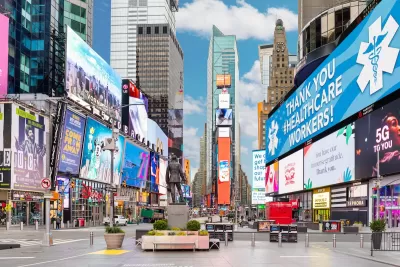
Two city blocks in Manhattan will become a “premier public space” open primarily to pedestrians and bikes, reports Kevin Duggan in Streetsblog NYC. According to Duggan, “Capital reconstruction would start in September 2026 and take two years to complete, and the spaces will host a two-way cycle lane, public seating, plantings and spaces for art.” The block between 39th and 40th Streets will be closed to cars, while the block between 38th and 39th will allow southbound vehicle traffic.
“The city painted a plaza on Broadway between 39th and 40th streets and created a shared street configuration on the block south of W. 39th Street three years ago, which officials plan to transform with concrete to be level with the curb, Department of Transportation reps told the Community Board 5 Transportation Committee on Monday.” The project is part of the larger Broadway Vision plan to improve the signature street.
FULL STORY: Sound Vision: Two Broadway Blocks To Get Permanent Upgrades

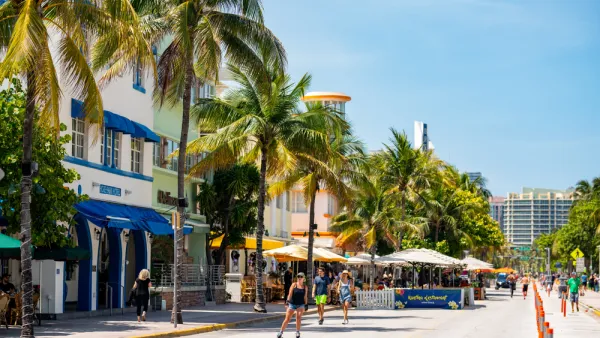
Miami Beach to Reopen Ocean Drive to Cars
The famous cruising strip was off-limits to cars during the pandemic. Now, the city is letting vehicles return with some pedestrian-oriented compromises.
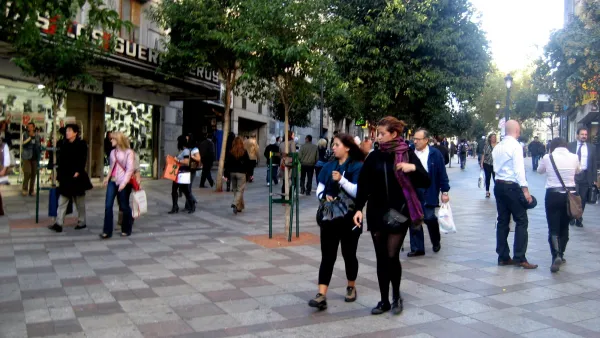
Pedestrian Malls in the 21st Century
The successes and failures of past pedestrian malls can inform the future of pandemic-induced "open streets" programs.
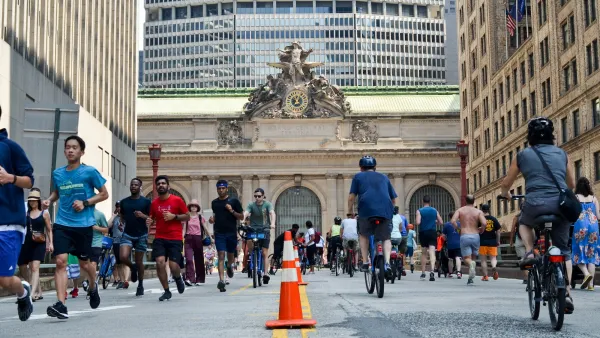
Mamdani’s Budget Fails to Expand Open Streets, Breaking Campaign Promise
The proposed budget allocates $2 million to Summer Streets and Open Streets, less than the $2.1 million allocated by the Adams administration last year.

Planetizen Federal Action Tracker
A weekly monitor of how Trump’s orders and actions are impacting planners and planning in America.

The state-sanctioned urbicide of Austin
People don’t kill cities. Freeways do.

US to reduce Colorado River water deliveries to Mexico
A new Colorado Treaty amendment reduces Mexico’s Colorado River water allocation by 250,000 acre feet.

Airbnb launches $250 million 'last-dollar financing' housing accelerator, makes first investment in Austin
The company will put $6.4 million towards affordable housing development in Texas’ capital.

Guerilla urbanists are building DIY bus stop benches in Chicago
A before-and-after of one of the bus stops with a new bench. The new benches are not officially sanctioned or permitted, but the residents who placed them hope they will be the start of a network of DIY benches across the city.

Mamdani overhauls NYC's Vision Zero plan with 100 new policy goals
The overhaul aims to reduce traffic deaths and make streets safer for pedestrians, cyclists and drivers through lower speed limits, new safety infrastructure and more.

FREE Course: Walkable City 1: Why Walkability?
After describing his path towards focusing on walkability as the essence of good planning, Jeff Speck marches through his five principal reasons for making more walkable places.
Reinventing Malls: Planning Alchemy—Turning Gray Fields Into Gold
The course focuses on the opportunities and imperatives that shape reinvention of mall sites.

Eagle County Government
Harvard University Graduate School of Design
Nashville Planning Department
The Architects Foundation
University of Cincinnati Online
The Pocatello Development Authority
The Urban Renewal Agency of the City of Pocatello
Journal of the American Planning Association