A $12 million repaving and restriping project is intended to alleviate congestion at the state line between California and Nevada, just outside of Las Vegas.


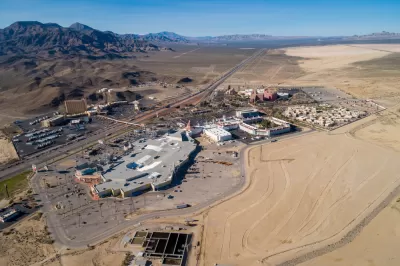
"A 5-mile stretch of Interstate 15 south of the Nevada state line will be widened this spring in an effort to eliminate a frustrating bottleneck that has caused miles of backups for travelers to California," reports Bryan Rokos for The Sun.
In a separate article for the Las Vegas Sun, Ray Brewer provides additional news coverage of the plan to widen I-15 at the border between the two states by repaving and restriping the right shoulder for use as a third lane between the border and the California Department of Food and Agriculture station during peak traffic periods—Sunday and Monday, in this case.
California Governor Gavin Newsom and Nevada Governor Steve Sisolak made a joint announcement about the $12 million project at a press conference held next to the freeway near the border. Both governors touted the importance of the corridor, and the connections caused by the bottleneck at state lines.
"This stretch of highway between the Nevada border and the California Department of Food and Agriculture Agricultural Station is federally recognized as an economic lifeline corridor due to its role in the supply chain, and for connecting the economic and tourism hubs of Southern California and Las Vegas," writes Rokos.
The project is not, as noted in both article, a long-term solution for congestion between Los Angeles and Las Vegas—where two competing visions for connecting the two regions are in disparate states of speculation. A plan to build a high-speed rail route between Las Vegas and Southern California was shelved in November 2020, while many officials in Las Vegas are pushing for the state to use its funding from the federal infrastructure bill, officially known as the Infrastructure Investment and Jobs Act, on the I-15 corridor between the two states.
FULL STORY: Newsom: Southbound I-15 near Nevada line will be widened to alleviate traffic jams

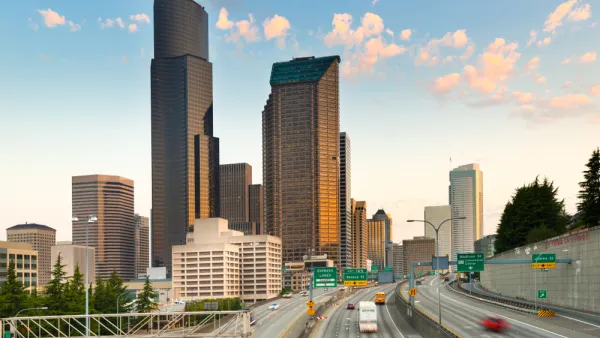
I-5 Widening Kicks Off in Downtown Seattle
Congestion relief is promised as the Washington Department of Transportation begins to rework the existing I-5 roadway in Downtown Seattle to mitigate a stretch of freeway with a reputation as the state's worst bottleneck.
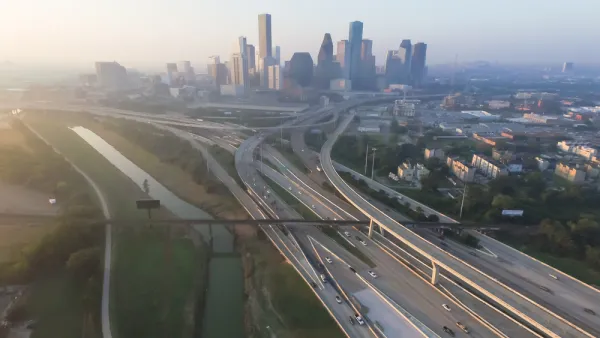
Environmental Study Released for $7 Billion Houston Highway Project
The final environmental impact statement for the controversial North Houston Highway Improvement Project is available for public comment, courtesy of the Texas Department of Transportation.
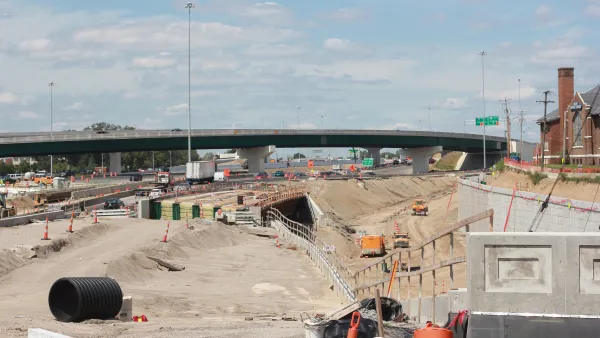
The 'Congestion Con' Debunked
New road capacity doesn't solve congestion, according to the central argument of a new report by Transportation for America.

Planetizen Federal Action Tracker
A weekly monitor of how Trump’s orders and actions are impacting planners and planning in America.

The state-sanctioned urbicide of Austin
People don’t kill cities. Freeways do.

US to reduce Colorado River water deliveries to Mexico
A new Colorado Treaty amendment reduces Mexico’s Colorado River water allocation by 250,000 acre feet.

5 New England states march closer to 800 megawatt wind energy project
Securing federal approval for the project may be complicated under the Trump administration, which has historically been hostile towards domestic wind power.

Baltimore to break ground on $50 million Transit Priority Project
The project will bring faster bus trips, safer streets and better bike connections to Baltimore.

Airbnb launches $250 million 'last-dollar financing' housing accelerator, makes first investment in Austin
The company will put $6.4 million towards affordable housing development in Texas’ capital.

FREE Course: Walkable City 1: Why Walkability?
After describing his path towards focusing on walkability as the essence of good planning, Jeff Speck marches through his five principal reasons for making more walkable places.
Reinventing Malls: Planning Alchemy—Turning Gray Fields Into Gold
The course focuses on the opportunities and imperatives that shape reinvention of mall sites.

Eagle County Government
Harvard University Graduate School of Design
Nashville Planning Department
The Architects Foundation
University of Cincinnati Online
The Pocatello Development Authority
The Urban Renewal Agency of the City of Pocatello
Journal of the American Planning Association