A study by the Port Authority of Allegheny County warns against displacement of low-income residents and calls for an increased focus on equity in developments around transit stations.



The Port Authority of Allegheny County's "33-page self-evaluation of its five-year-old program to encourage transit-oriented development" concluded that "the agency should do more to make sure that development reaches those who need public transit the most," reports Ed Blazina.
"One of the main goals [of the program] is to increase population density around transportation stations with affordable housing so that those most likely to use transit have easy access, which would improve the quality of life for residents and ridership on public transit." Yet "the study shows that this type of development may be causing gentrification, drawing higher-income residents who don’t necessarily use public transit."
The study urges the agency to prioritize equity. "It is not simply enough to build housing units adjacent to transit: We must ensure that those who are most dependent on public transit can live and work in these developments and are not displaced as a result of them," the study says. It also "encouraged Port Authority to work more closely with local communities to set zoning requirements and encourage affordable housing to be included in projects close to transit" and reduce parking requirements to make construction more affordable and encourage transit use.
"The agency is in the process of finalizing plans to refurbish three stations over the next few years that could have development benefits on its property and the surrounding neighborhood."
FULL STORY: Port Authority study pushes more diverse development around transit stations

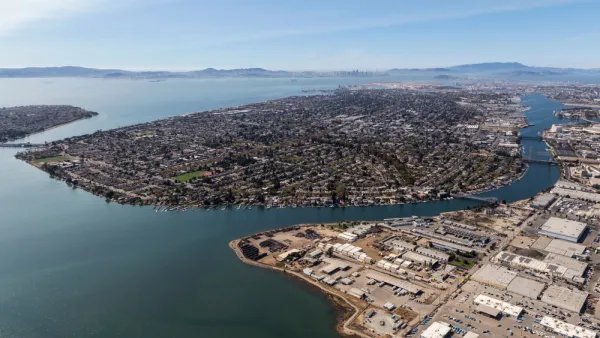
Opinion: To Meet Climate Goals, Bay Area Needs More Transit-Oriented Development
The region's transit-oriented development (TOD) plan requires a significant update to achieve the density and housing goals laid out in the MTC's 30-year vision.

San Diego wants to limit upzoning law to just 16% of transit-adjacent parcels
The city's planning director says some areas are unfit for immediate upzoning due to a lack of resources or hazards such as wildfire risk.
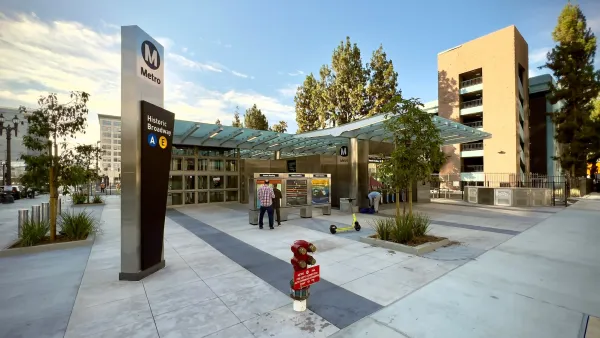
LA Delays State TOD Law to 2030 With its Own, Lower-density Plan
SB 79 allows cities to delay its implementation if they come up with alternate plans to boost density while retaining local control near transit.

The state-sanctioned urbicide of Austin
People don’t kill cities. Freeways do.

US to reduce Colorado River water deliveries to Mexico
A new Colorado Treaty amendment reduces Mexico’s Colorado River water allocation by 250,000 acre feet.

New Jersey’s second-largest city bans standalone data centers
Jersey City will continue to allow co-location facilities, such as those meant for research institutions that store their own data.

Amtrak not solely to blame for New Jersey commuter rail's unreliability, report finds
A new study from the Garden State Initiative found that NJ Transit’s budget grew 20% across a 4 year period, but reliability declined significantly over the same period.

EPA erases limits on planet-warming pollution from power plants
Under Monday’s plan, power plants would still have some limits on how much mercury, arsenic and other contaminants they can emit.

Phoenix announces new on-demand transit service, more frequent RAPID buses
Both new services will launch in October, and are part of Phoenix's Project Effective Access Solutions for Easing Congestion.

FREE Course: Walkable City 1: Why Walkability?
After describing his path towards focusing on walkability as the essence of good planning, Jeff Speck marches through his five principal reasons for making more walkable places.
Reinventing Malls: Planning Alchemy—Turning Gray Fields Into Gold
The course focuses on the opportunities and imperatives that shape reinvention of mall sites.

Eagle County Government
Harvard University Graduate School of Design
Nashville Planning Department
The Architects Foundation
University of Cincinnati Online
The Pocatello Development Authority
The Urban Renewal Agency of the City of Pocatello
Journal of the American Planning Association