With revenue tanking during the pandemic, Greyhound has been sold from one European company to another—the new owner also happens to be the new kid on the Intercity bus block.


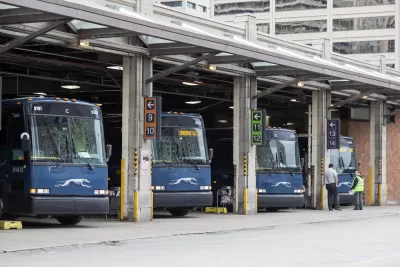
Greyhound will be sold to Europe's largest intercity bus company, FlixMobility, report Paul O'Donnell and Natalie Walters. The Covid-19 pandemic is blamed for cutting deeply into the bus company's revenues.
The Dallas-based Greyhound Lines Inc. has been in operation since 1914 and is synonymous with the open road to anyone who has ever relied on their intercity bus services. Greyhound was previously owned by a British company called FirstGroup plc.
FlixMobility, which operates FlixBus and FlixTrain, "said the combination will improve service on intercity bus lines, which it described as 'a lifeline during the pandemic for communities and essential workers," according to the article.
"The deal includes Greyhound’s fleet, trademarks and other assets and carries an enterprise value of $46 million, plus another $32 million in deferred payments."
FlixBus arrived in the United States in 2018, with a background of swift growth since its founding in 2013.
FULL STORY: Dallas-based Greyhound sells to Europe’s largest long-distance bus network


Op-Ed: Looking for Efficiency? Fund Intercity Buses
Much less expensive than rail, intercity buses serve millions of Americans every year, but public subsidies are lacking.
Intercity Bus Ridership Grows Despite Service Cuts
Passengers continue to rely on intercity bus lines, even as cities shutter bus terminals and bus companies restructure to avoid financial failure.

Chicago Bus Travelers Could Lose Downtown Terminal — and Winter is Coming
As the loss of intercity bus services and stations continues, Chicago could become the largest city in the developed world without a major downtown bus terminal.

Planetizen Federal Action Tracker
A weekly monitor of how Trump’s orders and actions are impacting planners and planning in America.

The state-sanctioned urbicide of Austin
People don’t kill cities. Freeways do.

US to reduce Colorado River water deliveries to Mexico
A new Colorado Treaty amendment reduces Mexico’s Colorado River water allocation by 250,000 acre feet.

5 New England states march closer to 800 megawatt wind energy project
Securing federal approval for the project may be complicated under the Trump administration, which has historically been hostile towards domestic wind power.

Baltimore to break ground on $50 million Transit Priority Project
The project will bring faster bus trips, safer streets and better bike connections to Baltimore.

Airbnb launches $250 million 'last-dollar financing' housing accelerator, makes first investment in Austin
The company will put $6.4 million towards affordable housing development in Texas’ capital.

FREE Course: Walkable City 1: Why Walkability?
After describing his path towards focusing on walkability as the essence of good planning, Jeff Speck marches through his five principal reasons for making more walkable places.
Reinventing Malls: Planning Alchemy—Turning Gray Fields Into Gold
The course focuses on the opportunities and imperatives that shape reinvention of mall sites.

Eagle County Government
Harvard University Graduate School of Design
Nashville Planning Department
The Architects Foundation
University of Cincinnati Online
The Pocatello Development Authority
The Urban Renewal Agency of the City of Pocatello
Journal of the American Planning Association