Passengers continue to rely on intercity bus lines, even as cities shutter bus terminals and bus companies restructure to avoid financial failure.


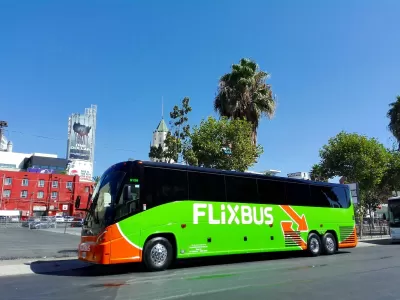
Despite operators’ financial struggles and the closure of dozens of bus terminals around the country, intercity bus ridership is growing in the United States, prompting bus companies to expand their fleets, reveals a report from the Chaddick Institute. “Greyhound acquired 60 motor coaches last year; Trailways, 30; and Peter Pan, 15. The Motorcoach Builders Survey for the third quarter of 2024 saw sales of new coaches up over 15% from the same period in the previous year.”
According to a Smart Cities Dive piece by Dan Zukowski, intercity buses provided almost 50 million riders in 2023, and ridership could grow by as much as 4 percent this year — higher than growth in air travel. Colorado’s Bustang line carried almost 280,000 riders in 2023. Other state-supported bus services are available in North Carolina, Virginia, and Washington,and Maine launched a new intercity service last year.
As Zukowski notes, “State services like these are made possible by the Federal Transit Administration’s formula grants for rural areas program, also known as Section 5311.”
However, the report warns that closures of terminals have slowed ridership recovery in rural and secondary routes, and some urban bus terminals are on the chopping block or have already closed down.
FULL STORY: Intercity bus service on the upswing


Chicago Bus Travelers Could Lose Downtown Terminal — and Winter is Coming
As the loss of intercity bus services and stations continues, Chicago could become the largest city in the developed world without a major downtown bus terminal.
Op-Ed: Looking for Efficiency? Fund Intercity Buses
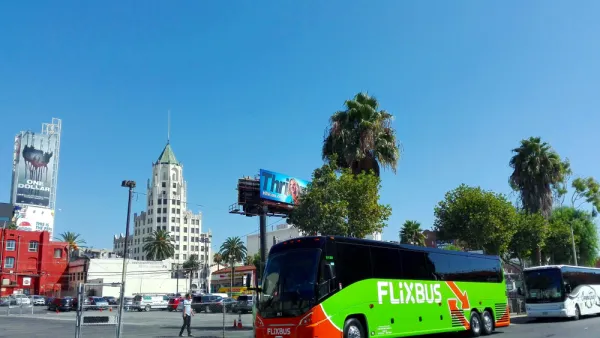
Much less expensive than rail, intercity buses serve millions of Americans every year, but public subsidies are lacking.
Intercity Bus Passengers See Service Evaporate
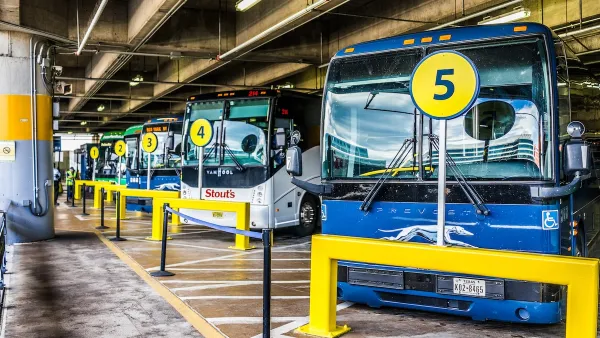
Facing financial troubles, intercity bus operators are leaving passengers stranded without services in many U.S. markets.

Planetizen Federal Action Tracker
A weekly monitor of how Trump’s orders and actions are impacting planners and planning in America.

The state-sanctioned urbicide of Austin
People don’t kill cities. Freeways do.

US to reduce Colorado River water deliveries to Mexico
A new Colorado Treaty amendment reduces Mexico’s Colorado River water allocation by 250,000 acre feet.

Guerilla urbanists are building DIY bus stop benches in Chicago
A before-and-after of one of the bus stops with a new bench. The new benches are not officially sanctioned or permitted, but the residents who placed them hope they will be the start of a network of DIY benches across the city.

Mamdani overhauls NYC's Vision Zero plan with 100 new policy goals
The overhaul aims to reduce traffic deaths and make streets safer for pedestrians, cyclists and drivers through lower speed limits, new safety infrastructure and more.

Amtrak not solely to blame for New Jersey commuter rail's unreliability, report finds
A new study from the Garden State Initiative found that NJ Transit’s budget grew 20% across a 4 year period, but reliability declined significantly over the same period.

FREE Course: Walkable City 1: Why Walkability?
After describing his path towards focusing on walkability as the essence of good planning, Jeff Speck marches through his five principal reasons for making more walkable places.
Reinventing Malls: Planning Alchemy—Turning Gray Fields Into Gold
The course focuses on the opportunities and imperatives that shape reinvention of mall sites.

Eagle County Government
Harvard University Graduate School of Design
Nashville Planning Department
The Architects Foundation
University of Cincinnati Online
The Pocatello Development Authority
The Urban Renewal Agency of the City of Pocatello
Journal of the American Planning Association