The University of Arizona will leverage traditional STEM education to partner with local indigenous tribes to find and implement culturally appropriate solutions to the challenges of climate change and other environmental risks.



The University of Arizona recently announced the creation of an Indigenous Resilience Center.
According to an article by Kyle Mittan, the Indigenous Resilience Center "will be a partnership between Native nations and the university's Arizona Institutes for Resilience, Agnese Nelms Haury Program in Environment and Social Justice and multiple faculty members and academic programs that focus on supporting the resilience of Native and Indigenous communities." Karletta Chief, a professor of environmental science in the College of Agriculture and Life Sciences, will serve as the center's director.
"The center's faculty members will lead research projects and design courses that blend traditional STEM education with topics such as Native and Indigenous knowledge, tribal consultation, research ethics, natural resource management, tribal environmental health and more," adds Mittan.
FULL STORY: UArizona Launches Center to Advance Resilience of Native Nations, Address Environmental Challenges


In a Warmer, Wetter and More Disaster-prone World: “Nature is the Greatest Designer”
A conversation with the American Society of Landscape Architects’ CEO Torey Carter-Conneen and board president Kona Gray.
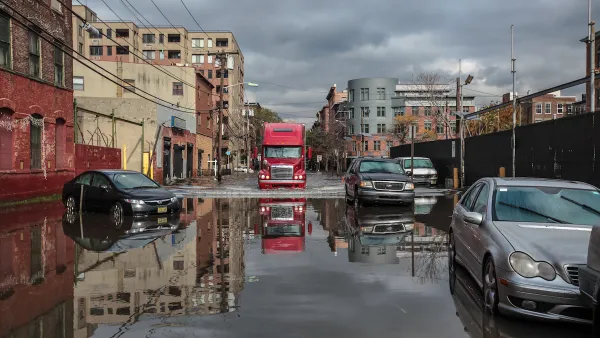
FEMA Resilience Program Cuts Grant Funding
The Building Resilient Infrastructure and Communities program funded projects from flood prevention to power station upgrades.

Report Outlines Strategies for Resilient Wildfire Recovery in LA
Project Recovery offers a roadmap for rebuilding more sustainable and climate-resilient communities after wildfires and other disasters.

The state-sanctioned urbicide of Austin
People don’t kill cities. Freeways do.

US to reduce Colorado River water deliveries to Mexico
A new Colorado Treaty amendment reduces Mexico’s Colorado River water allocation by 250,000 acre feet.

New Jersey’s second-largest city bans standalone data centers
Jersey City will continue to allow co-location facilities, such as those meant for research institutions that store their own data.

Amtrak not solely to blame for New Jersey commuter rail's unreliability, report finds
A new study from the Garden State Initiative found that NJ Transit’s budget grew 20% across a 4 year period, but reliability declined significantly over the same period.

EPA erases limits on planet-warming pollution from power plants
Under Monday’s plan, power plants would still have some limits on how much mercury, arsenic and other contaminants they can emit.

Phoenix announces new on-demand transit service, more frequent RAPID buses
Both new services will launch in October, and are part of Phoenix's Project Effective Access Solutions for Easing Congestion.

FREE Course: Walkable City 1: Why Walkability?
After describing his path towards focusing on walkability as the essence of good planning, Jeff Speck marches through his five principal reasons for making more walkable places.
Reinventing Malls: Planning Alchemy—Turning Gray Fields Into Gold
The course focuses on the opportunities and imperatives that shape reinvention of mall sites.

Eagle County Government
Harvard University Graduate School of Design
Nashville Planning Department
The Architects Foundation
University of Cincinnati Online
The Pocatello Development Authority
The Urban Renewal Agency of the City of Pocatello
Journal of the American Planning Association