The bill also calls for increased investment in charging infrastructure and financial incentives for consumers.


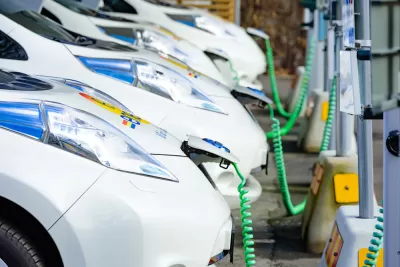
If signed by Governor Andrew Cuomo, a bill passed by the New York state legislature would "require all sales of new passenger cars and trucks in the state be zero emission by 2035," reports Robert Walton in Smart Cities Dive. The legislation includes the same requirement for medium and heavy-duty trucks by 2045.
Electrification advocates praise the bill as a "really great first step," but "eliminating emissions from the transportation sector will ultimately require development of a broader EV marketplace including charging infrastructure," says Kathy Harris, clean vehicles and fuels advocate at the Natural Resources Defense Council (NRDC).
New York "is also targeting carbon-free electricity by 2040 and an 85% reduction in economy-wide emissions by 2050," writes Walton. The bill includes directives to "accelerate the development of affordable fueling and charging options for zero emission vehicles, with a focus on ensuring access in low-income and economically disadvantaged communities."
The legislation comes as other states and the federal government ramp up their own investment in electric vehicle infrastructure. Last November, California became the first state to ban the sale of cars powered by internal combustion engines by 2035 through an executive order issued by Governor Gavin Newsom. At the federal level, "[t]he Biden administration has committed to building 500,000 public chargers and wants to spend $174 billion to grow the adoption of electric vehicles."
FULL STORY: New York lawmakers pass bill requiring all new vehicle sales be zero-emissions by 2035

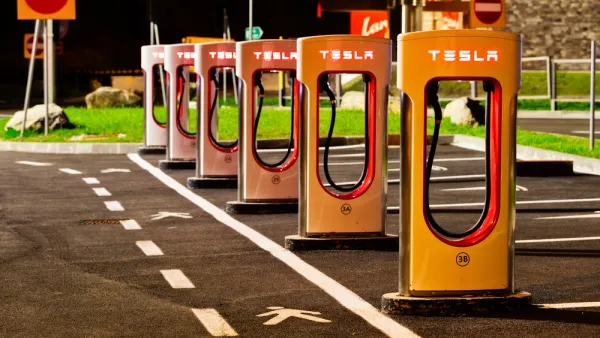
Decarbonizing Transportation at the Federal Level
A new report shows that long-term federal investments in electric vehicles could promote significant growth in the sector as the nation moves toward reducing GHG emissions.
Chuck Schumer Proposes Big Investment in Electric Vehicles
The Senate Majority Leader's plan would pump more than $50 billion into direct incentives for consumers, manufacturers, and property owners.
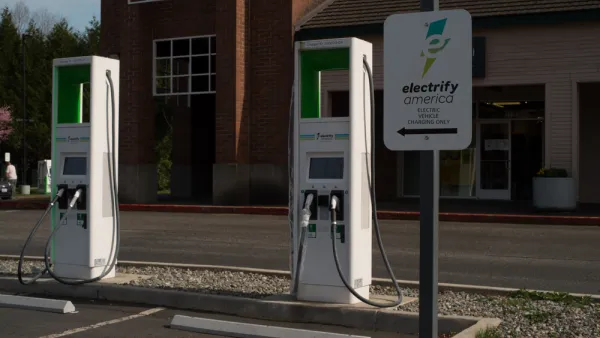
A Green Governor Vetoes Electric Vehicle Legislation
Washington Gov. Jay Insee distinguished himself in the 2020 presidential Democratic primary as the "climate candidate," yet he vetoed a section of a transportation electrification bill that set a goal of ending sales of gas-powered cars by 2030.

The state-sanctioned urbicide of Austin
People don’t kill cities. Freeways do.

US to reduce Colorado River water deliveries to Mexico
A new Colorado Treaty amendment reduces Mexico’s Colorado River water allocation by 250,000 acre feet.

New Jersey’s second-largest city bans standalone data centers
Jersey City will continue to allow co-location facilities, such as those meant for research institutions that store their own data.

Amtrak not solely to blame for New Jersey commuter rail's unreliability, report finds
A new study from the Garden State Initiative found that NJ Transit’s budget grew 20% across a 4 year period, but reliability declined significantly over the same period.

EPA erases limits on planet-warming pollution from power plants
Under Monday’s plan, power plants would still have some limits on how much mercury, arsenic and other contaminants they can emit.

Phoenix announces new on-demand transit service, more frequent RAPID buses
Both new services will launch in October, and are part of Phoenix's Project Effective Access Solutions for Easing Congestion.

FREE Course: Walkable City 1: Why Walkability?
After describing his path towards focusing on walkability as the essence of good planning, Jeff Speck marches through his five principal reasons for making more walkable places.
Reinventing Malls: Planning Alchemy—Turning Gray Fields Into Gold
The course focuses on the opportunities and imperatives that shape reinvention of mall sites.

Eagle County Government
Harvard University Graduate School of Design
Nashville Planning Department
The Architects Foundation
University of Cincinnati Online
The Pocatello Development Authority
The Urban Renewal Agency of the City of Pocatello
Journal of the American Planning Association