The Portland Bureau of Transportation continues its work of drafting transportation plans targeted to specific geographic corners of the city,


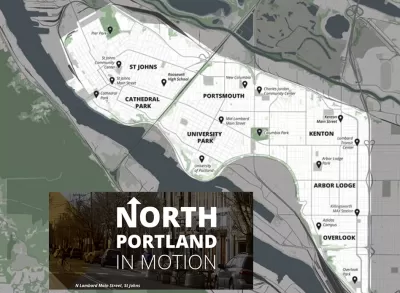
"The Portland Bureau of Transportation has launched a comprehensive planning process for the northern tip of the city," reports Jonathan Maus.
The North Portland in Motion plan follows the East Portland in Motion, Central City in Motion, Northwest in Motion, and Southwest in Motion plans, with plans to "deeply" engage with North Portlanders; identify strategic, near-term investments in projects and programs to improve conditions for walking, biking, and transit; and build new relationships with community-based organizations.
The basic idea behind the "In Motion" approach for Portland has been to take a "deep dive" into one section of the city, according to Maus. "The formula has worked well. By working closely with community residents and organizations to agree on priorities, “in motion” plans give Portlanders an effective advocacy tool and also create the bureaucratic inertia and political will needed to get things built."
In addition to describing some of the "In Motion" methodology, Maus also describes the current state of active transportation infrastructure in North Portland.
FULL STORY: North Portland is latest section of city to be put “in motion”


Houston Residents Respond to Mobility Questions
What could the city look like if budget and bureaucracy were no object?

Seattle Mobility Advocates Say City Should Triple Transportation Levy
A measure set to go before voters in November will fund road safety and mobility projects, but advocates say a much bigger investment is required to meet the city’s needs.
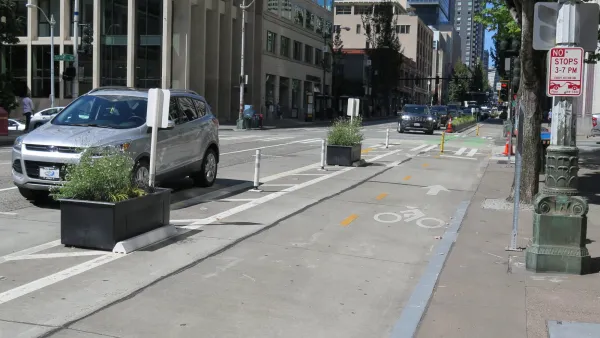
Bike and Pedestrian Improvements Proposed for Seattle Light Rail Stations
Anticipating the opening of two new stations in 2024, the Seattle Department of Transportation released a study prioritizing bike infrastructure in the surrounding areas.

The state-sanctioned urbicide of Austin
People don’t kill cities. Freeways do.

US to reduce Colorado River water deliveries to Mexico
A new Colorado Treaty amendment reduces Mexico’s Colorado River water allocation by 250,000 acre feet.

New Jersey’s second-largest city bans standalone data centers
Jersey City will continue to allow co-location facilities, such as those meant for research institutions that store their own data.

Amtrak not solely to blame for New Jersey commuter rail's unreliability, report finds
A new study from the Garden State Initiative found that NJ Transit’s budget grew 20% across a 4 year period, but reliability declined significantly over the same period.

EPA erases limits on planet-warming pollution from power plants
Under Monday’s plan, power plants would still have some limits on how much mercury, arsenic and other contaminants they can emit.

Phoenix announces new on-demand transit service, more frequent RAPID buses
Both new services will launch in October, and are part of Phoenix's Project Effective Access Solutions for Easing Congestion.

FREE Course: Walkable City 1: Why Walkability?
After describing his path towards focusing on walkability as the essence of good planning, Jeff Speck marches through his five principal reasons for making more walkable places.
Reinventing Malls: Planning Alchemy—Turning Gray Fields Into Gold
The course focuses on the opportunities and imperatives that shape reinvention of mall sites.

Eagle County Government
Harvard University Graduate School of Design
Nashville Planning Department
The Architects Foundation
University of Cincinnati Online
The Pocatello Development Authority
The Urban Renewal Agency of the City of Pocatello
Journal of the American Planning Association