University of Hawaii graduate students explored the potential for improvements to the Ala Wai Small Boat Harbor, an important coastal public space in Honolulu.


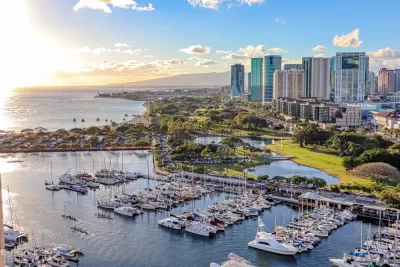
Coastal planning is complicated and challenging even for seasoned planners due in part to the variety of issues and stakeholders involved. But that has not discouraged planning and landscape architecture students from the University of Hawaii at Manoa from studying Ala Wai Small Boat Harbor and offering recommendations for its improvement. Specifically, students in two graduate classes recently explored the potential for short- and long-term improvements to the harbor which is an important coastal public space that serves as a link between Ala Moana and Waikīkī.
The students in a planning practicum and a landscape architecture studio also examined how projected sea-level rise would impact the harbor. They conducted research, gathered input from stakeholders, studied precedents, and explored design strategies to tackle the issue. The findings informed their conceptual plan and recommendations for climate risk adaptation as well as for site improvements to enhance this public amenity. The students appreciated the opportunity to work on a real-world assignment to assist the state’s Division of Boating and Ocean Recreation and gain valuable experience and skills to prepare them for the transition to becoming professionals.
Ala Wai Harbor is the largest small boat and yacht harbor in Hawaii. The harbor is situated in Honolulu at the mouth of the Ala Wai Canal, between Waikiki and downtown Honolulu. To the east are Waikiki and Diamond Head; to the west are Magic Island and the Honolulu waterfront. Ala Wai Harbor has a rich cultural history and land uses that support recreational activities. Research shows that the harbor will be impacted by sea-level rise in the coming years. Thus, it is critical for any future plans to address this issue while taking into consideration the public’s vision for the harbor.
Read the full story: Ala Wai Harbor gets planning help from UH students

Study: Oahu Could Lose 40 Percent of its Beaches by 2050
A new study calls for changes to coastal management policies to better protect sandy shorelines retreating under the pressure of rising sea levels.
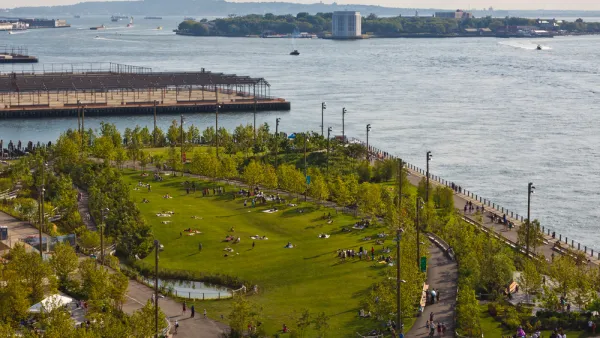
New York Updating its Comprehensive Waterfront Plan
Vision 2030 will update the award winning Vision 2020 New York City Comprehensive Waterfront Plan.
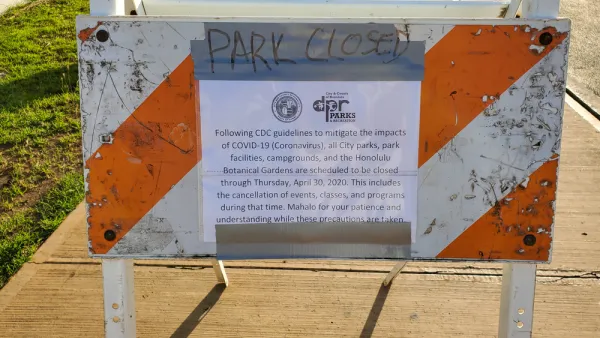
Coronavirus Success: The Unusual Story Behind the State with the Lowest Infection Rate
Like New Zealand, another island has achieved success in reducing viral spread. The ability to quarantine travelers to Hawaii was crucial, but the virus had already arrived. Health professionals played key roles which, at times, led to conflict.
Planetizen Federal Action Tracker
A weekly monitor of how Trump’s orders and actions are impacting planners and planning in America.

Eastern Nebraska is running out of electricity
Data centers and electrification are straining eastern Nebraska’s grid, throttling economic development.

Study reveals best places in the U.S. for cycling, walking
New research from Streetlight Data examines bicycle and pedestrian miles per capita in the 100 largest U.S. cities by population.

As Texas embraces carbon storage, a Black community questions the risks
Texas now issues permits for companies to store carbon dioxide underground. East Texas residents fear safety risks, and skeptics doubt the climate benefits.

New BLM proposal would slash public comment periods, environmental protections
The proposed rewrite would also strip legal leverage from Tribal nations and state governments.

DSA members accuse Mamdani of 'abandoning values' over housing redevelopment
New York City's mayor plans to replace about 2,000 units of public housing with private, mixed-income housing.

FREE Course: Walkable City 1: Why Walkability?
After describing his path towards focusing on walkability as the essence of good planning, Jeff Speck marches through his five principal reasons for making more walkable places.
Reinventing Malls: Planning Alchemy—Turning Gray Fields Into Gold
The course focuses on the opportunities and imperatives that shape reinvention of mall sites.

City of Rosemead
Rutgers University, Edward J. Bloustein School of Planning and Public Policy
One Hundred Miles
University of Michigan School for Environment and Sustainability (SEAS)
Hunter College, City University of New York (CUNY)
The Architects Foundation
City of Cambridge
The Pocatello Development Authority
The Urban Renewal Agency of the City of Pocatello