With warmer temperatures sapping the flow of water and communities clamoring for higher volumes, the Colorado River needs strict management to continue serving millions of people and farms.


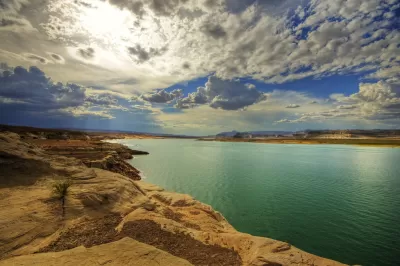
The Colorado River, which supplies water to 40 million people in seven western states, faces a crisis as its resources are stretched thin and climate change threatens its future. Its two largest reservoirs, Lake Mead and Lake Powell, are both below 50% capacity, and the drying trend continues as rainfall in the region remains lower than normal. Sammy Roth interviewed Jeff Kightlinger, the general manager of Southern California's Metropolitan Water District, the entity responsible for operating the Colorado River Aqueduct and distributing water to almost 19 million people.
Kightlinger admits there are formidable challenges facing Southern California as climate change accelerates warmer and drier conditions and growing populations demand more water. He suggests that the Imperial Irrigation District (IID), which serves the Imperial Valley and uses the largest share of the Colorado River's water, must "become a responsible, reliable" partner in the Drought Contingency Plan that California and neighboring states have developed in order to manage the Colorado's limited resources. The IID wants to see more resources directed toward stabilizing the Salton Sea, a major ecological challenge for the area.
"The next 25 years look like it’s going to be a real hard haul," Kightlinger says, "but I believe it’s doable, as long as the parties can be smart and work together."
FULL STORY: Boiling Point: Climate change spells trouble for the Colorado River. But there’s still hope

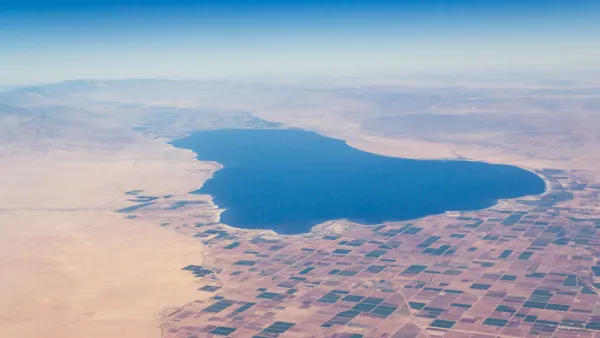
Controversial Agreement Yields Funding for Salton Sea Restoration
An unprecedented, but deeply controversial, agreement changes the equation for the Colorado River and the Salton Sea.
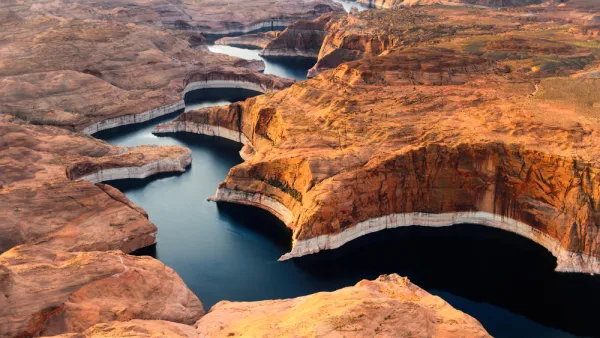
States Agree to Drastic Water Cuts From Colorado River
In the throes of a historic megadrought, three Southwestern states will make deep reductions in their water usage to preserve diminishing resources.
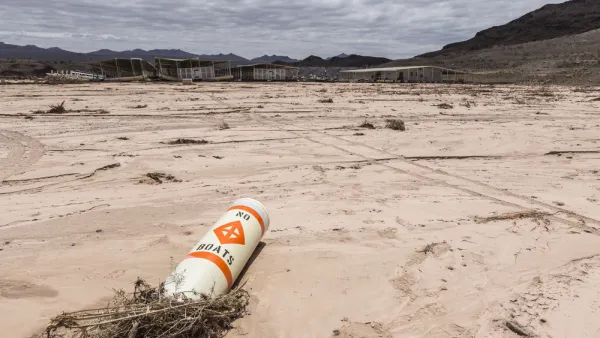
Federal Government Declares Water Shortage as Lake Mead Reaches Critical Low
The first-of-its-kind declaration triggers major water cutbacks for Arizona farmers and reduced allocations for Nevada and Mexico.

Planetizen Federal Action Tracker
A weekly monitor of how Trump’s orders and actions are impacting planners and planning in America.

The state-sanctioned urbicide of Austin
People don’t kill cities. Freeways do.

US to reduce Colorado River water deliveries to Mexico
A new Colorado Treaty amendment reduces Mexico’s Colorado River water allocation by 250,000 acre feet.

Amtrak not solely to blame for New Jersey commuter rail's unreliability, report finds
A new study from the Garden State initiative found that NJ Transit’s budget grew 20% across a 4 year period, but reliability declined significantly over the same period.

EPA erases limits on planet-warming pollution from power plants
Under Monday’s plan, power plants would still have some limits on how much mercury, arsenic and other contaminants they can emit.

Phoenix announces new on-demand transit service, more frequent RAPID buses
Both new services will launch in October, and are part of Phoenix's Project Effective Access Solutions for Easing Congestion.

FREE Course: Walkable City 1: Why Walkability?
After describing his path towards focusing on walkability as the essence of good planning, Jeff Speck marches through his five principal reasons for making more walkable places.
Reinventing Malls: Planning Alchemy—Turning Gray Fields Into Gold
The course focuses on the opportunities and imperatives that shape reinvention of mall sites.

Eagle County Government
Harvard University Graduate School of Design
Nashville Planning Department
The Architects Foundation
University of Cincinnati Online
The Pocatello Development Authority
The Urban Renewal Agency of the City of Pocatello
Journal of the American Planning Association