A residential skyscraper proposed for Manhattan's Upper West Side included a mechanical void that predated new rules in the city prohibiting the height-enhancing building practice. A judge still rejected the project as planned.



"A Manhattan state Supreme Court judge has rescinded a city permit for a hotly contested plan to build a 775-feet-tall luxury condo tower on the Upper West Side, arguing it defied zoning rules and common logic," reports Elizabeth Kim of the fate of the proposed 50 West 66th Street.
Judge Arthur Engoron issued the ruling in a case brought by City Club of New York against developer Extell. The building was planned to become the tallest on Manhattan's Upper West Side. The ruling came down to the building's use of mechanical voids to raise the height of the building, which is an issue of no small amount of controversy in New York City.
"All together, the proposed mechanical void space in the Extell building was to have totaled 198 feet in height, almost half the length of a football field, thereby giving it mega-skyscraper status," writes Kim. Developers on Manhattan's Billionaire's Row use mechanical voids to achieve scenic views, and raise sale prices on units benefitting from the lift.
More details on the specific circumstances that contributed to this litigation, and the judge's ruling, are included in the source article.
FULL STORY: Judge Voids City Permit For Controversial Upper West Side Luxury Mega Tower

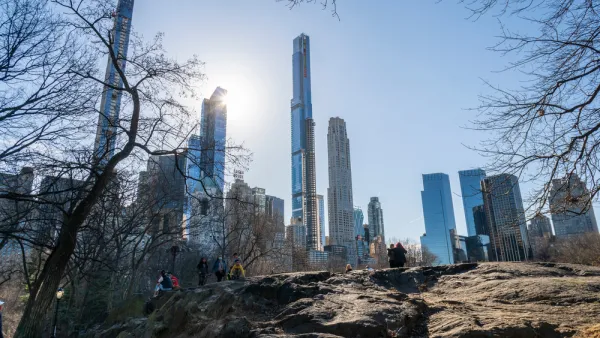
World's Tallest Residential Building Nears Completion in Manhattan
Central Park Tower, coming soon to New York City's "Billionaires' Row" was designed by Adrian Smith + Gordon Gill architecture.
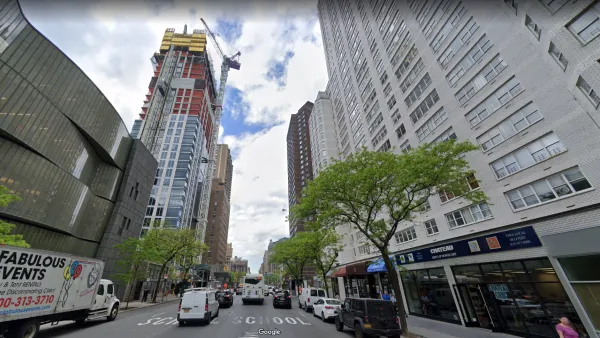
Court Will Decide Whether to Reduce NYC Skyscraper's Height
The new skyscraper being built at 200 Amsterdam Avenue in Manhattan might be forced by an appeals court to remove 20 floors of the mostly complete building.

More Skyscrapers Coming Soon to New York City's Skyline
After a decade of skyward expansion, even more skyscrapers are on the horizon in Manhattan.

Planetizen Federal Action Tracker
A weekly monitor of how Trump’s orders and actions are impacting planners and planning in America.

The state-sanctioned urbicide of Austin
People don’t kill cities. Freeways do.

US to reduce Colorado River water deliveries to Mexico
A new Colorado Treaty amendment reduces Mexico’s Colorado River water allocation by 250,000 acre feet.

Airbnb launches $250 million 'last-dollar financing' housing accelerator, makes first investment in Austin
The company will put $6.4 million towards affordable housing development in Texas’ capital.

Guerilla urbanists are building DIY bus stop benches in Chicago
A before-and-after of one of the bus stops with a new bench. The new benches are not officially sanctioned or permitted, but the residents who placed them hope they will be the start of a network of DIY benches across the city.

Mamdani overhauls NYC's Vision Zero plan with 100 new policy goals
The overhaul aims to reduce traffic deaths and make streets safer for pedestrians, cyclists and drivers through lower speed limits, new safety infrastructure and more.

FREE Course: Walkable City 1: Why Walkability?
After describing his path towards focusing on walkability as the essence of good planning, Jeff Speck marches through his five principal reasons for making more walkable places.
Reinventing Malls: Planning Alchemy—Turning Gray Fields Into Gold
The course focuses on the opportunities and imperatives that shape reinvention of mall sites.

Eagle County Government
Harvard University Graduate School of Design
Nashville Planning Department
The Architects Foundation
University of Cincinnati Online
The Pocatello Development Authority
The Urban Renewal Agency of the City of Pocatello
Journal of the American Planning Association