First proposed in 2019, Maryland Gov. Larry Hogan's highway widening plan has been trimmed everywhere but the bottom line.


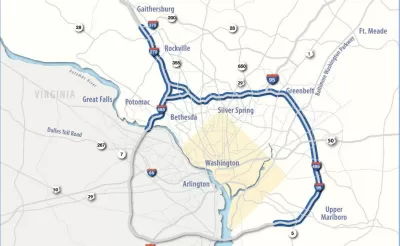
The Draft Environmental Impact Statement (DEIS) for a plan to widen highways in the state of Maryland has been subject to public scrutiny this summer, reports Bruce DePuyt, as the plan evolves since first proposed by Gov. Larry Hogan in 2017.
The plan has received some significant revisions since 2017, as noted by DePuyt, including cutting back on the number of miles that would be widened:
-
The widening of the Beltway from the Prince George’s-Montgomery border south to MD 5 has been put off into the indefinite future.
-
The widening of I-270 north of I-370 has been deferred.
Despite all the changes (more are listed in the source article), the price on the project hasn't budged, which has opened the plan to criticism.
For more information on the details of the proposed highway widening program, DePuyt reported the news of the first release of the 18,000-page DEIS back in August. Planetizen also picked up news of the release of the DEIS to the public in July.
FULL STORY: As Hogan’s Highway-Widening Plan Changes, $9 Billion Price Tag Does Not

Key Planning Agency Rejects Maryland Highway Widening Proposal
A plan to widen interstates 495 and 270 failed a critical step on the way to approval, in a decision likely to lead to a lawsuit when the Maryland Department of Transportation settles on a final plan.
Governor Larry Hogan's $9 Billion Highway Plan Critiqued
Governor Larry Hogan's $9 Billion Highway Plan Critiqued
Maryland Highway Widening Plans Moving Forward Under New Governor
Maryland Governor Wes Moore is differentiating his new administration from his predecessor’s, but some projects, like the widening of federal highways in the Capital Beltway, stay the same.

Planetizen Federal Action Tracker
A weekly monitor of how Trump’s orders and actions are impacting planners and planning in America.

The state-sanctioned urbicide of Austin
People don’t kill cities. Freeways do.

US to reduce Colorado River water deliveries to Mexico
A new Colorado Treaty amendment reduces Mexico’s Colorado River water allocation by 250,000 acre feet.

Colorado’s Largest Data Center Could Rise Next to Homes — Without a Public Hearing
The proposed campus would consume 11 times the power of Denver International Airport; as it has across the country, opposition mounts.

5 New England states march closer to 800 megawatt wind energy project
Securing federal approval for the project may be complicated under the Trump administration, which has historically been hostile towards domestic wind power.

Baltimore to break ground on $50 million Transit Priority Project
The project will bring faster bus trips, safer streets and better bike connections to Baltimore.

FREE Course: Walkable City 1: Why Walkability?
After describing his path towards focusing on walkability as the essence of good planning, Jeff Speck marches through his five principal reasons for making more walkable places.
Reinventing Malls: Planning Alchemy—Turning Gray Fields Into Gold
The course focuses on the opportunities and imperatives that shape reinvention of mall sites.

Eagle County Government
Harvard University Graduate School of Design
Nashville Planning Department
The Architects Foundation
University of Cincinnati Online
The Pocatello Development Authority
The Urban Renewal Agency of the City of Pocatello
Journal of the American Planning Association