A pilot project in Tampa is closing select streets to cars to allow more space for dine-in restaurant service.


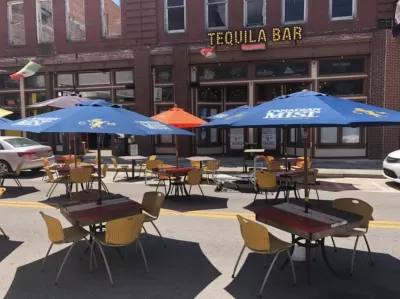
"In an effort to help further stimulate businesses throughout Tampa, the city proposed closing down select streets to cars entirely," reports Andrew Harlan.
"[R]estaurants and retailers in Tampa can begin catering to customers on premises with 25% occupancy inside, and tables spaced 6 feet apart outside."
The new Business Recovery Zones pilot program launched on Monday May 4, and will run for 14 days during a pilot program. Several streets in the historic district of Ybor City are designated the Business Recovery Zones, as are streets in the neighborhoods of Downtown Tampa, Hyde Park, Hyde Park Village, Tampa Heights, West River, and SoHo, according to a separate article published by Tampa Bay Metro.
Jason Fernandez, owner of Tequilas Taqueria & Tequila Bar in Ybor City, posted a picture on Facebook of his restaurant all decked out in preparation for the Cinco de mayo celebration yesterday.
By closing streets to cars to allow more room for local businesses to operate with enough space for social distancing, Tampa follows in the footsteps of Vilnius, Lithuania and Brookhaven, Georgia. New York City could also follow suit.
Read the full story: City of Tampa to shut down select streets to cars to help small businesses

Another City Opens Street Space for Restaurants—This Time in Suburban Chicago
Tampa, Brookhaven, Vilnius, Hinsdale. These cities will be the answer to a COVID-themed trivia night some time soon.
Seattle Extends Outdoor Dining for a Year, Eases Rules on Heaters for the Winter
Outdoor dining is going to hang out for a bit.
'Open Restaurants on Open Streets' Program Announced in NYC
The al fresco streets concept is coming to New York City.

Planetizen Federal Action Tracker
A weekly monitor of how Trump’s orders and actions are impacting planners and planning in America.

California plans to bury El Niño’s downpour
If the state plays its cards right, it may be able to store a billion acre-feet of El Niño’s water in aquifers.

Chicago breaks ground on $3 billion megadevelopment
The new neighborhood, titled Foundry Park, will one day host 3,700 residences.

Satanic Place Names
From streams and lakes to valleys and canyons, I mapped more than 1,000 places named after the Devil.

California High-Speed Rail Authority CEO resigns after $600,000 scandal
Under Ian Choudri, the authority used taxpayer dollars to fund first class flights and trips to nightclubs.

Want to study the Missouri River? Soon, you may need unanimous approval from 10 states
Legislation would require 10 governors’ permission to study or build projects moving water outside the basin.

FREE Course: Walkable City 1: Why Walkability?
After describing his path towards focusing on walkability as the essence of good planning, Jeff Speck marches through his five principal reasons for making more walkable places.
Reinventing Malls: Planning Alchemy—Turning Gray Fields Into Gold
The course focuses on the opportunities and imperatives that shape reinvention of mall sites.

City of Rosemead
Rutgers University, Edward J. Bloustein School of Planning and Public Policy
One Hundred Miles
Hunter College, City University of New York (CUNY)
The Architects Foundation
University of Cincinnati Online
City of Cambridge
Montrose County
The Pocatello Development Authority