The Crenshaw/LAX line, under construction in Los Angeles and passing through the city of Inglewood to connect the Expo and Green lines, was originally scheduled to open in 2019.


"The Metropolitan Transportation Authority acknowledged [recently] that flawed construction on a $2.06-billion rail line through South Los Angeles will delay its opening until mid-2021, two years later than originally promised," reports Laura J. Nelson.
"The Crenshaw Line is about 95% complete. But construction will not conclude until the end of this year or early 2021 because crews have been forced to redo work along the 8.5-mile route," according to the article.
The delays put the earliest possible opening date for the new light rail line in May 2021. The most-recent delay pushes the line further back from its original scheduled opening date in fall of 2019. The delay also adds cost to the project, which will have to be paid with a requested $90 million from Metro. The article includes more detail about the construction errors that caused the delay.
For those wondering how the Crenshaw/LA Line will be named to conform with Metro's decision to rename all of its rail and busway routes with letters, rumors are that the line will eventually be dubbed the "K Line."
FULL STORY: Construction problems delay Metro’s $2-billion Crenshaw Line opening until 2021


Crenshaw Line Light Rail Delayed in Los Angeles
Construction of the Crenshaw Line in Los Angeles will go later than expected. Metro now expects the light rail line to open in 2020.
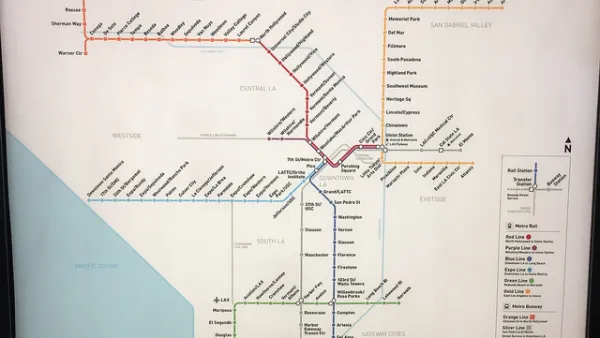
Coming to Los Angeles in 2047: The Busiest Light Rail Route in the U.S.
An extended Crenshaw Line would cut north-south through the middle of the Los Angeles basin, connecting three rail transit lines and some of the busiest buses in the county. Some don't want to wait 30 years for the plan to come to fruition.
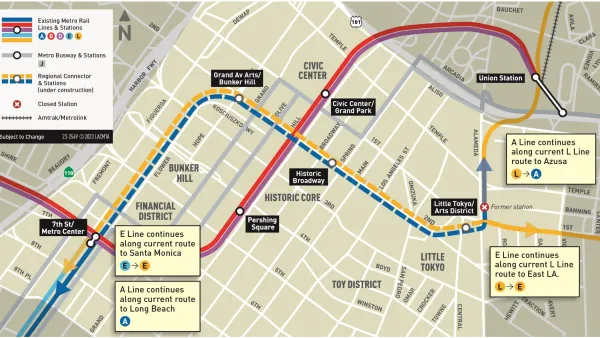
Newly Opened Regional Connector Redefines Light Rail Transit in Los Angeles
Three rail lines have become two rail lines in Los Angeles, providing one-seat rides from four corners of Los Angeles County.

The state-sanctioned urbicide of Austin
People don’t kill cities. Freeways do.

US to reduce Colorado River water deliveries to Mexico
A new Colorado Treaty amendment reduces Mexico’s Colorado River water allocation by 250,000 acre feet.

New Jersey’s second-largest city bans standalone data centers
Jersey City will continue to allow co-location facilities, such as those meant for research institutions that store their own data.

Amtrak not solely to blame for New Jersey commuter rail's unreliability, report finds
A new study from the Garden State Initiative found that NJ Transit’s budget grew 20% across a 4 year period, but reliability declined significantly over the same period.

EPA erases limits on planet-warming pollution from power plants
Under Monday’s plan, power plants would still have some limits on how much mercury, arsenic and other contaminants they can emit.

Phoenix announces new on-demand transit service, more frequent RAPID buses
Both new services will launch in October, and are part of Phoenix's Project Effective Access Solutions for Easing Congestion.

FREE Course: Walkable City 1: Why Walkability?
After describing his path towards focusing on walkability as the essence of good planning, Jeff Speck marches through his five principal reasons for making more walkable places.
Reinventing Malls: Planning Alchemy—Turning Gray Fields Into Gold
The course focuses on the opportunities and imperatives that shape reinvention of mall sites.


Eagle County Government
Harvard University Graduate School of Design
Nashville Planning Department
The Architects Foundation
University of Cincinnati Online
The Pocatello Development Authority
The Urban Renewal Agency of the City of Pocatello
Journal of the American Planning Association