A hopeful forecast predicts that thousands of monthly traffic collisions will be avoided due to reduced vehicular travel during California’s shelter-in-place period.


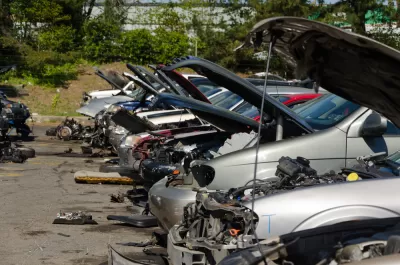
A U.C. Davis survey finds that auto collisions have been curbed by more than 50 percent since the stay-at-home orders went into effect around the state of California in March. "The survey suggests that a 60% drop in traffic volume — when compared with the same period last year — accounts for a roughly 50% decline in collisions on roadways policed by California Highway Patrol," writes Louis Sahagun.
The U.C. Davis Road Ecology Center's "California Highway Incident Processing System," which tracks close to real-time traffic data in California, reported only 500 collisions in the period between March 21st and March 30th, a significant reduction from the 1,116 collisions observed in the ten-day period between March 10th and March 19th. The decrease in vehicle travel and traffic volume resulting from the state-wide order also correlates to a reduction in fatality and injury caused by collisions.
Road Ecology Center co-director Fraser Shilling was unable to assess animal fatalities on public roadways, the main focus of his research, due to the lack of data in the short time period. Shilling hopes to center future research on "cost-savings and other social benefits from reduced injuries and deaths on state highways due to COVID-19."
FULL STORY: Coronavirus stay-at-home orders have reduced traffic accidents by half


Dangerous, Distracted Drivers Take More Joyrides During Lockdown
Some motorists see open roads as an opportunity for stress relief. Transportation officials urge motorists to slow down, citing dramatically increased rates of speeding since the onset of the pandemic.

Let’s End Traffic Stops
The technology to make traffic enforcement obsolete is becoming available. But in the U.S. willing to use it?
Acceptable Deaths
What can we learn from our Covid response?

Planetizen Federal Action Tracker
A weekly monitor of how Trump’s orders and actions are impacting planners and planning in America.

The state-sanctioned urbicide of Austin
People don’t kill cities. Freeways do.

US to reduce Colorado River water deliveries to Mexico
A new Colorado Treaty amendment reduces Mexico’s Colorado River water allocation by 250,000 acre feet.

Baltimore to break ground on $50 million Transit Priority Project
The project will bring faster bus trips, safer streets and better bike connections to Baltimore.

Airbnb launches $250 million 'last-dollar financing' housing accelerator, makes first investment in Austin
The company will put $6.4 million towards affordable housing development in Texas’ capital.

Guerilla urbanists are building DIY bus stop benches in Chicago
A before-and-after of one of the bus stops with a new bench. The new benches are not officially sanctioned or permitted, but the residents who placed them hope they will be the start of a network of DIY benches across the city.

FREE Course: Walkable City 1: Why Walkability?
After describing his path towards focusing on walkability as the essence of good planning, Jeff Speck marches through his five principal reasons for making more walkable places.
Reinventing Malls: Planning Alchemy—Turning Gray Fields Into Gold
The course focuses on the opportunities and imperatives that shape reinvention of mall sites.

Eagle County Government
Harvard University Graduate School of Design
Nashville Planning Department
The Architects Foundation
University of Cincinnati Online
The Pocatello Development Authority
The Urban Renewal Agency of the City of Pocatello
Journal of the American Planning Association