The two largest cities are headed in two different directions when it comes to parking enforcement for street sweeping during the coronavirus pandemic—for now at least.


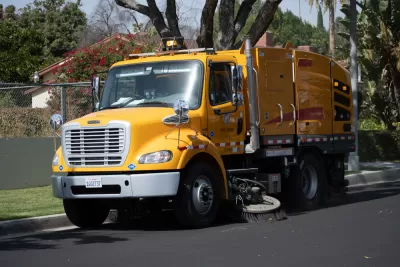
"In an effort to help residents stuck at home during the coronavirus pandemic, Los Angeles will temporarily stop ticketing cars during street sweeping and relax its enforcement of some other parking rules, Mayor Eric Garcetti said Monday," reports Laura J. Nelson.
The moratorium on street sweeping tickets will stay in place for at least two weeks.
In New York City, Mayor Bill de Blasio is making the case that the city's "alternate side parking" policy for street sweeping is a necessity of public health. A Politico article by Erin Durkin, Danielle Muoio, and Joe Anuta allows Mayor de Blasio to explain the rationale to continue enforcing alternate side parking:
“It's a pain in the butt. We all understand that, but it's there for a reason. It's because that is what allows the street sweepers to keep our neighborhoods clean,” he said on PIX 11 Morning News. “I am worried about a city in the middle of an epidemic that gets less and less clean. That's not good public health practice.”
Critics of the plan say avoiding an alternate side parking ticket requires residents to leave the home at a time when the city is asking everyone to stay home unless absolutely necessary.
The Politico article also mentions the revenue from parking tickets in a time of expected fiscal belt tightening at the city as tax revenues plummet while the public stays home.
FULL STORY: Coronavirus: L.A. will temporarily stop ticketing during street sweeping

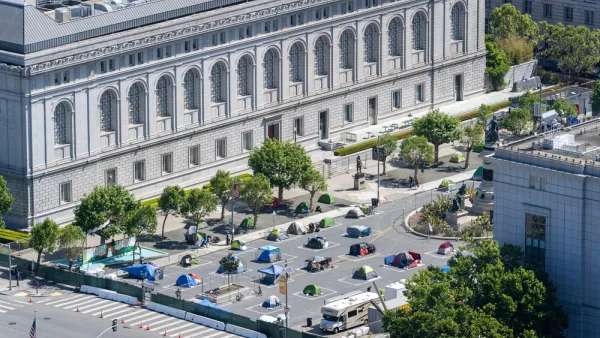
Cities Need More Public Bathrooms–Well Beyond the Pandemic
COVID-19 laid bare the dismal state of public bathrooms in America, and some cities stepped up to add more facilities. But why remove them while the need remains?
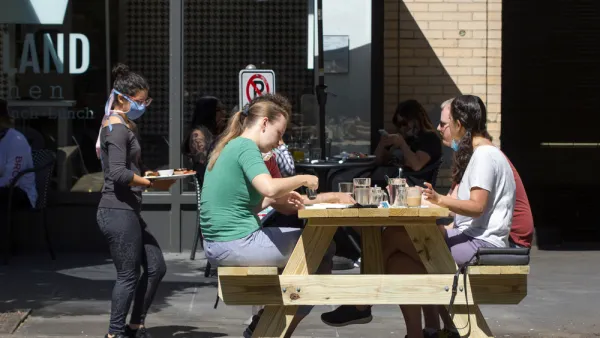
Strange Days: Outrage Absent as Businesses Reclaim Parking Spots
It took a pandemic, but the worldwide effort to move restaurant and retail businesses outside, at the expense of parking, is proving far less controversial than it would have before the coronavirus swept the globe.
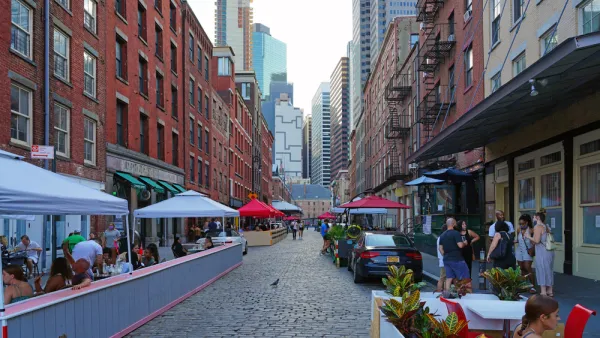
New York Outdoor Dining, Open Streets Programs Now Permanent
New York City will now be measurably less car-centric for the indefinite future.

Planetizen Federal Action Tracker
A weekly monitor of how Trump’s orders and actions are impacting planners and planning in America.

The state-sanctioned urbicide of Austin
People don’t kill cities. Freeways do.

US to reduce Colorado River water deliveries to Mexico
A new Colorado Treaty amendment reduces Mexico’s Colorado River water allocation by 250,000 acre feet.

5 New England states march closer to 800 megawatt wind energy project
Securing federal approval for the project may be complicated under the Trump administration, which has historically been hostile towards domestic wind power.

Baltimore to break ground on $50 million Transit Priority Project
The project will bring faster bus trips, safer streets and better bike connections to Baltimore.

Airbnb launches $250 million 'last-dollar financing' housing accelerator, makes first investment in Austin
The company will put $6.4 million towards affordable housing development in Texas’ capital.

FREE Course: Walkable City 1: Why Walkability?
After describing his path towards focusing on walkability as the essence of good planning, Jeff Speck marches through his five principal reasons for making more walkable places.
Reinventing Malls: Planning Alchemy—Turning Gray Fields Into Gold
The course focuses on the opportunities and imperatives that shape reinvention of mall sites.

Eagle County Government
Harvard University Graduate School of Design
Nashville Planning Department
The Architects Foundation
University of Cincinnati Online
The Pocatello Development Authority
The Urban Renewal Agency of the City of Pocatello
Journal of the American Planning Association