A controversial evaluation process has produced a final verdict, and four scooter companies are no longer welcome on the streets of the nation's capital.


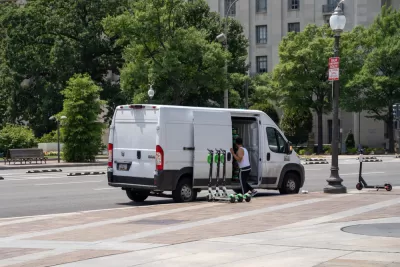
"The District’s Department of Transportation has made a final decision on which four scooter companies will operate in the city come April 1: Jump, Lyft, Skip and Spin," reports Margaret Barthel.
The announcement seems to conclude a micromobility controversy that dates to the end of 2019, when the District Department of Transportation cut the number of scooters allowed to operate on streets of the District, before allowing the companies a few months to appeal the decision. That appeal process yielded no changes to the original announcement of the four companies that will be forced to pull scooters off the streets, according to Barthel.
Barthel also explains how DDOT review process evaluated the scooter companies before making the decision: "On the original permit application, companies were scored on a 198-point scoring system. 25 percent of the score dealt with companies’ 'historical behavior,' and the rest looked at the company’s future operational plans, education and equity proposals, and data collection and protection methods."
FULL STORY: Bird, Lime, Bolt, And Razor Scooters To Leave D.C. After Unsuccessful Appeals


Can the Scooter Business Outlast the Coronavirus?
It's the end of the scooter as we know it.
Lyft Pulls Micromobility From Los Angeles Area
The company will no longer provide shared bikes and scooters in the L.A. region, citing a ‘lack of longterm commitment’ from cities.

Scooter-Share Company Tosses Financial Reports
Bird was counting money in customers’ digital “wallets” as revenue, and has admitted that financial statements from 2020 and 2021 “should no longer be relied upon.”

The state-sanctioned urbicide of Austin
People don’t kill cities. Freeways do.

US to reduce Colorado River water deliveries to Mexico
A new Colorado Treaty amendment reduces Mexico’s Colorado River water allocation by 250,000 acre feet.

New Jersey’s second-largest city bans standalone data centers
Jersey City will continue to allow co-location facilities, such as those meant for research institutions that store their own data.

Amtrak not solely to blame for New Jersey commuter rail's unreliability, report finds
A new study from the Garden State Initiative found that NJ Transit’s budget grew 20% across a 4 year period, but reliability declined significantly over the same period.

EPA erases limits on planet-warming pollution from power plants
Under Monday’s plan, power plants would still have some limits on how much mercury, arsenic and other contaminants they can emit.

Phoenix announces new on-demand transit service, more frequent RAPID buses
Both new services will launch in October, and are part of Phoenix's Project Effective Access Solutions for Easing Congestion.

FREE Course: Walkable City 1: Why Walkability?
After describing his path towards focusing on walkability as the essence of good planning, Jeff Speck marches through his five principal reasons for making more walkable places.
Reinventing Malls: Planning Alchemy—Turning Gray Fields Into Gold
The course focuses on the opportunities and imperatives that shape reinvention of mall sites.

Eagle County Government
Harvard University Graduate School of Design
Nashville Planning Department
The Architects Foundation
University of Cincinnati Online
The Pocatello Development Authority
The Urban Renewal Agency of the City of Pocatello
Journal of the American Planning Association