The threat of climate change has not guided transportation planning in Chicago, and the city and region could be doing much more to promote sustainable transportation, according to the article.


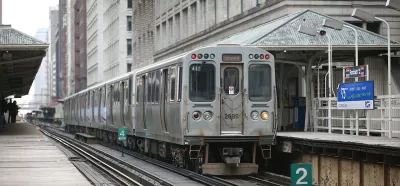
Courtney Cobb argues that policies and plans to support sustainable transportation are lacking in the Chicago region. "Curious about what the state of Illinois has its website about the subject, I went to the ‘Climate Change in Illinois’ page and did not see transportation listed as a sector where the state is committed to taking action when it comes to climate change."
Other places have taken proactive steps to address transportation and climate change, says Cobb. For example, Vancouver, Canada, has stepped up its goal to have two-thirds of trips made by biking, walking, and transit, and the state of California is working to reduce transportation emissions. "We are headed in the opposite direction of reducing transportation related emissions [in Illinois] by expanding highways and funnelling the majority of transportation funds into car-centric infrastructure," she notes.
"What would a state, city, and county transportation system look like if it was designed with climate change in mind?" asks Cobb. She offers a long list of measures and strategies that she would like to see implemented in Chicago and surrounding areas—including parking and congestion charges, an increase in the gas tax, and more funding for sustainable transportation infrastructure.
FULL STORY: We should be planning our transportation system as if the planet mattered


Friday Funny: The Onion Satirizes the Federal Government’s Electric Car Fetish
The totally satirical, not-at-all-real website The Onion is back with another planning-related fake news take.
Chicago Updating its Climate Action Plan for 2022
Chicago Mayor Lori Lightfoot on Earth Day announced the forthcoming release of a new plan to reduce greenhouse gas emissions and prepare communities for the effects of climate change.

Partisan Splits for Transportation Politics
Researchers found that while left-leaning respondents were more likely to favor transportation reform and sustainable modes, conservatives are not as far behind as we think.

The state-sanctioned urbicide of Austin
People don’t kill cities. Freeways do.

US to reduce Colorado River water deliveries to Mexico
A new Colorado Treaty amendment reduces Mexico’s Colorado River water allocation by 250,000 acre feet.

New Jersey’s second-largest city bans standalone data centers
Jersey City will continue to allow co-location facilities, such as those meant for research institutions that store their own data.

Amtrak not solely to blame for New Jersey commuter rail's unreliability, report finds
A new study from the Garden State Initiative found that NJ Transit’s budget grew 20% across a 4 year period, but reliability declined significantly over the same period.

EPA erases limits on planet-warming pollution from power plants
Under Monday’s plan, power plants would still have some limits on how much mercury, arsenic and other contaminants they can emit.

Phoenix announces new on-demand transit service, more frequent RAPID buses
Both new services will launch in October, and are part of Phoenix's Project Effective Access Solutions for Easing Congestion.

FREE Course: Walkable City 1: Why Walkability?
After describing his path towards focusing on walkability as the essence of good planning, Jeff Speck marches through his five principal reasons for making more walkable places.
Reinventing Malls: Planning Alchemy—Turning Gray Fields Into Gold
The course focuses on the opportunities and imperatives that shape reinvention of mall sites.


Eagle County Government
Harvard University Graduate School of Design
Nashville Planning Department
The Architects Foundation
University of Cincinnati Online
The Pocatello Development Authority
The Urban Renewal Agency of the City of Pocatello
Journal of the American Planning Association