Have you ever heard of the Salish Sea? Neither have most of the people who live near it, in cities named Seattle and Vancouver.


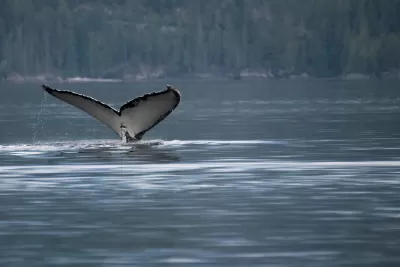
A new study by the SeaDoc Society finds that very few of the people who live next to the Salish Sea have even heard of the Salish Sea.
"The study reveals that only 5 percent of people in Washington and 14 percent of British Columbians can identify the Salish Sea—the marine ecosystem that spans the United States-Canada border and includes both Seattle and Vancouver," according to an article from May 2019 by Justin Cox.
According to the article, lack of knowledge, like that of people in Cascadia for the Salish Sea, shapes the way people feel about the nature that surrounds them. And ecosystems like the Salish Sea will need defenders as the built environment and its effects closes in around it, adds Cox. "The Salish Sea is home to two of the fastest growing cities in North America alongside a marine ecosystem that is home to many charismatic species. These include endangered southern resident killer whales, whose population has dropped to just 75 individuals, and the Chinook salmon they depend on for survival."
Read the full story: Where on Earth is the Salish Sea?

Hate Groups in the U.S. Are Both 'Concentrated and Considerably Spread Out'
A new study shows that these groups exist in around 10 percent of counties, and those counties are scattered across all 50 states.
Geographers Aren’t Going Anywhere
Microsoft says AI renders my profession obsolete. They couldn’t be more wrong.
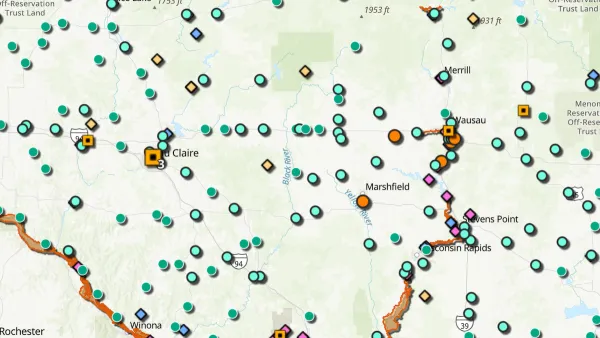
New Book Highlights How GIS Improves Outcomes
Esri Press recently published a digital book called Mapping the Nation which demonstrates how a geographic approach guides important decisions and addresses challenges around the globe.

Planetizen Federal Action Tracker
A weekly monitor of how Trump’s orders and actions are impacting planners and planning in America.

California plans to bury El Niño’s downpour
If the state plays its cards right, it may be able to store a billion acre-feet of El Niño’s water in aquifers.

Desperate measures: Advocates weigh draining Lake Powell to fill Colorado River
Draining the reservoir could reduce evaporation losses by a couple hundred thousand acre-feet.

In Texas, data centers are swallowing promised parkland
Residents who moved to Taylor, Texas for a rural community now have to contend with three data centers in their backyard.

How a Chicago-sized wind farm beat the odds and powered on
The project spanned five presidential administrations and a standoff with a U.S. military base.

MTA gives itself 30 days to transform pit into basketball court
The site has been under construction since 2022; the city originally estimated it would finish the court in 2024.

FREE Course: Walkable City 1: Why Walkability?
After describing his path towards focusing on walkability as the essence of good planning, Jeff Speck marches through his five principal reasons for making more walkable places.
Reinventing Malls: Planning Alchemy—Turning Gray Fields Into Gold
The course focuses on the opportunities and imperatives that shape reinvention of mall sites.

City of Rosemead
Rutgers University, Edward J. Bloustein School of Planning and Public Policy
One Hundred Miles
Hunter College, City University of New York (CUNY)
The Architects Foundation
University of Cincinnati Online
City of Cambridge
Montrose County
The Pocatello Development Authority