Los Angeles City Councilmember Marqueece Harris-Dawson outlines Destination Crenshaw and highlights the economic development and community investment opportunities it brings to South L.A.


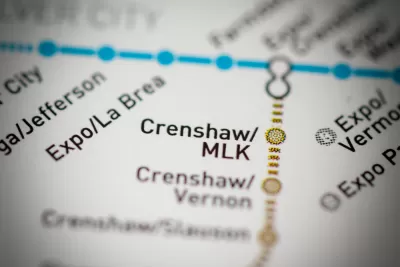
Set to open in Spring of 2020, the highly anticipated Los Angele County Metropolitan Transportation Authority (Metro) Crenshaw/LAX light rail line will run through South L.A. to connect the Los Angeles International Airport to the Expo Line and will serve as the transit gateway into Los Angeles. Destination Crenshaw is a $100 million 1.3 miles, open-air community art and park installation celebrating the black art and culture of South L.A. that will accompany the new line’s at-grade portion along the Crenshaw Corridor.
The Planning Report presents the remarks of City Councilmember Marqueece Harris-Dawson from a recent Los Angeles Economic Development Corporation Board of Governor's meeting, in which the councilmember outlines the project and highlights the economic development and community investment opportunities that Destination Crenshaw brings to South L.A., and the area's key asset, 'Black Culture':
"The strategic advantage that South LA has and offers to Southern California is culture. South LA largely decides what is in the cultural conversation or at least decides a disproportionately large share of it."
Read the full story at The Planning Report.
FULL STORY: Marqueece Harris-Dawson: ‘Destination Crenshaw' Showcases South LA's Strategic Advantage—Black Culture


Preview L.A.'s New Crenshaw Light Rail Line, Opening in 2020
Curbed Los Angeles takes a tour of the Crenshaw Line, currently doing test runs in Los Angeles and Inglewood and expected to open to the public in summer or fall 2020.
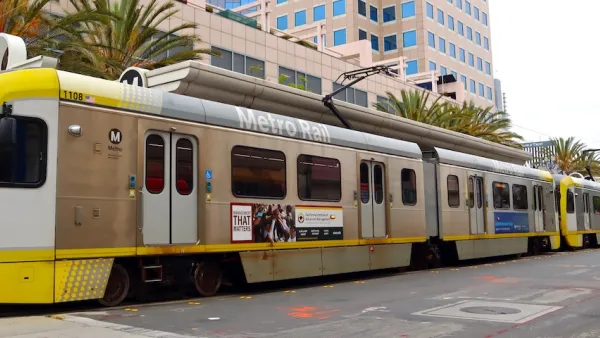
The World’s Longest Light Rail Line is in… Los Angeles?
In a city not known for its public transit, the 48.5-mile A Line is the longest of its kind on the planet.
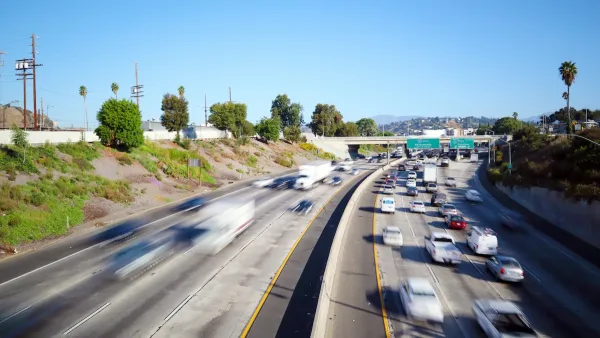
Opinion: LA Should Reject ‘Misguided’ Car-Centric Policies
Even as the city highlights clean energy and transportation for the 2028 Olympics, Metro and Caltrans move forward with plans to expand highways.

Planetizen Federal Action Tracker
A weekly monitor of how Trump’s orders and actions are impacting planners and planning in America.

The state-sanctioned urbicide of Austin
People don’t kill cities. Freeways do.

US to reduce Colorado River water deliveries to Mexico
A new Colorado Treaty amendment reduces Mexico’s Colorado River water allocation by 250,000 acre feet.

5 New England states march closer to 800 megawatt wind energy project
Securing federal approval for the project may be complicated under the Trump administration, which has historically been hostile towards domestic wind power.

Baltimore to break ground on $50 million Transit Priority Project
The project will bring faster bus trips, safer streets and better bike connections to Baltimore.

Airbnb launches $250 million 'last-dollar financing' housing accelerator, makes first investment in Austin
The company will put $6.4 million towards affordable housing development in Texas’ capital.

FREE Course: Walkable City 1: Why Walkability?
After describing his path towards focusing on walkability as the essence of good planning, Jeff Speck marches through his five principal reasons for making more walkable places.
Reinventing Malls: Planning Alchemy—Turning Gray Fields Into Gold
The course focuses on the opportunities and imperatives that shape reinvention of mall sites.

Eagle County Government
Harvard University Graduate School of Design
Nashville Planning Department
The Architects Foundation
University of Cincinnati Online
The Pocatello Development Authority
The Urban Renewal Agency of the City of Pocatello
Journal of the American Planning Association