Colorado transportation officials are making plans for a major overhaul of a five-mile stretch of Interstate 25, one of Colorado’s busiest highway corridors.


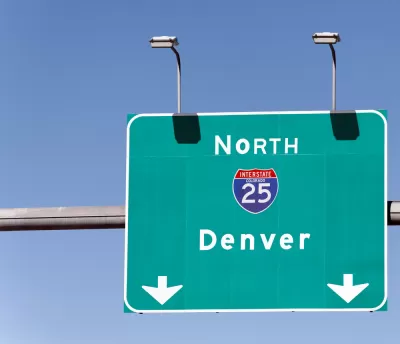
Interstate 25 through Denver is "being primed for what officials say is likely to be a series of projects aimed at smoothing its traffic flow and improving travel off the highway, too," according to an article by Jon Murray.
"The I-25 work would rip open all or parts of the freeway from Alameda Avenue to 20th Street, a congested five-mile stretch traveled by about 250,000 vehicles a day." The corridor was first built over 60 years ago, and the stretch of highway shows its age in congestion and collisions, with about 1,000 crashes every year.
"Major expansion possibilities are likely limited to the addition of an express toll lane in each direction, according to Denver Post interviews with [Colorado Department of Transportation’s] chief engineer and the manager of the study. CDOT is nearing the end of a two-year study that is narrowing the options and will help define the path forward," according to Murray.
CDOT officials are tempering the news of a highway expansion during a climate crisis by adding supplemental study into rail infrastructure located adjacent to the interstate right of way.
"CDOT officials also hope to expand off-highway transit capacity by adding tracks for RTD’s converging light rail lines through the area. South of Sixth Avenue, they want to relocate heavy rail tracks that are adjacent to I-25, freeing up space that would allow a shift of I-25 away from the South Platte River. Such a move also would improve travel on nearby streets by removing at-grade railroad crossings."
Highway expansion projects are common along I-25, both north and south beyond the boundaries of the city of Denver, reaching as far north as Fort Collins and as far south as Colorado Springs.
FULL STORY: CDOT sets its sights on I-25 in central Denver for major construction

Denver Freeway Widening Plans on Hold
The Colorado Department of Transportation’s plan to widen the Interstate 25 freeway through Denver is one of a few plans to widen urban freeways under consideration in the United States.
Colorado OKs $350 Million for I-25 Expansion
Colorado’s new approach to transportation projects is on display with the funding of a new project to widen an interstate freeway, adding bike and pedestrian infrastructure alongside new toll lanes.
If You Build It, Cars Will Come: the Common-Sense Logic of 'Induced Demand'
Highway expansion has been shown, time and again, to increase traffic and congestion. Cities are finally getting the message.

Planetizen Federal Action Tracker
A weekly monitor of how Trump’s orders and actions are impacting planners and planning in America.

The state-sanctioned urbicide of Austin
People don’t kill cities. Freeways do.

US to reduce Colorado River water deliveries to Mexico
A new Colorado Treaty amendment reduces Mexico’s Colorado River water allocation by 250,000 acre feet.

5 New England states march closer to 800 megawatt wind energy project
Securing federal approval for the project may be complicated under the Trump administration, which has historically been hostile towards domestic wind power.

Baltimore to break ground on $50 million Transit Priority Project
The project will bring faster bus trips, safer streets and better bike connections to Baltimore.

Airbnb launches $250 million 'last-dollar financing' housing accelerator, makes first investment in Austin
The company will put $6.4 million towards affordable housing development in Texas’ capital.

FREE Course: Walkable City 1: Why Walkability?
After describing his path towards focusing on walkability as the essence of good planning, Jeff Speck marches through his five principal reasons for making more walkable places.
Reinventing Malls: Planning Alchemy—Turning Gray Fields Into Gold
The course focuses on the opportunities and imperatives that shape reinvention of mall sites.

Eagle County Government
Harvard University Graduate School of Design
Nashville Planning Department
The Architects Foundation
University of Cincinnati Online
The Pocatello Development Authority
The Urban Renewal Agency of the City of Pocatello
Journal of the American Planning Association