The Southwest Ohio Regional Transit Authority wants funding to revamp its bus system, but convincing voters of a tax's necessity will require bigger thinking.


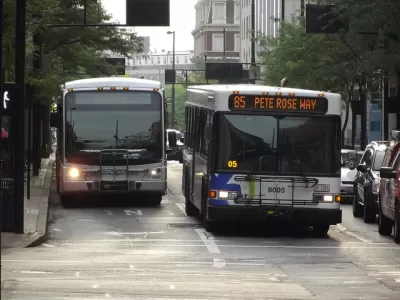
Chris Wetterich reports from Cincinnati: "Hamilton County has more than $1.17 billion in planned infrastructure projects along Metro bus routes, according to a new study commissioned by the Cincinnati USA Regional Chamber."
"The chamber released the analysis on Tuesday night to bolster the case for a countywide sales tax levy that would boost spending on road, bridge and sidewalk projects along with the Metro bus system, which is run by the Southwest Ohio Regional Transit Authority."
According to the political calculus of the effort, connecting transportation tax money to broader infrastructure issues will help convince voters who have historically proven skeptical of public transit to approve the tax.
SORTA is still trying to figure out the final details of a proposed tax, but most of the revenue generated by the tax would be spent on the regional bus system.
"Metro has said it would take a 0.7% sales tax to implement its Reinventing Metro plan, which calls for 24-hour service along some corridors, more-frequent service along most routes, new crosstown routes and neighborhood circulators, and bus-rapid transit, a rail-like bus service with limited stops, stations, traffic signal priority and dedicated lanes," according to Wetterich.
FULL STORY: Hamilton County has more than $1 billion in infrastructure needs along transit routes, study says

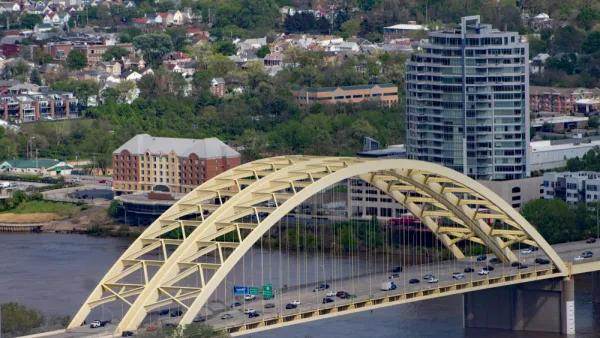
Transit Improvements Coming to Cincinnati Area After Voters Approve New Sales Tax
Hamilton County, Ohio, home to Cincinnati and the Southwest Ohio Regional Transit Authority, has a new coffer of money to fund public transit improvements.
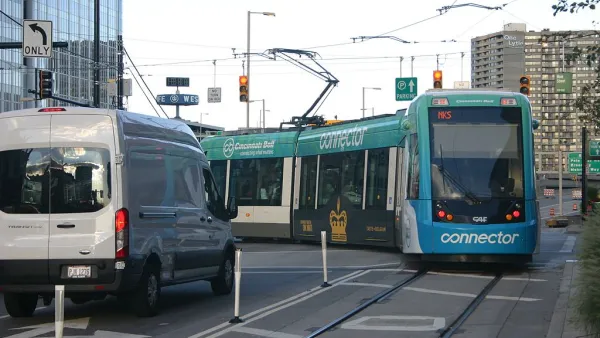
Management Divorce for the Cincinnati Streetcar
Efforts to bolster support for a countywide sales tax levy in Hamilton County, Ohio, are pushing the city to fire SORTA as the manager of the troubled Cincinnati Bell Connector.
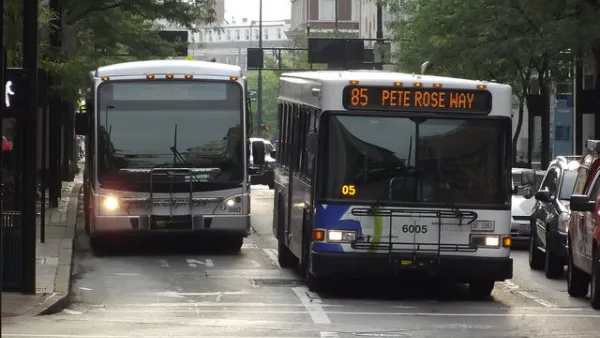
Swapping One Tax for Another to Fund Bus Improvements
Cincinnati area voters might get a chance to decide the future of transit funding in the city of Cincinnati and the county of Hamilton.

The state-sanctioned urbicide of Austin
People don’t kill cities. Freeways do.

US to reduce Colorado River water deliveries to Mexico
A new Colorado Treaty amendment reduces Mexico’s Colorado River water allocation by 250,000 acre feet.

New Jersey’s second-largest city bans standalone data centers
Jersey City will continue to allow co-location facilities, such as those meant for research institutions that store their own data.

Amtrak not solely to blame for New Jersey commuter rail's unreliability, report finds
A new study from the Garden State Initiative found that NJ Transit’s budget grew 20% across a 4 year period, but reliability declined significantly over the same period.

EPA erases limits on planet-warming pollution from power plants
Under Monday’s plan, power plants would still have some limits on how much mercury, arsenic and other contaminants they can emit.

Phoenix announces new on-demand transit service, more frequent RAPID buses
Both new services will launch in October, and are part of Phoenix's Project Effective Access Solutions for Easing Congestion.

FREE Course: Walkable City 1: Why Walkability?
After describing his path towards focusing on walkability as the essence of good planning, Jeff Speck marches through his five principal reasons for making more walkable places.
Reinventing Malls: Planning Alchemy—Turning Gray Fields Into Gold
The course focuses on the opportunities and imperatives that shape reinvention of mall sites.

Eagle County Government
Harvard University Graduate School of Design
Nashville Planning Department
The Architects Foundation
University of Cincinnati Online
The Pocatello Development Authority
The Urban Renewal Agency of the City of Pocatello
Journal of the American Planning Association