A 25 percent tariff on steel imports could eventually be passed to transit riders in the form of higher fares.


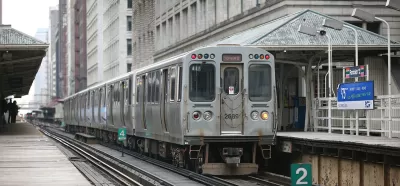
Tariffs imposed by the Trump administration on Chinese products are driving up the price of a project to replace about half of the Chicago Transit Authority's rail fleet, reports Mary Wisniewski.
"The transit agency and the manufacturer of the new cars disagree about who will bear the additional costs," according to Wisniewski. "If the CTA has to pay more, riders could eventually end up footing the bill through higher fares."
CRRC Sifang America, a subsidiary of a Chinese rail car company, has a $1.3 billion, 10-year contract "to produce up to 846 rail cars for the CTA at a manufacturing facility in Hegewisch." Though the cars are being assembled in Chicago, "about 15% of the parts, including stainless steel rail car shells, are imported from China and subject to a 25% tariff on imported Chinese goods imposed by the Trump administration."
Read the full story: Trump’s tariffs could drive up the cost of new 'L' cars the CTA ordered

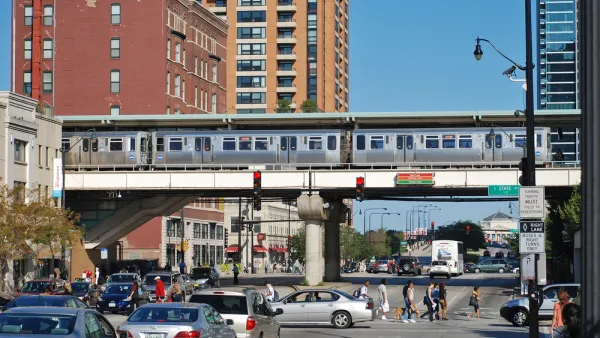
Chicago Transit Increasing Rail Service to Pre-Pandemic Levels
The Chicago Transit Authority is close to returning both rail and bus service to pre-pandemic schedules, with some adjustments for new travel demand.
Chicago Transit Releases 2024 Budget
The agency projects modest ridership growth while aiming to make long-term investments in bus and rail improvements.
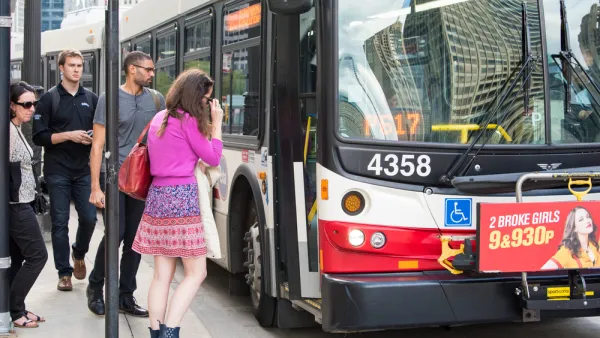
Chicago to Pilot All-Door Bus Boarding
Chicago is late to the game on all-door bus boarding, but that will change this summer.

Planetizen Federal Action Tracker
A weekly monitor of how Trump’s orders and actions are impacting planners and planning in America.

California plans to bury El Niño’s downpour
If the state plays its cards right, it may be able to store a billion acre-feet of El Niño’s water in aquifers.

Chicago breaks ground on $3 billion megadevelopment
The new neighborhood, titled Foundry Park, will one day host 3,700 residences.

California High-Speed Rail Authority CEO resigns after $600,000 scandal
Under Ian Choudri, the authority used taxpayer dollars to fund first class flights and trips to nightclubs.

Want to study the Missouri River? Soon, you may need unanimous approval from 10 states
Legislation would require 10 governors’ permission to study or build projects moving water outside the basin.

Desperate measures: Advocates weigh draining Lake Powell to fill Colorado River
Draining the reservoir could reduce evaporation losses by a couple hundred thousand acre-feet.

FREE Course: Walkable City 1: Why Walkability?
After describing his path towards focusing on walkability as the essence of good planning, Jeff Speck marches through his five principal reasons for making more walkable places.
Reinventing Malls: Planning Alchemy—Turning Gray Fields Into Gold
The course focuses on the opportunities and imperatives that shape reinvention of mall sites.


City of Rosemead
Rutgers University, Edward J. Bloustein School of Planning and Public Policy
One Hundred Miles
Hunter College, City University of New York (CUNY)
The Architects Foundation
University of Cincinnati Online
City of Cambridge
Montrose County
The Pocatello Development Authority