A new state task could prove its seriousness about ending traffic fatalities, by recommending that two of its most populated counties test speed cameras on highways.


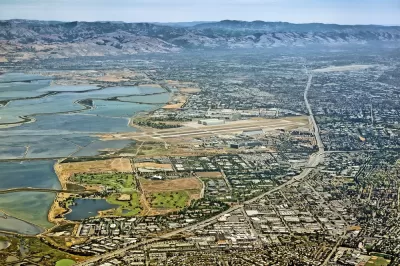
"As pedestrian, bicycling and auto fatalities continue to mount, California will convene a new Zero Traffic Fatalities Task Force this week to consider a variety of ways to slow drivers," reports Gary Richards.
Among the proposals expected to potentially emerge from the task force is a test of automated speed cameras in San Jose and San Francisco. The idea was last proposed by failed legislation at the state, but the appetite might be growing as tragedies mount on the streets and highways of the region.
The task force is targeting December 2020 to produce a series of recommendations. "Other ideas may include reducing local speed limits by 5 miles per hour, lowering the DUI level to 0.05, replacing dangerous intersections with roundabouts, narrowing lanes and installing rumble strips on more roads," according to Richards.
Read the full story: Speed cameras may be on table again for San Jose and San Francisco

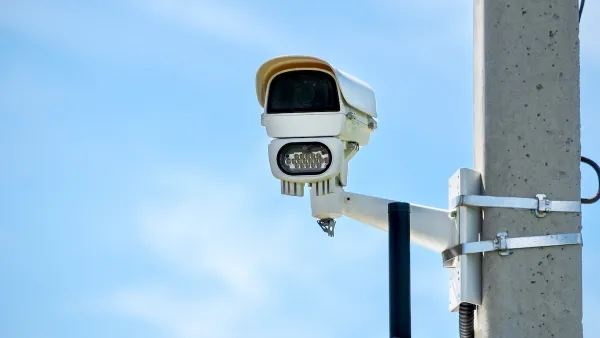
Philly Speed Camera Program Cuts Fatalities in Half
Excessive speeding along dangerous segments of Roosevelt Boulevard dropped by 90 percent after the city installed automated enforcement cameras.
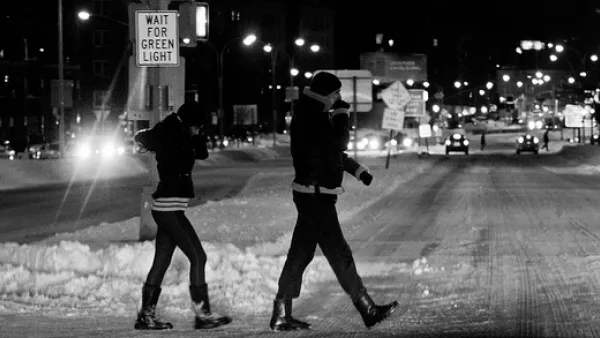
A Vision Zero Success Story in New York
The 300-foot wide Queens Boulevard has been known as the Boulevard of Death. Since 1990, it has claimed 186 lives, 74 percent being pedestrians, including 18 in 1997 alone. A series of safety improvements have brought fatalities to zero since 2014.
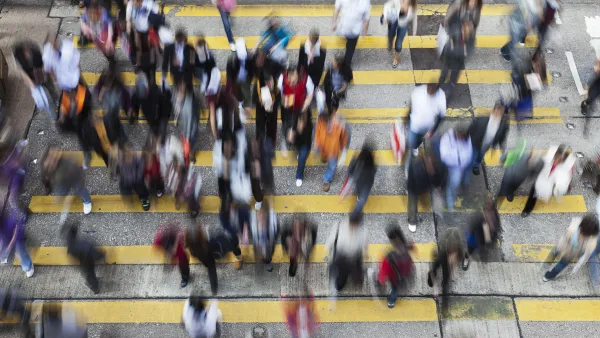
Big Cities Make Pedestrian Safety a Priority
New data released Dec. 19 by NHTSA shows increased safety for those traveling by car, but pedestrian fatalities are 15% higher than in 2009. Plans by San Francisco, Los Angeles, New York, and Chicago to increase ped safety are described by the WSJ.

Planetizen Federal Action Tracker
A weekly monitor of how Trump’s orders and actions are impacting planners and planning in America.

The state-sanctioned urbicide of Austin
People don’t kill cities. Freeways do.

US to reduce Colorado River water deliveries to Mexico
A new Colorado Treaty amendment reduces Mexico’s Colorado River water allocation by 250,000 acre feet.

Nation's most wind-powered state turns to coal as data centers increase energy demand
For the first time in decades, Iowa has increased its generation of coal power.

NYC cools commuters with city's first rain garden above a bus stop
New York City officials say the plants in the rain garden can absorb 16 gallons of rainwater during heavy storms.

Brightline West’s future may rely on $6 billion federal loan
The company has until Nov. 2 to make a $400 million equity investment into its proposed high-speed rail line.

FREE Course: Walkable City 1: Why Walkability?
After describing his path towards focusing on walkability as the essence of good planning, Jeff Speck marches through his five principal reasons for making more walkable places.
Reinventing Malls: Planning Alchemy—Turning Gray Fields Into Gold
The course focuses on the opportunities and imperatives that shape reinvention of mall sites.

Greater Baltimore Committee
Eagle County Government
Harvard University Graduate School of Design
The Architects Foundation
University of Cincinnati Online
The Pocatello Development Authority
The Urban Renewal Agency of the City of Pocatello
Journal of the American Planning Association