The Joint Center for Housing Studies of Harvard University released its annual "The State of the Nation's Housing" report this morning. There are some signs of post-recession normalcy in the housing market for high-income earners.



"Although household growth is returning to a more normal pace, our new State of the Nation's Housing report shows that housing production still falls short of what is needed, which is keeping pressure on house prices and rents and eroding affordability," according to the website that hosts the 2019 "The State of the Nation's Housing" report, as well as several other maps and resources to supplement an understanding of the report's findings.
A press release promoting the report [pdf] digs into the report in more detail, blaming low home construction levels on rising land prices and regulatory constraints on development. "These constraints, largely imposed at the local level, raise costs and limit the number of homes that can be built in places where demand is highest," according to a soundbite from Chris Herbert, managing director of the Joint Center for Housing Studies, in the press release.
As for where the report finds some return to normalcy after the Great Recession, the report finds a sharply rising number of homeowners—but even those figures are couched in indicators of a less affordable housing market.
Read the full story: The State of the Nation's Housing 2019

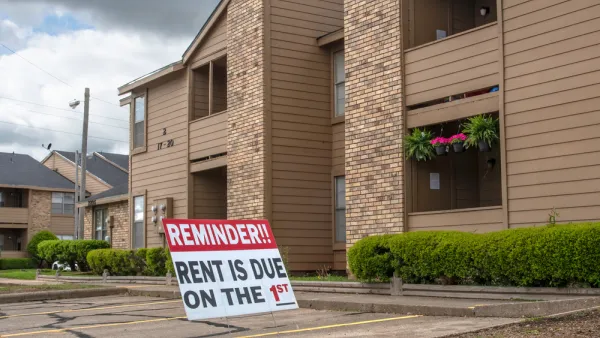
Report: The Pandemic Tells a Tale of Two Housing Markets
The differences between the haves and the have-nots, already apparent in the U.S. housing market before the pandemic, is more apparent than ever after more than a year of economic and demographic upheaval.
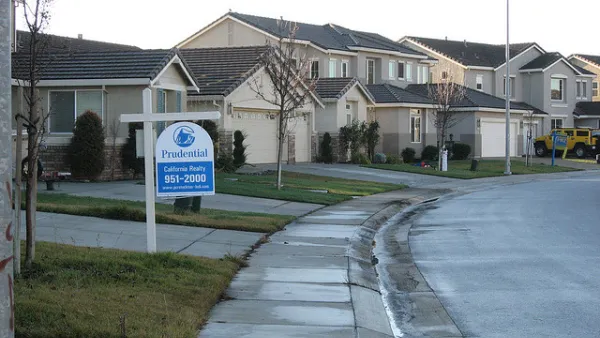
When Wall Street Controls the Housing Market
A debate about the effect of the increasing footprint of large, institutional investors in the housing market is further fragmenting the politics of development in the United States.
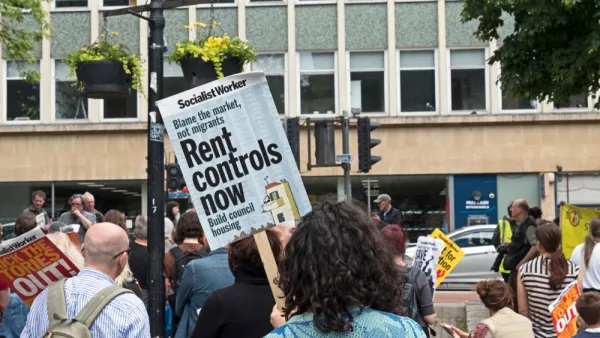
Another Rent Control Initiative on the Ballot in California
There are significant differences between Proposition 21, a statewide rent control measure on the ballot in California, compared to a similar measure defeated soundly by voters in 2018.

Planetizen Federal Action Tracker
A weekly monitor of how Trump’s orders and actions are impacting planners and planning in America.

California plans to bury El Niño’s downpour
If the state plays its cards right, it may be able to store a billion acre-feet of El Niño’s water in aquifers.

Chicago breaks ground on $3 billion megadevelopment
The new neighborhood, titled Foundry Park, will one day host 3,700 residences.

California High-Speed Rail Authority CEO resigns after $600,000 scandal
Under Ian Choudri, the authority used taxpayer dollars to fund first class flights and trips to nightclubs.

Want to study the Missouri River? Soon, you may need unanimous approval from 10 states
Legislation would require 10 governors’ permission to study or build projects moving water outside the basin.

Desperate measures: Advocates weigh draining Lake Powell to fill Colorado River
Draining the reservoir could reduce evaporation losses by a couple hundred thousand acre-feet.

FREE Course: Walkable City 1: Why Walkability?
After describing his path towards focusing on walkability as the essence of good planning, Jeff Speck marches through his five principal reasons for making more walkable places.
Reinventing Malls: Planning Alchemy—Turning Gray Fields Into Gold
The course focuses on the opportunities and imperatives that shape reinvention of mall sites.

City of Rosemead
Rutgers University, Edward J. Bloustein School of Planning and Public Policy
One Hundred Miles
Hunter College, City University of New York (CUNY)
The Architects Foundation
University of Cincinnati Online
City of Cambridge
Montrose County
The Pocatello Development Authority