PeopleforBike has released its most comprehensive analysis yet of how well cities and towns provide bike infrastructure and succeed in attracting people to active transportation.


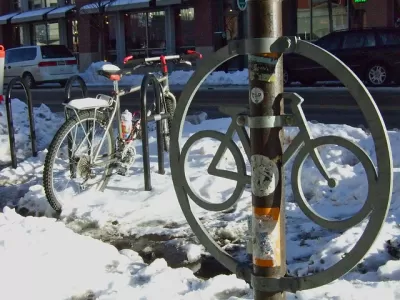
PeopleForBikes released this week the 2019 PlacesForBikes City Ratings, reporting a much higher participation rate and, thus, "better data and have an improved picture of bicycling in the United States."
A blog post announcing the new rankings reports a diverse mix of cities in the top 20 list, "which signals that progress is being made across the board."
The rankings are built on a scoring system that rates five key areas: "Ridership (how many people ride bikes?), Safety (how safe is it to ride bikes?), Network (how easy is it for people to get where they need to go?), Acceleration (how fast is the bike network expanding?) and Reach (how well the network serves all neighborhoods in the community)." In all, the rankings make 184 calculations per city, and draw data from six sources.
A new city took over the top spot this year: Boulder, Colorado, bumping Fort Collins, Colorado from the top spot. Fort Collins fell to #2. Rounding out the top five are Eugene, Oregon; Manhattan, New York, and Arlington, Virginia. A note on each of the places is included in the blog post.
You can also take a closer look at each city on the rankings. Los Angeles, for instance, scored a 1.7 (Boulder had a 3.7), and was docked major points for a lack of effort in building new infrastructure (according to the "Acceleration" rating).
FULL STORY: 2019 CITY RATINGS: TOP OVERALL CITIES

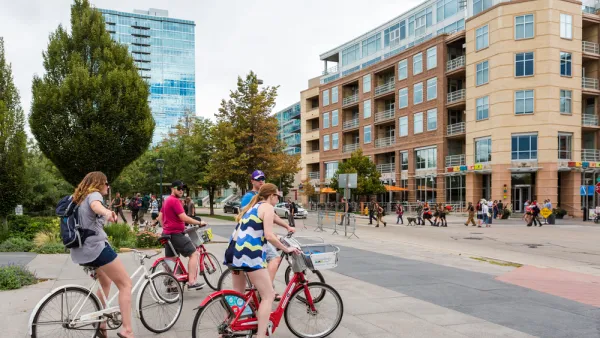
Study: More Bike Infrastructure Could Prevent 15,000 Deaths Annually
In addition to reducing air pollution and congestion, improving bike infrastructure could save thousands of lives each year, according to new research.
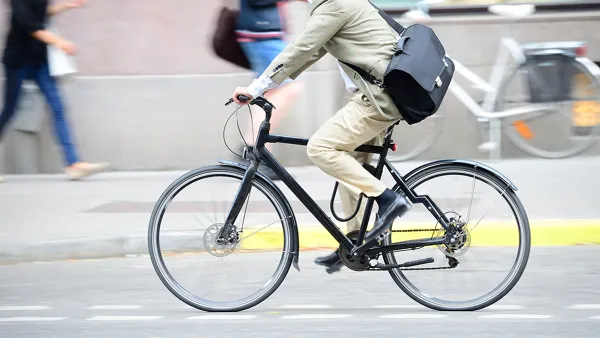
U.S. Still Lags Behind in Bike Commuting
Triple Pundit takes a step back to gather some perspective, asking why the U.S. commuters are still so resistant to getting on bikes.
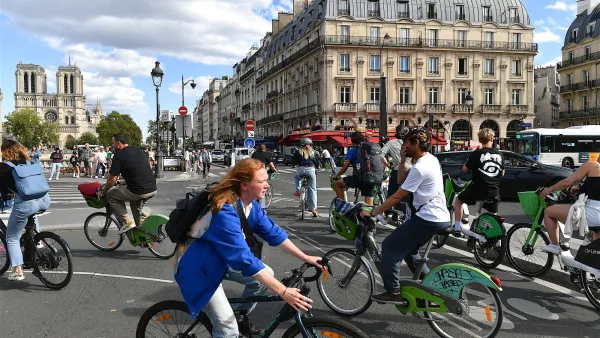
Biking in Paris grew by 240% in 5 years
The city saw a significant rise in bike use thanks to data-driven policy changes.

Planetizen Federal Action Tracker
A weekly monitor of how Trump’s orders and actions are impacting planners and planning in America.

The state-sanctioned urbicide of Austin
People don’t kill cities. Freeways do.

US to reduce Colorado River water deliveries to Mexico
A new Colorado Treaty amendment reduces Mexico’s Colorado River water allocation by 250,000 acre feet.

5 New England states march closer to 800 megawatt wind energy project
Securing federal approval for the project may be complicated under the Trump administration, which has historically been hostile towards domestic wind power.

Baltimore to break ground on $50 million Transit Priority Project
The project will bring faster bus trips, safer streets and better bike connections to Baltimore.

Airbnb launches $250 million 'last-dollar financing' housing accelerator, makes first investment in Austin
The company will put $6.4 million towards affordable housing development in Texas’ capital.

FREE Course: Walkable City 1: Why Walkability?
After describing his path towards focusing on walkability as the essence of good planning, Jeff Speck marches through his five principal reasons for making more walkable places.
Reinventing Malls: Planning Alchemy—Turning Gray Fields Into Gold
The course focuses on the opportunities and imperatives that shape reinvention of mall sites.

Eagle County Government
Harvard University Graduate School of Design
Nashville Planning Department
The Architects Foundation
University of Cincinnati Online
The Pocatello Development Authority
The Urban Renewal Agency of the City of Pocatello
Journal of the American Planning Association