One venture plans to fund a 100-acre campus for tech, bioscience, and medical research in Chicago's Bronzeville neighborhood.



Ryan Ori of the Chicago Tribune reports on a venture seeking to invest $1 billion in Opportunity Zones primarily in Chicago, beginning with the former Michael Reese Hospital site in Bronzeville.
Decennial Group consists of Scott Goodman, a founder of Sterling Bay and Farpoint Development, and Steve Glickman, a former Obama adviser who helped author the Opportunity Zone legislation and is now a consultant for potential Opportunity Zone investors.
Theirs is not the first attempt to redevelop the site of the Michael Reese Hospital, which was demolished in 2009. The property was part of Chicago's failed bid for the 2016 Olympic Summer Games, and considered for Amazon's second headquarters. Decennial's project would bring "medical lab space, offices, incubator and accelerator spaces for science and technology startups, data centers, apartments, senior housing and retail" to the 100 acres on and around the site, to be powered by renewable energy.
Bioscience and technology infrastructure—that is, data storage centers to support high-tech functions like autonomous vehicles and 5G networks—are likely to lead investors' interest in the 135 Opportunity Zones are distributed throughout Chicago's South and West sides, according Ori. "It remains to be seen whether benefits of the program will trickle down to Chicago's most challenged areas," he notes.
FULL STORY: Column: Chicago's poorest neighborhoods may be transformed by billions invested in 135 'opportunity zones'

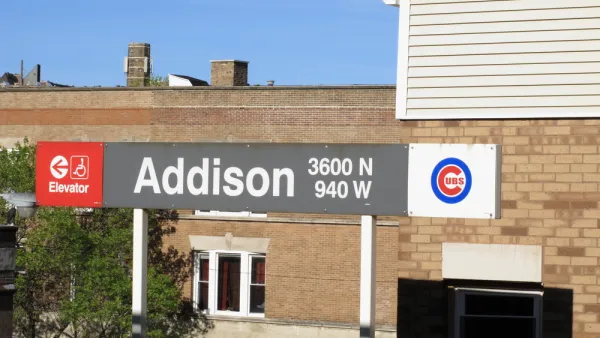
Risk and Reward in Play With Wrigleyville Developments
A wave of investments is visiting one of the most famous, and notorious, neighborhoods in the city of Chicago. The question is whether the final product will be worth the expense.
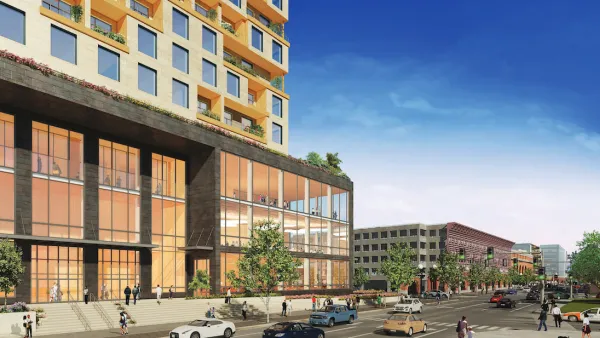
Thousands of Affordable Housing Units Planned Near New Haven Train Station
The proposal could breathe new life into a long-neglected area near a heavily trafficked Amtrak station.
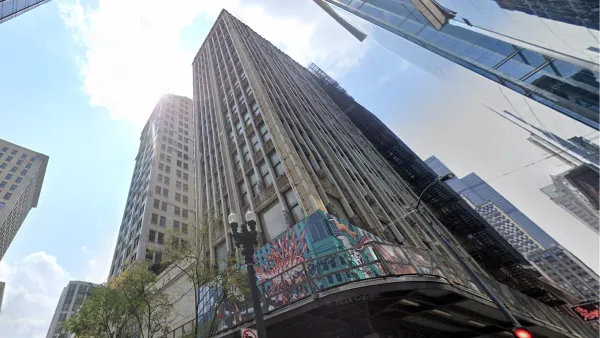
Chicago Towers Recommended for Adaptive Reuse
Once slated for demolition, two historic buildings owned by the federal government will be restored for new uses.

Planetizen Federal Action Tracker
A weekly monitor of how Trump’s orders and actions are impacting planners and planning in America.

The state-sanctioned urbicide of Austin
People don’t kill cities. Freeways do.

US to reduce Colorado River water deliveries to Mexico
A new Colorado Treaty amendment reduces Mexico’s Colorado River water allocation by 250,000 acre feet.

5 New England states march closer to 800 megawatt wind energy project
Securing federal approval for the project may be complicated under the Trump administration, which has historically been hostile towards domestic wind power.

Baltimore to break ground on $50 million Transit Priority Project
The project will bring faster bus trips, safer streets and better bike connections to Baltimore.

Airbnb launches $250 million 'last-dollar financing' housing accelerator, makes first investment in Austin
The company will put $6.4 million towards affordable housing development in Texas’ capital.

FREE Course: Walkable City 1: Why Walkability?
After describing his path towards focusing on walkability as the essence of good planning, Jeff Speck marches through his five principal reasons for making more walkable places.
Reinventing Malls: Planning Alchemy—Turning Gray Fields Into Gold
The course focuses on the opportunities and imperatives that shape reinvention of mall sites.

Eagle County Government
Harvard University Graduate School of Design
Nashville Planning Department
The Architects Foundation
University of Cincinnati Online
The Pocatello Development Authority
The Urban Renewal Agency of the City of Pocatello
Journal of the American Planning Association