A lawsuit by Bird and Lime against the company Scooter Removal highlights the difficult challenges required to reconcile the private interests of new mobility companies with the access to the public realm on which they depend.


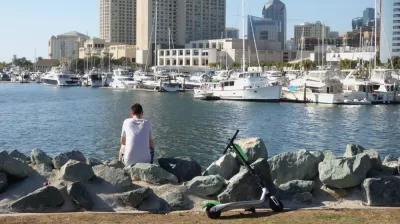
The business model of the San Diego-based company Scooter Removal involves picking rental scooters up off the streets and selling them back to the company that owns them.
Erik Shilling explains:
A company in San Diego co-founded by a former Marine has been scooping up the abandoned scooters that litter city streets owned by the startups Bird and Lime for months, giving some of them back to Bird in November in exchange for more than $40,000. Bird and Lime have since called the company’s activities “ransom,” and a legal battle has begun.
Shilling is reporting that Bird and Lime have filed a lawsuit against Scooter Removal, "arguing that the company’s removal of scooters was in many cases illegal." The article references legal impounding practices as a precedent, and the question of the lawsuit will come down to whether Scooter Removal's business meets the standards met by car impounders.
FULL STORY: Vigilantes Are Taking Scooters Off the Streets of San Diego and Bird and Lime Are Pissed


The Electric Scooter Rebound
The nascent electric scooter rental industry came close to total collapse during the pandemic, but riders are back in bigger numbers than ever and the companies hope to build momentum on growing concerns about the climate impacts of transportation.
E-Scooter Helmet Laws Could Harm Ridership
Transportation experts warn that mandatory helmet laws for shared e-scooters could cripple the nascent industry and discourage casual rides.

E-Scooters Are Coming to New York City
Major micromobility comapnies and lesser known competitors are stating their interest to take part in a New York City e-scooter pilot program slated for Spring 2021.

Planetizen Federal Action Tracker
A weekly monitor of how Trump’s orders and actions are impacting planners and planning in America.

The state-sanctioned urbicide of Austin
People don’t kill cities. Freeways do.

US to reduce Colorado River water deliveries to Mexico
A new Colorado Treaty amendment reduces Mexico’s Colorado River water allocation by 250,000 acre feet.

5 New England states march closer to 800 megawatt wind energy project
Securing federal approval for the project may be complicated under the Trump administration, which has historically been hostile towards domestic wind power.

Baltimore to break ground on $50 million Transit Priority Project
The project will bring faster bus trips, safer streets and better bike connections to Baltimore.

Airbnb launches $250 million 'last-dollar financing' housing accelerator, makes first investment in Austin
The company will put $6.4 million towards affordable housing development in Texas’ capital.

FREE Course: Walkable City 1: Why Walkability?
After describing his path towards focusing on walkability as the essence of good planning, Jeff Speck marches through his five principal reasons for making more walkable places.
Reinventing Malls: Planning Alchemy—Turning Gray Fields Into Gold
The course focuses on the opportunities and imperatives that shape reinvention of mall sites.

Eagle County Government
Harvard University Graduate School of Design
Nashville Planning Department
The Architects Foundation
University of Cincinnati Online
The Pocatello Development Authority
The Urban Renewal Agency of the City of Pocatello
Journal of the American Planning Association