Gretchen Whitmer has outdone the new Democratic governor of Minnesota, Tim Walz, who proposed a 20 cents tax hike. Like Walz's budget, gas tax revenue would replace some general funds directed to road spending, thus benefiting other state programs.


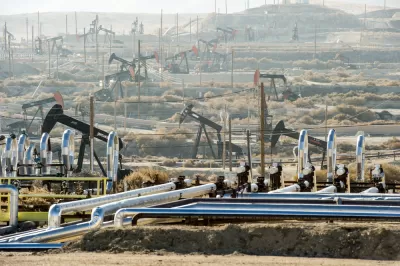
"Whitmer's budget calls for a 45-cent-per-gallon increase in the fuel tax, to be introduced in three steps between Oct. 1 of this year and Oct. 1, 2020," report Paul Egan and Kathleen Gray for the Detroit Free Press on March 5.
Whitmer estimates the added fuel tax would raise an extra $2.5 billion. Instead of putting that money through the regular formula under Public Act 51 of 1951, under which most of the road money goes to local road agencies, a greater proportion would be spent on the most heavily traveled roads, according to budget documents.
Angie Schmitt of Streetsblog USA connects the increase in the gas tax to investing in sprawl-inducing highway projects (posted here March 14), such as the I-75 Modernization (mega) Project (posted here) within Oakland County and the I-94 Modernization Project within Detroit. This nexus begs the question, would opposing the gas tax increase mean those projects don't receive funding?
- Without examining Whitmer's budget documents, we don't know how much gas tax revenue will be directed to these two "reconstruct and widen" highway projects.
- Both are long-term projects started well before Whitmer took office this year, and both will no doubt continue with or without the additional state gas tax revenue included in Whitmer's budget proposal. For example, Crain's Detroit Business reported in June 2015:
Rather than asking Congress for a project-specific lump sum, the Michigan Department of Transportation will rely on its regular annual federal transportation funding to pay for a $3 billion widening and repair of I-94 through Detroit. That’s why the project, slated to see freeway construction work begin in 2019, isn’t expected to be finished until September 2036.
One need also examine the relationship between funding sources and transportation projects. Americans must still file and pay income taxes even if they don't' like how the federal government uses their taxes. Unlike most income taxes, which go to a government's general fund unless otherwise directed, transportation taxes are often directed by statute or the state's constitution to transportation programs, usually roads, a term known as a transportation lockbox.
However, when dedicated funding is insufficient, these projects will often tap the general fund, competing with programs that have no dedicated sources of revenue, which brings us back to Whitmer's budget.
"By using the new revenue to fund roads, the state would reclaim up to $600 million in general fund spending that had been targeted for roads under the 2015 funding plan, add Egan and Gray. That amounts to 24 percent of the gas tax revenue of $2.5 billion. Minn. Gov. Tim Walz's proposed budget gas tax hike of 20-cents per gallon would reclaim $450 million for other state-backed programs.
Michigan's gas tax
The current gas tax totals 38.41 cents per gallon as of Jan. 1, according to API, 4.63 cents above the national average, is the ninth highest in the nation after Pennsylvania, California, Washington, Hawaii, N.Y., Indiana, Florida and New Jersey. If the Republican-controlled legislature were to approve the entire 45-cents tax, which would seem highly unlikely, the gas tax in the Wolverine State would be almost a quarter higher than the Keystone State.
"Michigan fuel taxes last increased on Jan. 1, 2017, as a result of the 2015 legislation, reports Egan on March 7, the first increase in 20 years. "The tax on regular fuel increased 7.3 cents per gallon and the tax on diesel fuel increased 11.3 cents per gallon, equalizing both taxes at 26.3 cents per gallon." Sales tax is applied to fuel prices, resulting in higher total state fuel taxes.
To his credit, Egan explains how the 2015 legislation dedicated general fund revenue to roads, something that Whitmer wants to undo.
Finally, the package earmarked specified annual amounts of income tax revenues for road repairs, starting with $264 million this year and increasing to $600 million in 2021 and every year after that.
Whitmer wants roads paid for primarily through user fees, and her plan would replace the general fund money earmarked for roads under the 2015 plan with gas tax money.
An earlier transportation funding proposal "by the new Michigan Consensus Policy Project, a bipartisan group of former state legislative leaders, would raise the state’s regular and diesel gas taxes by 5 cents per year for nine years to raise nearly $2.5 billion for roads," according to the Bridge, Michigan's nonpartisan, nonprofit news source.
Related in Planetizen:
-
Where Gas Taxes Only Serve the Needs of More Sprawl, March 14, 2019
-
Michigan DOT Set to Launch $1 Billion Highway Widening Project, February 25, 2016
-
Michigan Gov. Rick Snyder to Sign 7.3-cent Gas Tax Hike Today, November 10, 2015
FULL STORY: Whitmer reveals Michigan budget proposals: What to know

Michigan DOT Set to Launch $1 Billion Highway Widening Project
The Michigan Department of Transportation will start a $1 billion, 14-year construction project later this year, on I-75, north of Detroit. Some community members are still wondering if the project is necessary.
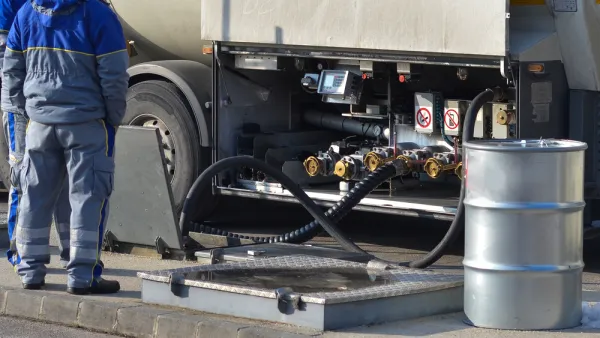
A Small but Significant Fuel Tax Hike for Arkansas
The 3 cent gas tax and 6 cent diesel tax increases are among the lowest of any states that have hiked fuel taxes since 2013, but combined with other revenue sources in the legislation, plus an upcoming sales tax ballot measure, it's historic.
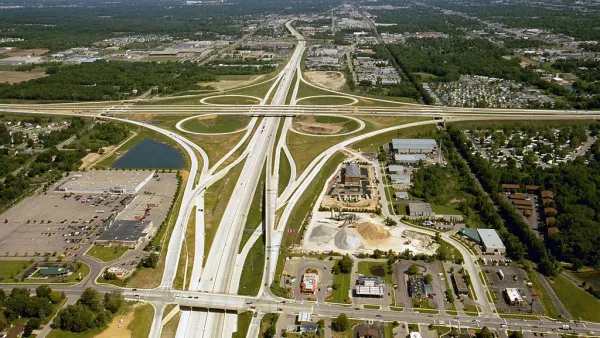
Where Gas Taxes Only Serve the Needs of More Sprawl
The gas tax, suburban highway spending cycle is both self-serving and self-destructive, according to this article.

Planetizen Federal Action Tracker
A weekly monitor of how Trump’s orders and actions are impacting planners and planning in America.

The state-sanctioned urbicide of Austin
People don’t kill cities. Freeways do.

US to reduce Colorado River water deliveries to Mexico
A new Colorado Treaty amendment reduces Mexico’s Colorado River water allocation by 250,000 acre feet.

Baltimore to break ground on $50 million Transit Priority Project
The project will bring faster bus trips, safer streets and better bike connections to Baltimore.

Airbnb launches $250 million 'last-dollar financing' housing accelerator, makes first investment in Austin
The company will put $6.4 million towards affordable housing development in Texas’ capital.

Guerilla urbanists are building DIY bus stop benches in Chicago
A before-and-after of one of the bus stops with a new bench. The new benches are not officially sanctioned or permitted, but the residents who placed them hope they will be the start of a network of DIY benches across the city.

FREE Course: Walkable City 1: Why Walkability?
After describing his path towards focusing on walkability as the essence of good planning, Jeff Speck marches through his five principal reasons for making more walkable places.
Reinventing Malls: Planning Alchemy—Turning Gray Fields Into Gold
The course focuses on the opportunities and imperatives that shape reinvention of mall sites.

Eagle County Government
Harvard University Graduate School of Design
Nashville Planning Department
The Architects Foundation
University of Cincinnati Online
The Pocatello Development Authority
The Urban Renewal Agency of the City of Pocatello
Journal of the American Planning Association