In Philadelphia, letting pedestrians cross at more places helps challenge the norms that privilege cars.


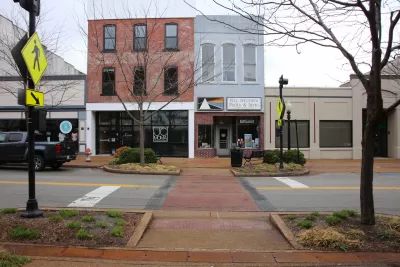
Inga Saffron writes about mid-block crosswalks in Philadelphia, a strategy that helps prioritize pedestrians by giving them more locations to cross streets. Corner crosswalks are designed around vehicle traffic, while mid-block crosswalks better reflect how and where people want to use streets.
So far, many of these crosswalks in Philadelphia have been private projects. Comcast is behind one of the best, says Saffron — a mid-block crosswalk connecting two towers that many employees move between:
Flashing lights attached to poles alert motorists to slow down as they approach the unusual crossing. The street on both sides of the walkway also has been paved with rough granite blocks, another traffic-calming measure. Instead of simply painting black-and-white stripes in the street, Comcast installed bricks treated with a glazed, reflective coating in those colors.
The city says the budget for such street improvements is limited, and justifying the investment in the crosswalks in Philadelphia neighborhoods has been hard. Still, transit advocates say that they are needed at locations throughout the city where crossing is dangerous or pedestrians have limited options.
"It’s always been human nature to seek out the shortest path between Point A and Point B. If Philadelphia is going to be the walkable city we claim it is, then we have an obligation to make it safe, no matter where people insist on crossing the street," argues Saffron.
Read the full story: Go ahead, cross in the middle of the block

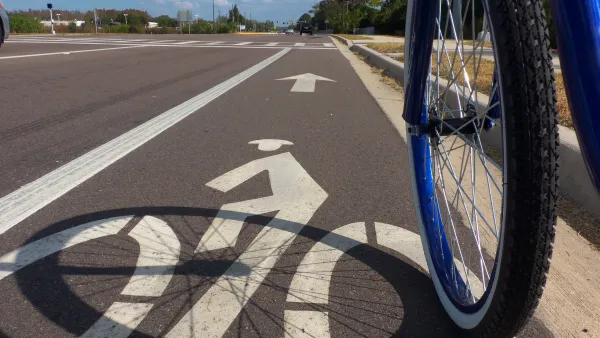
How 'Bicycle Friendly' is Gainesville?
Despite a recent designation from the League of American Bicyclists, one writer argues that the city's infrastructure is failing to protect pedestrians and cyclists from dangerous car traffic.
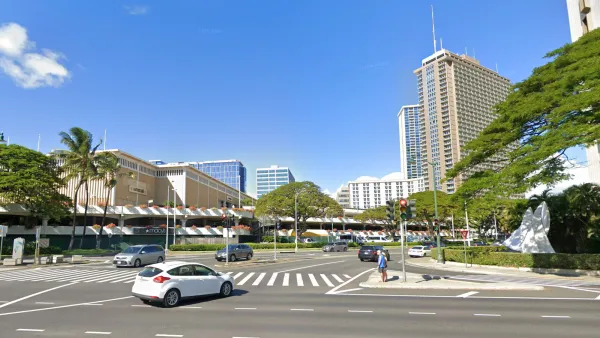
Hawaii DOT takes action after reporters call attention to dangerous crosswalk
The state made changes to a treacherous intersection after reporting revealed that traffic light timing was posting a threat to pedestrians.
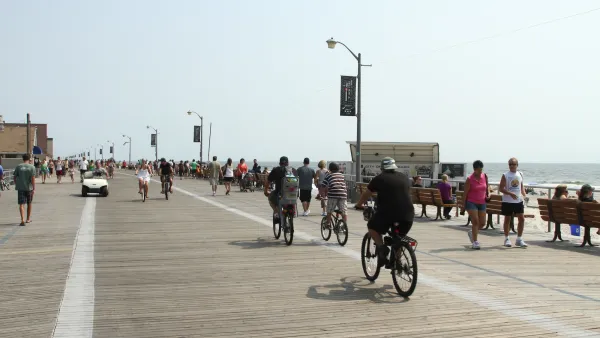
Long Beach, New York pledges $600K for pedestrian safety
The city will use $500,000 in community block development grant funding to improve pedestrian infrastructure.

Planetizen Federal Action Tracker
A weekly monitor of how Trump’s orders and actions are impacting planners and planning in America.

The state-sanctioned urbicide of Austin
People don’t kill cities. Freeways do.

US to reduce Colorado River water deliveries to Mexico
A new Colorado Treaty amendment reduces Mexico’s Colorado River water allocation by 250,000 acre feet.

Nation's most wind-powered state turns to coal as data centers increase energy demand
For the first time in decades, Iowa has increased its generation of coal power.

NYC cools commuters with city's first rain garden above a bus stop
New York City officials say the plants in the rain garden can absorb 16 gallons of rainwater during heavy storms.

Brightline West’s future may rely on $6 billion federal loan
The company has until Nov. 2 to make a $400 million equity investment into its proposed high-speed rail line.

FREE Course: Walkable City 1: Why Walkability?
After describing his path towards focusing on walkability as the essence of good planning, Jeff Speck marches through his five principal reasons for making more walkable places.
Reinventing Malls: Planning Alchemy—Turning Gray Fields Into Gold
The course focuses on the opportunities and imperatives that shape reinvention of mall sites.

Eagle County Government
Harvard University Graduate School of Design
Nashville Planning Department
The Architects Foundation
University of Cincinnati Online
The Pocatello Development Authority
The Urban Renewal Agency of the City of Pocatello
Journal of the American Planning Association