Chicago is the home of a political movement to protect birds from the hazards presented by glass-sheathed modern buildings.


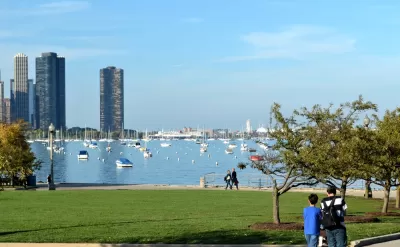
Blair Kamin reports on two new pieces of legislation, both originating from Chicago-area elected officials, to require bird-safe construction on new buildings.
Ald. Brian Hopkins, 2nd, proposed a local ordinance in January called the Bird Friendly Design ordinance, with backing from a coalition of groups calling itself Bird Friendly Chicago.
Quigley’s legislation, the Bird-Safe Buildings Act, would apply to public buildings constructed, significantly renovated or bought by the U.S. General Services Administration, the federal government’s landlord.
Kamin explains some of the details of that proposed local ordinance:
One of its measures would mandate that at least 95 percent of a building’s facade, from the ground to a height of 36 feet, not be sheathed in glass or have bird-safe glass with etching, frosting or mounted elements like screens.
Another item in the proposed ordinance would require that nonessential exterior lighting be automatically shut off between 11 p.m. and sunrise. Interior landscaping should “always” be placed behind bird-friendly exterior glass, the proposal says.
Rep. Mike Quigley (D-Ill) has proposed a separate piece of legislation at the federal level called the Bird-Safe Buildings Act that "would apply to public buildings constructed, significantly renovated or bought by the U.S. General Services Administration, the federal government’s landlord."
FULL STORY: Spectacular skylines can also be bird killers. Here's how a proposed Chicago ordinance is trying to help.


New York Largest U.S. City to Require Bird-Friendly Building Materials
The New York City Council approved Proposed Initiative 1482B by an overwhelming margin, ensuring bird-friendly design and construction practices in the largest U.S. city.
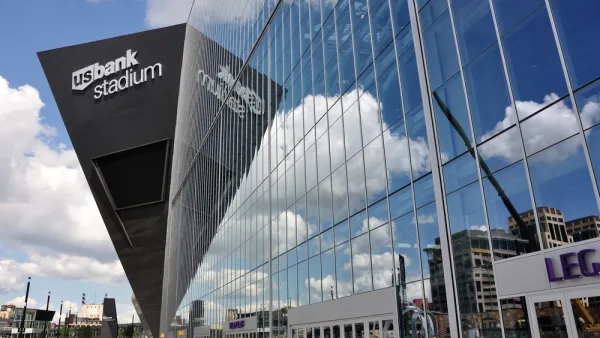
U.S. Bank Stadium: Home to Super Bowl LII and a Death Trap for Migratory Birds
This isn't a joke about the Philadelphia Eagles. This story is about the deadly consequences of planning and architecture decisions.
State Bill Would Add TIFs Along Transit Lines in Chicago
Expanded use of tax increment financing is on the table in Chicago—a city that invests less than its peers on building and running transit.

The state-sanctioned urbicide of Austin
People don’t kill cities. Freeways do.

US to reduce Colorado River water deliveries to Mexico
A new Colorado Treaty amendment reduces Mexico’s Colorado River water allocation by 250,000 acre feet.

New Jersey’s second-largest city bans standalone data centers
Jersey City will continue to allow co-location facilities, such as those meant for research institutions that store their own data.

Amtrak not solely to blame for New Jersey commuter rail's unreliability, report finds
A new study from the Garden State Initiative found that NJ Transit’s budget grew 20% across a 4 year period, but reliability declined significantly over the same period.

EPA erases limits on planet-warming pollution from power plants
Under Monday’s plan, power plants would still have some limits on how much mercury, arsenic and other contaminants they can emit.

Phoenix announces new on-demand transit service, more frequent RAPID buses
Both new services will launch in October, and are part of Phoenix's Project Effective Access Solutions for Easing Congestion.

FREE Course: Walkable City 1: Why Walkability?
After describing his path towards focusing on walkability as the essence of good planning, Jeff Speck marches through his five principal reasons for making more walkable places.
Reinventing Malls: Planning Alchemy—Turning Gray Fields Into Gold
The course focuses on the opportunities and imperatives that shape reinvention of mall sites.

Eagle County Government
Harvard University Graduate School of Design
Nashville Planning Department
The Architects Foundation
University of Cincinnati Online
The Pocatello Development Authority
The Urban Renewal Agency of the City of Pocatello
Journal of the American Planning Association