The New York City Council approved Proposed Initiative 1482B by an overwhelming margin, ensuring bird-friendly design and construction practices in the largest U.S. city.



The New York City Council "passed a new regulation mandating the use of 'bird-friendly material' in all new construction projects," according to an article by Shawn Simmons.
"Conservationists hope the new bill will curb the number of birds killed annually by collisions with the city’s buildings, a figure that currently ranges between 90,000 and 230,000," adds Simmons of the legislation approved on December 10, 2019.
The new requirements "will require 90 percent of the first 75 feet of new buildings to be constructed with materials that are easier for birds to identify as obstacles."
John Rowden, director of community conservation at the National Audubon Society, is quoted in the article describing how glass contributes to bird collisions. New York City poses significant risk to migratory birds because of its location along the Atlantic Flyway, one of four major migratory routes around the world, according to Simmons.
A separate article by Caroline Spivack broke the news on December 10, providing more detail on the political context for the bill, making New York City the largest U.S. city to require bird-friendly construction materials.
Read the full story: NYC passes legislation requiring bird-friendly construction


U.S. Bank Stadium: Home to Super Bowl LII and a Death Trap for Migratory Birds
This isn't a joke about the Philadelphia Eagles. This story is about the deadly consequences of planning and architecture decisions.
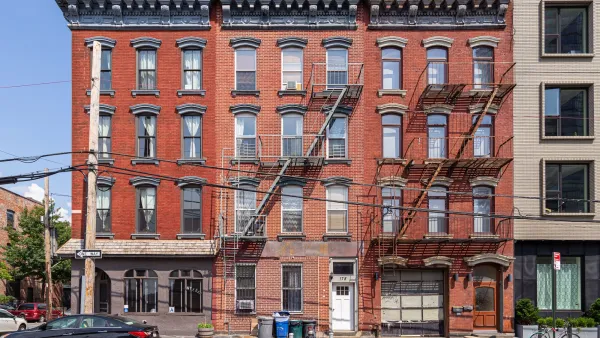
NYC Puts 250 Most Distressed Apartment Buildings on Enhanced Oversight List
The city’s Alternative Enforcement Program prioritizes buildings with the most unaddressed code violations, allowing the city to make repairs where needed.
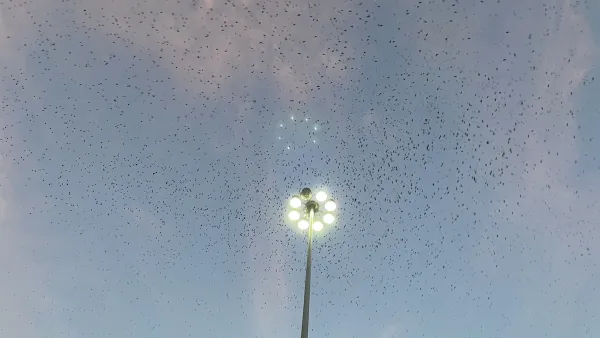
Purple Martins Call Nashville Home. Some Wish They Wouldn't
Each year, the city plays host to hundreds of thousands of birds on their way to and from South America.

Planetizen Federal Action Tracker
A weekly monitor of how Trump’s orders and actions are impacting planners and planning in America.

California plans to bury El Niño’s downpour
If the state plays its cards right, it may be able to store a billion acre-feet of El Niño’s water in aquifers.

Desperate measures: Advocates weigh draining Lake Powell to fill Colorado River
Draining the reservoir could reduce evaporation losses by a couple hundred thousand acre-feet.

California city breaks ground on transit connector
The project includes three mobility hubs and a pedestrian bridge.

After public outcry, Massachusetts city releases housing development tracker
Cambridge’s tracker currently shows 250 housing projects in various stages of development.

40 years after approval, Chicago breaks ground on new park
The park honors Jean Baptiste Point du Sable, the city’s first permanent non-native settler.

FREE Course: Walkable City 1: Why Walkability?
After describing his path towards focusing on walkability as the essence of good planning, Jeff Speck marches through his five principal reasons for making more walkable places.
Reinventing Malls: Planning Alchemy—Turning Gray Fields Into Gold
The course focuses on the opportunities and imperatives that shape reinvention of mall sites.

City of Rosemead
Rutgers University, Edward J. Bloustein School of Planning and Public Policy
One Hundred Miles
Hunter College, City University of New York (CUNY)
The Architects Foundation
University of Cincinnati Online
City of Cambridge
Montrose County
The Pocatello Development Authority