In a city where bus ridership has been declining for years, Pace has found success on the expressway.


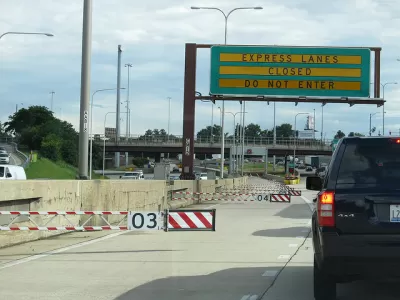
Pace’s bus ridership is down 3% year over year, but its service on expressways continues to grow. "The good news is that some routes are doing great — specifically, the long-haul, express service on interstates 55 and 90," Mary Wisniewski reports for the Chicago Tribune. These routes have seen the speeds of their buses improve with infrastructure improvements on the toll ways and with more frequency. "The service on I-55 started in 2011 with 400 people daily, and is now at 3,000," Wisniewski reports.
Pace officials would like to continue to grow the service but say they need capital to continue the momentum. "To grow its express routes and make other improvements, Donahue said Pace need Springfield to pass a capital bill, which it hasn’t done in 10 years," Wisniewski writes. Illinois' previous governor, Bruce Rauner, was not willing to pass a capital bill. Transit advocates hope the new governor, J. B. Pritzker, will be more amenable to the idea.
Read the full story: Going the distance — Pace wants more buses on expressways

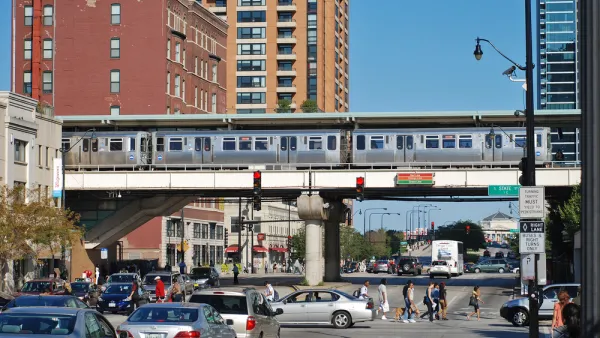
Study: Loss of Public Transit in Chicago Would Have ‘Severe’ Mobility, Economic Consequences
The first-of-it’s kind study found that without public transit, Chicago would lose an estimated $35 billion in economic activity annually and the quality of life of residents, particularly women and low-income groups, would take a major hit.
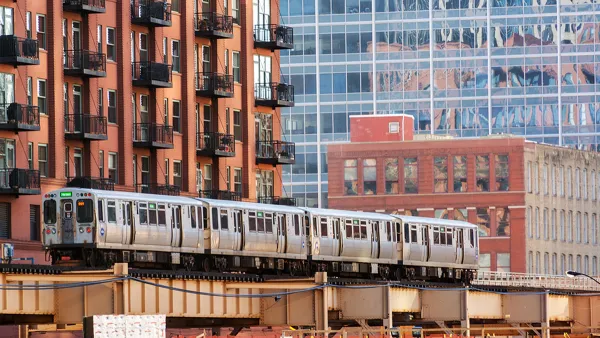
Advocating for Reduced Transit Fairs for Low-Income Riders in Chicago
A new report by the Active Transportation Alliance builds the case for reduced transit fares on all three transit systems in the Chicago region.
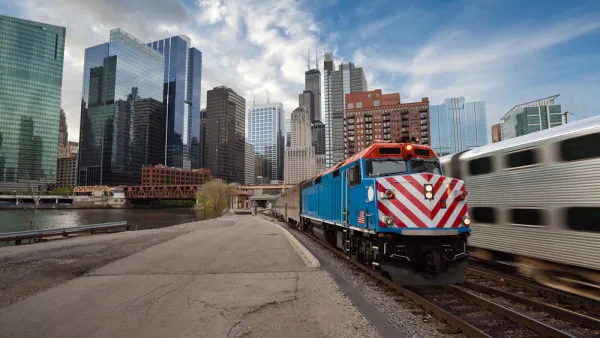
Op-Ed: Metra Expansion May Encourage Sprawl
The $45 billion transportation bill approved by the Illinois Legislature ended up including more public transit funding than it originally offered, but a Kendall County Metra project raises questions.

Planetizen Federal Action Tracker
A weekly monitor of how Trump’s orders and actions are impacting planners and planning in America.

The state-sanctioned urbicide of Austin
People don’t kill cities. Freeways do.

US to reduce Colorado River water deliveries to Mexico
A new Colorado Treaty amendment reduces Mexico’s Colorado River water allocation by 250,000 acre feet.

Brightline West’s future may rely on $6 billion federal loan
The company has until Nov. 2 to make a $400 million equity investment into its proposed high-speed rail line.

LA Metro’s ultimatum: no extra buses for LA28 if federal funding isn’t imminently secured
If Metro does not provide additional buses, LA28 organizers will have to find a new way to manage Olympic traffic. LA28’s budget does not include a line item for transit.

Colorado’s Largest Data Center Could Rise Next to Homes — Without a Public Hearing
The proposed campus would consume 11 times the power of Denver International Airport; as it has across the country, opposition mounts.

FREE Course: Walkable City 1: Why Walkability?
After describing his path towards focusing on walkability as the essence of good planning, Jeff Speck marches through his five principal reasons for making more walkable places.
Reinventing Malls: Planning Alchemy—Turning Gray Fields Into Gold
The course focuses on the opportunities and imperatives that shape reinvention of mall sites.

Eagle County Government
Harvard University Graduate School of Design
Nashville Planning Department
The Architects Foundation
University of Cincinnati Online
The Pocatello Development Authority
The Urban Renewal Agency of the City of Pocatello
Journal of the American Planning Association