Citi Bike's new owner is funding a massive expansion of the bike share system. Meanwhile ,City Hall is prepping for a battle over electric assist bikes and scooters.


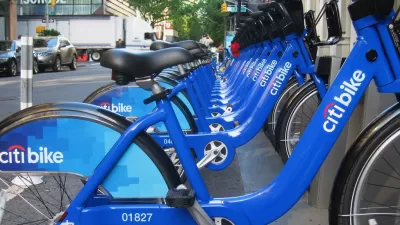
"Citi Bike will triple its current fleet of 12,000 bikes — and double the system’s coverage area — as part of a five-year, $100-million investment," reports Gersh Kuntzman.
The investment comes as new owner, Lyft, invests in the expansion of its acquisition. The system is currently limited to most of Manhattan and tiny slivers of Queens and Brooklyn, an area totaling 30 square miles. The expansion will raise that total service area to 65 square miles.
The investment will also expand the deployment of electric-assist bicycles, or e-bikes, though the total number is not clear. On a related note, a package of bills recently introduced in the New York City Council would "legalize most forms of the so-called e-bikes," according to an article by J. David Goodman, as well as electric scooters. That legislation, "is likely to set off a public confrontation" with Mayor Bill de Blasio, according to Goodman.
Read the full story: BREAKING: Citi Bike To Triple Fleet Size And Double Zone as Lyft Coughs Up $100M

Keeping NYC’s E-Bike Fleet Charged and Running
How a crew of hundreds maintains one of the world’s largest bike share systems.
Citi Bike’s New Contract: What You Need to Know
Double the e-bikes, but no system expansion: an outline of what riders can expect from Citi Bike’s new agreement with the city.
Why Can’t Citi Bike Keep its E-Bikes Running?
Citi Bike’s e-bikes are becoming too popular for their own good as Lyft struggles to keep up with maintenance and charging.

Planetizen Federal Action Tracker
A weekly monitor of how Trump’s orders and actions are impacting planners and planning in America.

California plans to bury El Niño’s downpour
If the state plays its cards right, it may be able to store a billion acre-feet of El Niño’s water in aquifers.

Desperate measures: Advocates weigh draining Lake Powell to fill Colorado River
Draining the reservoir could reduce evaporation losses by a couple hundred thousand acre-feet.

California city breaks ground on transit connector
The project includes three mobility hubs and a pedestrian bridge.

After public outcry, Massachusetts city releases housing development tracker
Cambridge’s tracker currently shows 250 housing projects in various stages of development.

40 years after approval, Chicago breaks ground on new park
The park honors Jean Baptiste Point du Sable, the city’s first permanent non-native settler.

FREE Course: Walkable City 1: Why Walkability?
After describing his path towards focusing on walkability as the essence of good planning, Jeff Speck marches through his five principal reasons for making more walkable places.
Reinventing Malls: Planning Alchemy—Turning Gray Fields Into Gold
The course focuses on the opportunities and imperatives that shape reinvention of mall sites.

City of Rosemead
Rutgers University, Edward J. Bloustein School of Planning and Public Policy
One Hundred Miles
Hunter College, City University of New York (CUNY)
The Architects Foundation
University of Cincinnati Online
City of Cambridge
Montrose County
The Pocatello Development Authority