Service on a long-awaited BART extension to the Berryessa district in San Jose may be delayed again due to equipment problems.


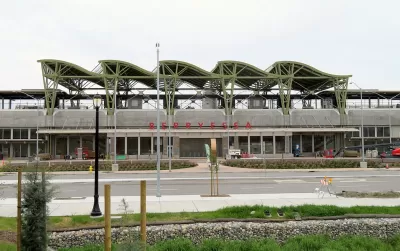
John Woolfolk reports on the status of the Bay Area Rapid Transit extension project from Fremont to San Jose and the additional delays on the horizon. Construction to Berryessa started in April 2012, and service was originally scheduled to begin earlier this year in June. After testing delays, the completion date moved to September 2019. Recent communications equipment problems may now keep the extension from starting up service until December 2019.
While BART will oversee operation of the trains, the Santa Clara Valley Transportation Authority is responsible for construction. This latest delay will involve replacement of the equipment and cost $1.25 million, which VTA anticipates the contractor will cover.
Still, residents grappling with worsening traffic are frustrated by the project’s ongoing delays. Voters passed a tax measure in 2000 to build the extension and approved a second tax in 2008 to fund operating costs. They also approved a third tax in 2016 for a second extension from Berryessa to Santa Clara.
The rest of the project, including tracks and stations, from Fremont to Berryessa is completed. The second-phase extension to Santa Clara is not affected by the Berryessa extension delays and remains on schedule for completion in 2026.
FULL STORY: BART to San Jose delayed again, parts mistake puts Berryessa service at end of 2019

Change of Plans: Transit Funding Priorities Shift in the Silicon Valley
Santa Clara County cities rebel against the agency's proposed plan to spend most of the Measure B funds on a Silicon Valley BART extension.
History in the Making: BART Extension into San Jose Ready for June Opening
Twenty years after voters first approved funding to build a BART extension into the heart of the South Bay Area, the project is finally ready to offer rides to the public.
BART San Jose Extension Faces Delays and Ballooning Costs
The extension to downtown is a complex and ambitious project facing many challenges and questions about feasibility.

Planetizen Federal Action Tracker
A weekly monitor of how Trump’s orders and actions are impacting planners and planning in America.

The state-sanctioned urbicide of Austin
People don’t kill cities. Freeways do.

US to reduce Colorado River water deliveries to Mexico
A new Colorado Treaty amendment reduces Mexico’s Colorado River water allocation by 250,000 acre feet.

5 New England states march closer to 800 megawatt wind energy project
Securing federal approval for the project may be complicated under the Trump administration, which has historically been hostile towards domestic wind power.

Baltimore to break ground on $50 million Transit Priority Project
The project will bring faster bus trips, safer streets and better bike connections to Baltimore.

Airbnb launches $250 million 'last-dollar financing' housing accelerator, makes first investment in Austin
The company will put $6.4 million towards affordable housing development in Texas’ capital.

FREE Course: Walkable City 1: Why Walkability?
After describing his path towards focusing on walkability as the essence of good planning, Jeff Speck marches through his five principal reasons for making more walkable places.
Reinventing Malls: Planning Alchemy—Turning Gray Fields Into Gold
The course focuses on the opportunities and imperatives that shape reinvention of mall sites.


Eagle County Government
Harvard University Graduate School of Design
Nashville Planning Department
The Architects Foundation
University of Cincinnati Online
The Pocatello Development Authority
The Urban Renewal Agency of the City of Pocatello
Journal of the American Planning Association