A state program in New York s provides financial support for investors who adaptively reuse abandoned buildings in post-industrial towns.


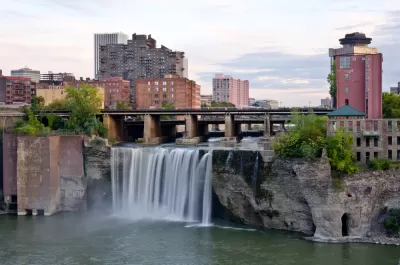
New York State's "Neighbors for Neighborhoods" program is gaining steam in the state's post-industrial cities, reports Jared Brey.
"The Neighbors for Neighborhoods program provides financial support for New York residents to renovate abandoned properties in their neighborhoods for affordable rental housing," according to Brey.
After sharing the model of success from the Newburgh Community Land Bank that lead to the expansion of the neighbors for neighborhoods program around the state, Brey shares news of proposals for the program in cities like Schenectady and Rochester.
The article includes a lot more detail on how the state of New York established Neighbors for Neighborhoods, the kinds of benefits the program is expected to deliver, and the kinds of risks it mitigates.
FULL STORY: Reactivating Abandoned Buildings through Local Ownership in Smaller Cities

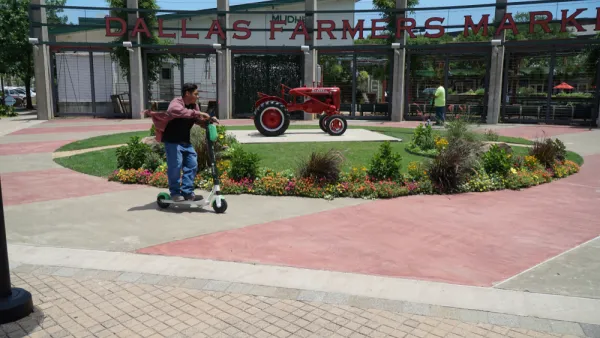
Development Momentum for the East Side of Dallas
In addition to Uber announcing a major expansion to the Deep Ellum neighborhood in Dallas, other projects are popping up all over the East Side of Dallas, including an entirely new community of 40 homes.
1,000 Parcels Available for Redevelopment in Highland Park, Michigan
Highland Park, Michigan, a former hub of the auto industry, is looking for a massive redevelopment plan to revitalize the city.
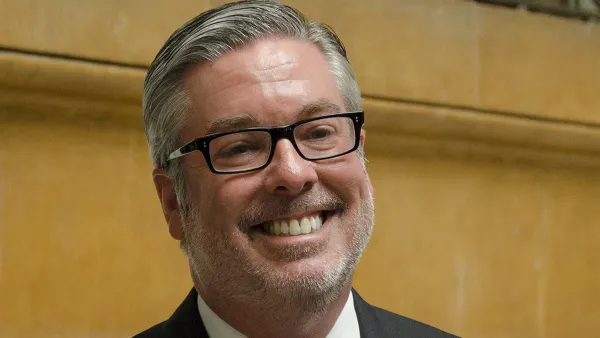
The College President With the Sterling Redevelopment Résumé
John A. Fry lacks a terminal degree, but what he doesn't lack is land use and redevelopment know-how. Drexel University in Philadelphia is the latest to employ his talents.

Planetizen Federal Action Tracker
A weekly monitor of how Trump’s orders and actions are impacting planners and planning in America.

The state-sanctioned urbicide of Austin
People don’t kill cities. Freeways do.

US to reduce Colorado River water deliveries to Mexico
A new Colorado Treaty amendment reduces Mexico’s Colorado River water allocation by 250,000 acre feet.

Baltimore to break ground on $50 million Transit Priority Project
The project will bring faster bus trips, safer streets and better bike connections to Baltimore.

Airbnb launches $250 million 'last-dollar financing' housing accelerator, makes first investment in Austin
The company will put $6.4 million towards affordable housing development in Texas’ capital.

Guerilla urbanists are building DIY bus stop benches in Chicago
A before-and-after of one of the bus stops with a new bench. The new benches are not officially sanctioned or permitted, but the residents who placed them hope they will be the start of a network of DIY benches across the city.

FREE Course: Walkable City 1: Why Walkability?
After describing his path towards focusing on walkability as the essence of good planning, Jeff Speck marches through his five principal reasons for making more walkable places.
Reinventing Malls: Planning Alchemy—Turning Gray Fields Into Gold
The course focuses on the opportunities and imperatives that shape reinvention of mall sites.

Eagle County Government
Harvard University Graduate School of Design
Nashville Planning Department
The Architects Foundation
University of Cincinnati Online
The Pocatello Development Authority
The Urban Renewal Agency of the City of Pocatello
Journal of the American Planning Association