In post-bankruptcy Detroit, planner Maurice Cox and his interdisciplinary team are making vacancy an asset, revitalizing through preservation, and listening to residents who know the city the best.


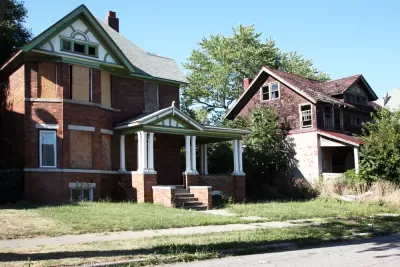
Maurice Cox grew up in Brooklyn, a borough whose name has since become a global shorthand for gentrification. An urban designer, architectural educator, and former mayor of the City of Charlottesville, VA, in 2015 Cox became head of the planning department of Detroit, where he hopes to prevent the forces that have reshaped his childhood home from taking over the Motor City. The city’s population peaked at 1.8 million, but has less than half as many residents today; Cox is using design to catalyze growth that’s incremental and closely in line with the city’s strong sense of self. This means making the most of an abundance of vacant land and listening closely to what residents have to say. Below, Cox speaks with Marc Norman about plans and projects underway, preserving Black spaces, and how Detroit might serve as a model for other cities in the 21st century.
Read the full story: Growing in the Gaps
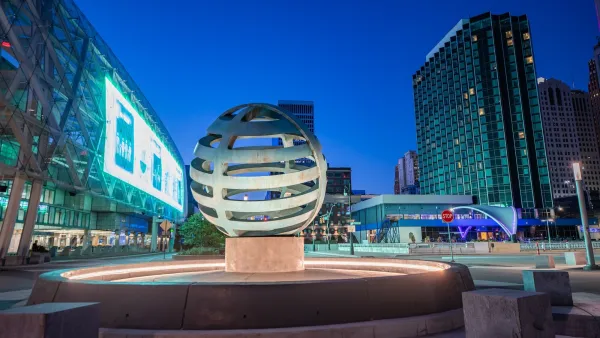
APA conference draws 4,000 urban planners to Detroit this weekend
The annual conference brings together planners for a weekend of panels, discussions and tours.
Could Detroit Rise Again?
Detroit has become our most notorious story of urban collapse. But reporter Matthew Power suggests that we consider the city's official motto: "It shall rise from the ashes."

Learning loss and urban schools, part 2
Did test scores in progressive cities drop more post-COVID than test scores in moderate ones?

Washington state to charge fee to drivers with fuel-efficient cars
Revenue from the fee will go towards supporting the state’s highways.

Illinois considers spending $1 billion in taxpayer money on data center
A quantum computing campus and data center are currently under construction in Chicago.

Trump to blast ‘hydrocarbon highway’ through ‘world’s longest art gallery’
Environmental and historic preservation groups are suing to stop the project.

Boston City Council votes to no longer mandate parking in residential developments
The Boston Zoning Commission still needs to approve the proposal.

Passengers in New York, California lift off in air taxis
Two air taxi companies have received a Special Airworthiness Market Survey Certificate, which allows them to service passengers.

MTA to upgrade subway signals for entire network by 2050
This is the first time New York City has planned to modernize subway signals in the Bronx.

FREE Course: Walkable City 1: Why Walkability?
After describing his path towards focusing on walkability as the essence of good planning, Jeff Speck marches through his five principal reasons for making more walkable places.
Reinventing Malls: Planning Alchemy—Turning Gray Fields Into Gold
The course focuses on the opportunities and imperatives that shape reinvention of mall sites.

City of Charlotte
City of Rosemead
Rutgers University, Edward J. Bloustein School of Planning and Public Policy
University of Michigan School for Environment and Sustainability (SEAS)
Hunter College, City University of New York (CUNY)
The Architects Foundation
University District Partnership