Philadelphia offers another regulatory model to respond to the proliferation of dockless bike, ebike, and electric scooter share companies.


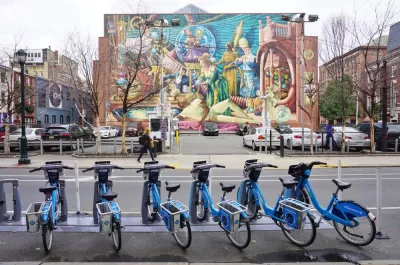
"A bill to regulate and license dockless bike share, electric scooters, and pedal-assist bicycles passed City Council last week, meaning Indego will soon have to share the road with competitors after three years as the city’s only bike-share program," reports Jim Saksa.
The city’s Office of Transportation and Infrastructure Systems will be tasked with creating the regulations and licensing requirements. "OTIS plans to develop those rules over the summer, with the hope of beginning to accept license applications this fall," reports Saksa.
The article provides an introduction to the growing variety of private, dockless bike and scooter share companies. Also of concern is the status of Indego, the city's public bike share system, which launched in 2015 and has reported success with equity outcomes.
FULL STORY: With new licensing scheme in place, Philly could have dockless bike share, e-scooters by next year

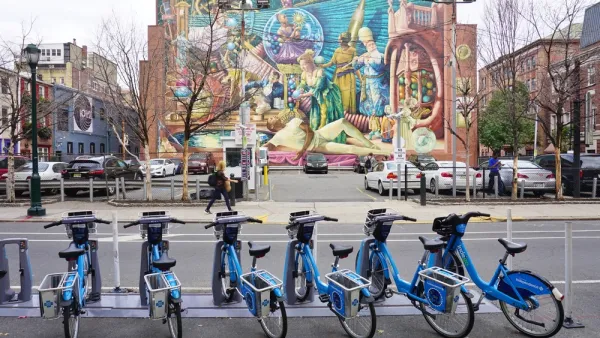
Study: Bikeshare Boosts Riding in Philadelphia
Public health researchers outline the benefits of Philadelphia’s Indego bikeshare network, which has encouraged more residents to choose biking over other transit modes.
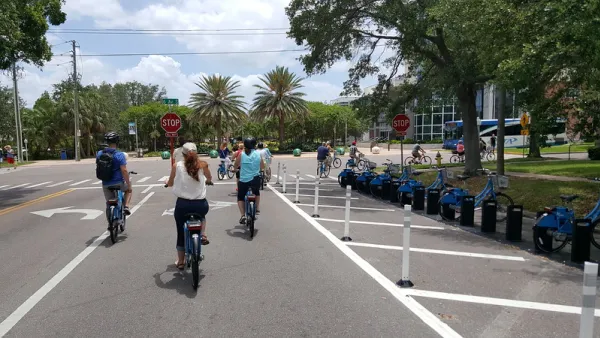
The State of Micromobility
The NACTO Bike Share and Micromobility Initiative yesterday published a bunch of data and infographics to explain the state of shared micromobility, defined as station-based bikeshare, dockless bike share, and scooter share.
Philadelphia's Indego Bikeshare System Reports Equity Successes in its Second Year
With the help of grant funded infrastructure and community outreach programs, Philadelphia's Indego bikeshare system has shown impressive leadership in equitable bikeshare.

Planetizen Federal Action Tracker
A weekly monitor of how Trump’s orders and actions are impacting planners and planning in America.

The state-sanctioned urbicide of Austin
People don’t kill cities. Freeways do.

US to reduce Colorado River water deliveries to Mexico
A new Colorado Treaty amendment reduces Mexico’s Colorado River water allocation by 250,000 acre feet.

Baltimore to break ground on $50 million Transit Priority Project
The project will bring faster bus trips, safer streets and better bike connections to Baltimore.

Airbnb launches $250 million 'last-dollar financing' housing accelerator, makes first investment in Austin
The company will put $6.4 million towards affordable housing development in Texas’ capital.

Guerilla urbanists are building DIY bus stop benches in Chicago
A before-and-after of one of the bus stops with a new bench. The new benches are not officially sanctioned or permitted, but the residents who placed them hope they will be the start of a network of DIY benches across the city.

FREE Course: Walkable City 1: Why Walkability?
After describing his path towards focusing on walkability as the essence of good planning, Jeff Speck marches through his five principal reasons for making more walkable places.
Reinventing Malls: Planning Alchemy—Turning Gray Fields Into Gold
The course focuses on the opportunities and imperatives that shape reinvention of mall sites.

Eagle County Government
Harvard University Graduate School of Design
Nashville Planning Department
The Architects Foundation
University of Cincinnati Online
The Pocatello Development Authority
The Urban Renewal Agency of the City of Pocatello
Journal of the American Planning Association