After decades of planning, the city hopes several huge developments will draw millenials and empty-nesters.


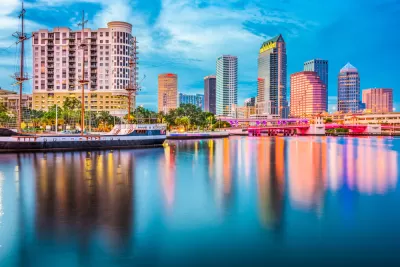
At Curbed, Patrick Sisson writes about what’s happening to the formerly "underutilized, underappreciated, and unattractive" neighborhoods that make up the Tampa waterfront.
Today, Tampa’s waterfront is a magnet for investment: The city’s downtown has become the locus of a wave of construction projects that will bring an estimated $13 billion on investment to the Tampa region through 2022, according to Dodge Data & Analytics.
The city's intentionally New Urbanist redesign is meant to stitch together disconnected attractions and residential areas with parks and other "shoreline destinations."
[Developer James] Nozar has compared all the activity in the once-overlooked urban core as filing in a hole in a doughnut. But it can also be seen as a zipper: The new downtown core, as well as the development heading north along the Hillsborough River, will ideally pull together the neighborhoods on the east and west of the waterway.
Read the full story: Tampa’s multibillion-dollar downtown development boom starts on the waterfront 2

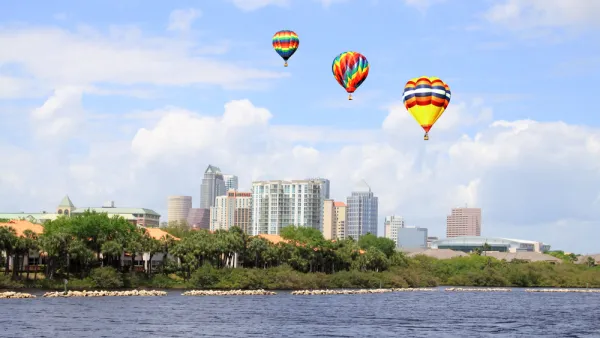
Tampa Approves Big Riverfront Park Renovation
The Tampa City Council approved a big, ambitious park proposal for 23 neglected acres along the Hillsborough River.
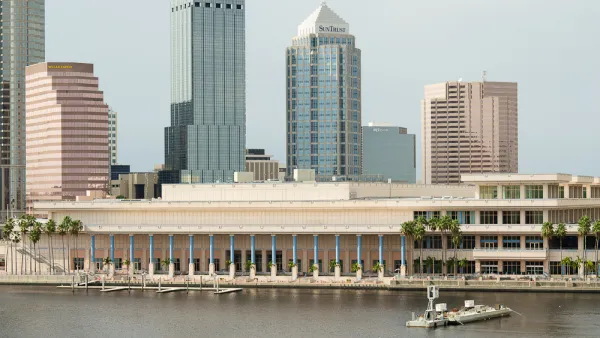
Inside Tampa's New Urbanism Makeover
The Tampa Bay Times dives into New Urbanism with an interview of Jeff Speck and Dvid Dixon about their work on the $1 billion transformation of Tampa's downtown waterfront.
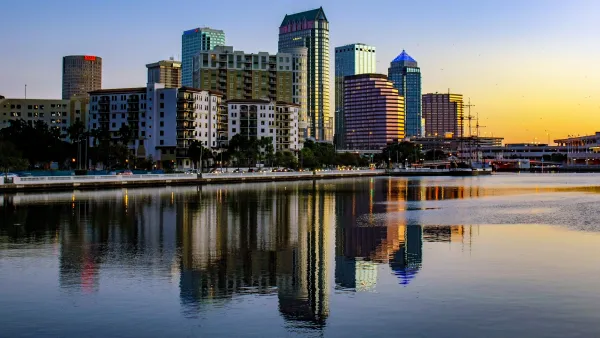
Luxury Housing Construction and Rents on the Rise in Tampa Bay
A majority of new construction permits in the region are for high-end housing, accompanied by an increase in average rents.

Planetizen Federal Action Tracker
A weekly monitor of how Trump’s orders and actions are impacting planners and planning in America.

California plans to bury El Niño’s downpour
If the state plays its cards right, it may be able to store a billion acre-feet of El Niño’s water in aquifers.

Chicago breaks ground on $3 billion megadevelopment
The new neighborhood, titled Foundry Park, will one day host 3,700 residences.

California High-Speed Rail Authority CEO resigns after $600,000 scandal
Under Ian Choudri, the authority used taxpayer dollars to fund first class flights and trips to nightclubs.

Want to study the Missouri River? Soon, you may need unanimous approval from 10 states
Legislation would require 10 governors’ permission to study or build projects moving water outside the basin.

Desperate measures: Advocates weigh draining Lake Powell to fill Colorado River
Draining the reservoir could reduce evaporation losses by a couple hundred thousand acre-feet.

FREE Course: Walkable City 1: Why Walkability?
After describing his path towards focusing on walkability as the essence of good planning, Jeff Speck marches through his five principal reasons for making more walkable places.
Reinventing Malls: Planning Alchemy—Turning Gray Fields Into Gold
The course focuses on the opportunities and imperatives that shape reinvention of mall sites.

City of Rosemead
Rutgers University, Edward J. Bloustein School of Planning and Public Policy
One Hundred Miles
Hunter College, City University of New York (CUNY)
The Architects Foundation
University of Cincinnati Online
City of Cambridge
Montrose County
The Pocatello Development Authority