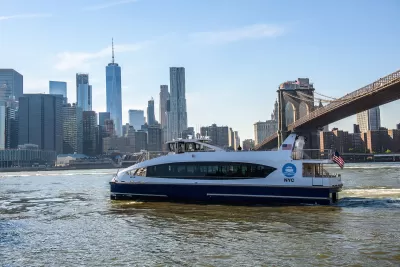
NYC Ferry, which opened in May 2017, would double in size if Mayor Bill de Blasio's budget proposal moves forward.


[Updated: This article has been updated to correct an error in the headline.]
New York City Mayor Bill de Blasio has announced a new budget proposal that would allocate $300 million to double the size of the NYC Ferry system, reports Will Bredderman.
The idea of expanding the NYC Ferry system has already met with criticism for taking focus away from needed improvements at the MTA.
But the New York City Economic Development Corp., which de Blasio controls, says that each passenger's voyage—though priced at $2.75 to match subway and bus fares—will still require a $6.60 taxpayer subsidy. This is several times larger than the government's cost for each ride on the subway system, which carries between 5 million and 6 million passengers every day. Critics also say the ferries favor waterfront communities that are often more affluent than the average inland enclave.
While Mayor de Blasio has found this $300 million for a ferry service he obviously sees as part of his legacy, his administration remains resistant to providing additional city support for the state-run MTA.
The council has pushed the mayor to set aside $212 million from the budget to finance reduced-cost MetroCards for low-income New Yorkers. The mayor again called this a "good idea," but dismissed it as extra city funding for the MTA, which he finds especially unpalatable after the state budget forced his administration to cough up $418 million toward an "emergency" repair plan.
The proposed $300 million in funding for NYC Ferry would fund the acquisition of "350-passenger vessels, improvements to piers and docks, and a second facility for boat repairs and maintenance," according to Bredderman. The article includes more details about the results of NYC Ferry service in its first full year of operation.
FULL STORY: De Blasio tries to justify sinking another $300 million into ferries

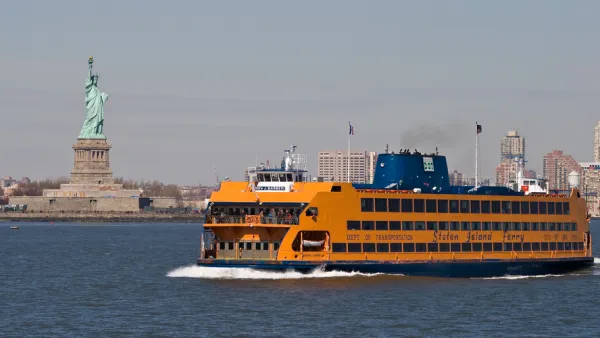
Details of New York's Ferry Service 'Gamble'
An ambitious and aggressive plan to launch new ferry service connecting all five boroughs in New York is scheduled to launch in January 2017.
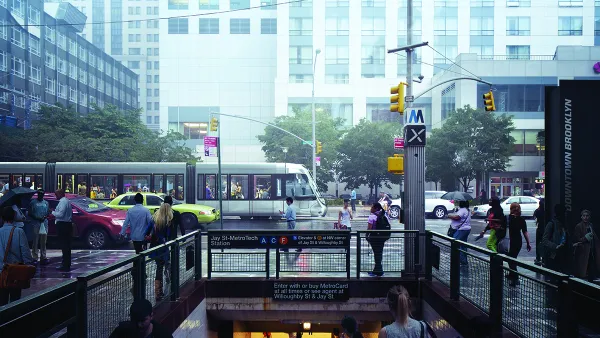
Brooklyn-Queens Streetcar Will Live or Die in the Next Administration
Construction on the Brooklyn-Queens Streetcar, a potential legacy project for New York Mayor Bill de Blasio, was supposed to begin in 2019. The fate of the heavily debated project will rest with the next mayor.
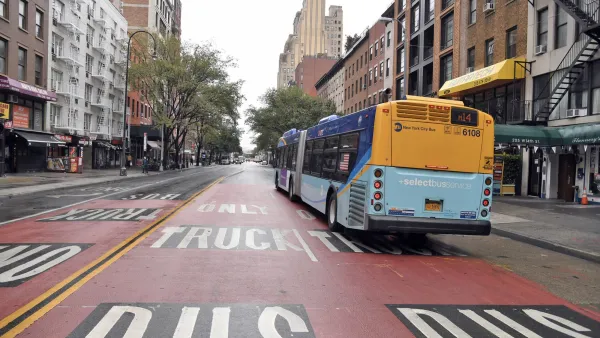
Judge Clears the Obstacles for Queens Busway Project
One piece of New York City's Better Buses Action Plan has been relieved of legal resistance.

The state-sanctioned urbicide of Austin
People don’t kill cities. Freeways do.

US to reduce Colorado River water deliveries to Mexico
A new Colorado Treaty amendment reduces Mexico’s Colorado River water allocation by 250,000 acre feet.

New Jersey’s second-largest city bans standalone data centers
Jersey City will continue to allow co-location facilities, such as those meant for research institutions that store their own data.

Amtrak not solely to blame for New Jersey commuter rail's unreliability, report finds
A new study from the Garden State Initiative found that NJ Transit’s budget grew 20% across a 4 year period, but reliability declined significantly over the same period.

EPA erases limits on planet-warming pollution from power plants
Under Monday’s plan, power plants would still have some limits on how much mercury, arsenic and other contaminants they can emit.

Phoenix announces new on-demand transit service, more frequent RAPID buses
Both new services will launch in October, and are part of Phoenix's Project Effective Access Solutions for Easing Congestion.

FREE Course: Walkable City 1: Why Walkability?
After describing his path towards focusing on walkability as the essence of good planning, Jeff Speck marches through his five principal reasons for making more walkable places.
Reinventing Malls: Planning Alchemy—Turning Gray Fields Into Gold
The course focuses on the opportunities and imperatives that shape reinvention of mall sites.

Eagle County Government
Harvard University Graduate School of Design
Nashville Planning Department
The Architects Foundation
University of Cincinnati Online
The Pocatello Development Authority
The Urban Renewal Agency of the City of Pocatello
Journal of the American Planning Association