Transit advocates suffered a resounding defeat in Nashville yesterday. The Let's Move Nashville plan does not have the funding to build-out its ambitiously pro-transit agenda.



"Nashville voters on Tuesday rejected a plan to raise four taxes to pay for a $5.4 billion transit plan," reports Joey Garrison.
The election was never close, even after the referendum won support from the Tennessean's editorial board a few weeks before the election.
We expect more commentary about the failure of the transit referendum to emerge in the coming days and weeks, but for now, there are reports of the opposition funding that flowed to the campaign in recent months. Angie Schmitt sounded alarms about the Koch Brothers and "dark money" influencing the campaign in April.
Writing for the Tennessean in a separate article, Alex Hubbard pins some of the blame for the loss on the resignation of Mayor Megan Barry, who was an early and active supporter of the Let's Move Nashville Plan.
Finally, the critics have certainly had their say. In the source article, Garrison summarizes the opposition, with a reference to self-driving cars.
Critics have called light rail antiquated and have contended it wouldn't do anything to cut down on traffic congestion. They've pointed to Nashville's dwindling bus ridership, the decline of ridership of legacy transit in other cities, and advancement in technology of self-driving cars, which they say will make transit obsolete.
FULL STORY: Opponents hold big lead in Nashville transit plan vote; pro-transit campaign concedes defeat

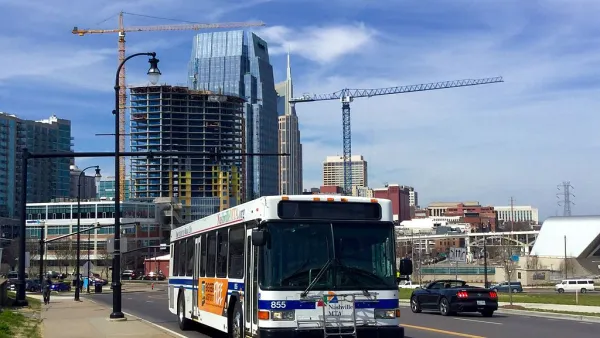
'Better Bus' Is Nashville's Latest Attempt at Transit Upgrades
The Better Bus plan is the latest effort at rethinking public transit in Nashville.
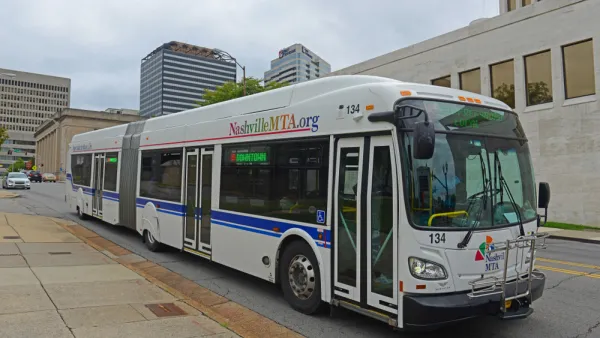
A New Transit Hub Pitched in Nashville
The city of Nashville is trying to get back on track with some of the projects proposed in the 2016 nMotion plan—even without the massive pot of transit tax money it could have won at the ballot box.
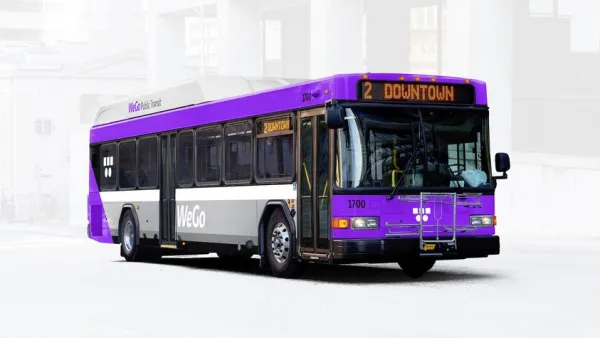
Following a Failed Referendum, Nashville Transit Advocates Regroup
Last spring, voters resoundingly quashed Let's Move Nashville, a $5.4 billion plan to build out the city's transit options. The plan paid too little attention to current riders, advocates say, and they aim to do things differently.

Planetizen Federal Action Tracker
A weekly monitor of how Trump’s orders and actions are impacting planners and planning in America.

The state-sanctioned urbicide of Austin
People don’t kill cities. Freeways do.

US to reduce Colorado River water deliveries to Mexico
A new Colorado Treaty amendment reduces Mexico’s Colorado River water allocation by 250,000 acre feet.

Baltimore to break ground on $50 million Transit Priority Project
The project will bring faster bus trips, safer streets and better bike connections to Baltimore.

Airbnb launches $250 million 'last-dollar financing' housing accelerator, makes first investment in Austin
The company will put $6.4 million towards affordable housing development in Texas’ capital.

Guerilla urbanists are building DIY bus stop benches in Chicago
A before-and-after of one of the bus stops with a new bench. The new benches are not officially sanctioned or permitted, but the residents who placed them hope they will be the start of a network of DIY benches across the city.

FREE Course: Walkable City 1: Why Walkability?
After describing his path towards focusing on walkability as the essence of good planning, Jeff Speck marches through his five principal reasons for making more walkable places.
Reinventing Malls: Planning Alchemy—Turning Gray Fields Into Gold
The course focuses on the opportunities and imperatives that shape reinvention of mall sites.

Eagle County Government
Harvard University Graduate School of Design
Nashville Planning Department
The Architects Foundation
University of Cincinnati Online
The Pocatello Development Authority
The Urban Renewal Agency of the City of Pocatello
Journal of the American Planning Association