Some oppose housing on the grounds that building in expensive cities just makes more homes for rich people. According to and, while there's some truth to that, adding housing beats the alternative.


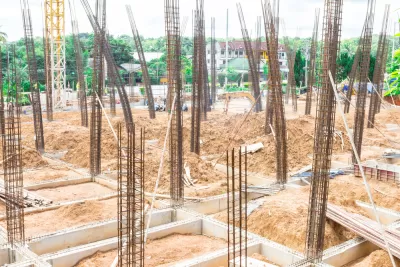
After an aggressive housing bill, SB 827, failed in committee, the discussion about how to solve California's housing woes continue, offering examples for other expensive markets all over the country. While some of its critics complained the zoning reform included in SB 827 would only create more housing for the rich, Matthew Yglesias argues there's no great alternative. "California will continue to suffer from exorbitant housing costs that contribute to the highest poverty rate in the nation when judged by the Supplemental Poverty Measure," Yglesias writes for Vox.
While some contend that people would be better off just moving to cheaper cities, Yglesias points out the trade offs. "Obviously it’s well-known that elite professionals can earn superstar wages in superstar cities. But the fact of the matter is that everyone earns higher wages in affluent cities, for basically the same reason that everyone from Mexican day laborers to Indian computer programmers can greatly increase their earnings by immigrating to the United States — places matte."
Even a cook at McDonald’s makes more in Los Angeles than she would in other cities around the country. "You could help out LA’s existing population of fast-food workers with price controls, but for the much larger population of Americans who might benefit from moving to California if only the prices were more reasonable, you need to simultaneously address the price of housing and the overall quantity of dwellings," Yglesias writes.
FULL STORY: There’s no good alternative to building more homes in expensive cities

Another SB 827? Ambitious California Housing Bill Isn't Quite Dead Yet
It received a lot of press, but ultimately California's Senate Bill 827 went nowhere. Now, the state senator who introduced the bill is working with advocates who opposed it on another version that just might have better chances.

Op-Ed: Let's Build Homes, Not Ideology
Knee-jerk, ideological reactions to the California housing crisis rest on faulty arguments and threaten to cheat the state out of workable solutions.

California Gives 15 Cities ‘Final Warning’ to Submit Mandatory Housing Plans
Communities are required to produce housing elements that accommodate sufficient housing for all income levels.

The state-sanctioned urbicide of Austin
People don’t kill cities. Freeways do.

US to reduce Colorado River water deliveries to Mexico
A new Colorado Treaty amendment reduces Mexico’s Colorado River water allocation by 250,000 acre feet.

New Jersey’s second-largest city bans standalone data centers
Jersey City will continue to allow co-location facilities, such as those meant for research institutions that store their own data.

Amtrak not solely to blame for New Jersey commuter rail's unreliability, report finds
A new study from the Garden State Initiative found that NJ Transit’s budget grew 20% across a 4 year period, but reliability declined significantly over the same period.

EPA erases limits on planet-warming pollution from power plants
Under Monday’s plan, power plants would still have some limits on how much mercury, arsenic and other contaminants they can emit.

Phoenix announces new on-demand transit service, more frequent RAPID buses
Both new services will launch in October, and are part of Phoenix's Project Effective Access Solutions for Easing Congestion.

FREE Course: Walkable City 1: Why Walkability?
After describing his path towards focusing on walkability as the essence of good planning, Jeff Speck marches through his five principal reasons for making more walkable places.
Reinventing Malls: Planning Alchemy—Turning Gray Fields Into Gold
The course focuses on the opportunities and imperatives that shape reinvention of mall sites.

Eagle County Government
Harvard University Graduate School of Design
Nashville Planning Department
The Architects Foundation
University of Cincinnati Online
The Pocatello Development Authority
The Urban Renewal Agency of the City of Pocatello
Journal of the American Planning Association