Freeing buses from congestion and protecting pedestrians from speeding cars are two of the goals expressed by the Central City in Motion planning process.


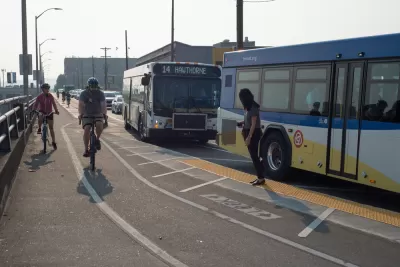
The Portland Bureau of Transportation is looking for ideas about how to speed up buses around the city as part of its Central City in Motion plan.
"[The] Portland Bureau of Transportation posted an interactive map Monday as part of its long-awaited Central City in Motion plan, an effort officials say focuses on speeding up buses on both sides of the Willamette River, creating new 'low-stress bikeways' and making pedestrian crossings safer," reports Andrew Theen.
According to Theen, the Portland Bureau of Transportation has the money to spend on dedicated bus lanes, separated bikeways, and pedestrian crossings. The Central City in Motion plan is a component of the ongoing Central City 2035 plan. The article has more background on the planning approach reflected in the Central City in Motion plan (hint: it's not a car-centric approach).
FULL STORY: Portland wants help plotting bus-only lanes, bikeways and safer crossings in central city

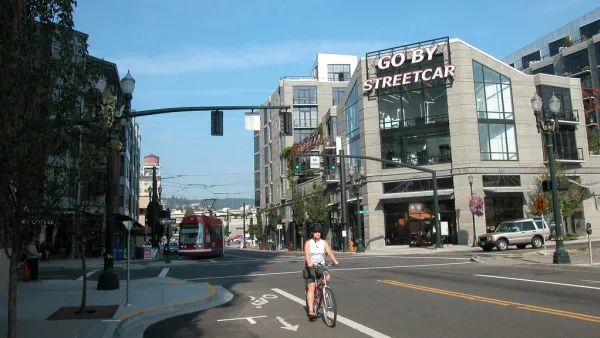
Advocacy Groups Have Their Say on Portland's Central City in Motion Plan
A downtown transportation plan designed to prioritize "transportation for everyone" will come before
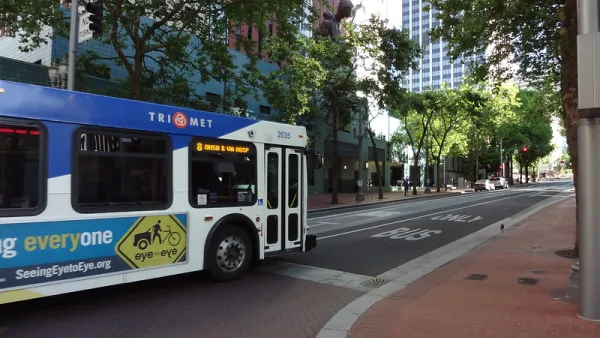
Bus Service Cut in Portland as Driver Shortage Lingers
Like many transit agencies around the country, the regional transit agency for Portland, Oregon is struggling to attract enough bus drivers to maintain planned levels of transit service.
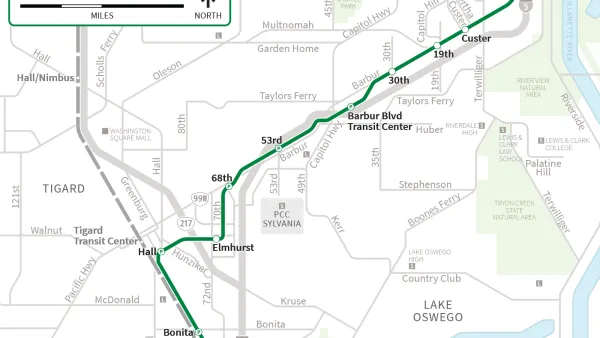
Portland Transit Vote Kills SW Transit Corridor Light Rail Project
In a pair of articles, Jonathan Maus reports on the final moments of the SW Corridor Light Rail Project, as project supporters deals with a loss at the ballot box.

The state-sanctioned urbicide of Austin
People don’t kill cities. Freeways do.

US to reduce Colorado River water deliveries to Mexico
A new Colorado Treaty amendment reduces Mexico’s Colorado River water allocation by 250,000 acre feet.

New Jersey’s second-largest city bans standalone data centers
Jersey City will continue to allow co-location facilities, such as those meant for research institutions that store their own data.

Amtrak not solely to blame for New Jersey commuter rail's unreliability, report finds
A new study from the Garden State Initiative found that NJ Transit’s budget grew 20% across a 4 year period, but reliability declined significantly over the same period.

EPA erases limits on planet-warming pollution from power plants
Under Monday’s plan, power plants would still have some limits on how much mercury, arsenic and other contaminants they can emit.

Phoenix announces new on-demand transit service, more frequent RAPID buses
Both new services will launch in October, and are part of Phoenix's Project Effective Access Solutions for Easing Congestion.

FREE Course: Walkable City 1: Why Walkability?
After describing his path towards focusing on walkability as the essence of good planning, Jeff Speck marches through his five principal reasons for making more walkable places.
Reinventing Malls: Planning Alchemy—Turning Gray Fields Into Gold
The course focuses on the opportunities and imperatives that shape reinvention of mall sites.

Eagle County Government
Harvard University Graduate School of Design
Nashville Planning Department
The Architects Foundation
University of Cincinnati Online
The Pocatello Development Authority
The Urban Renewal Agency of the City of Pocatello
Journal of the American Planning Association