PeopleForBikes surveys the best new additions to bike networks around the country, and finds a lot to celebrate.


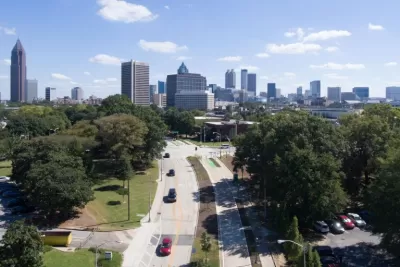
PeopleForBikes continues its annual tradition of acknowledging the best new bike infrastructure around the United States. PeopleForBikes acknowledges the highest quality of bike infrastructure—protected bike lanes, off-street paths, and neighborhood bikeways.
The narrative Michael Andersen draws on in presenting this year's list of best new bike infrastructure is that cities are in the process of building and connecting networks of low-stress bike routes. The PATH Parkway in Atlanta, which tops the list, exemplifies the benefits of connecting the pieces of a network, according to Andersen: "With network connections on both ends, six new bike-optimized traffic signals and a clever reuse of the former roadway median to divide bike and auto traffic, the PATH Parkway is world-class."
In total, the list includes ten examples of new bike paths, including two examples from Austin, two from New York City, and two from the Twin Cities in addition to representation for California, Washington, and Indiana.
FULL STORY: AMERICA’S 10 BEST NEW BIKEWAYS OF 2017

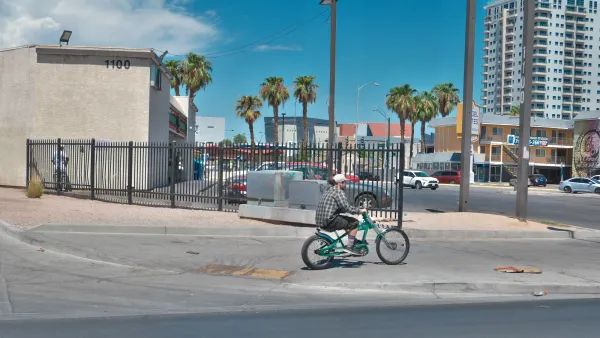
Las Vegas is building its first protected bike lane
The new lane connects Henderson and the Las Vegas Raiders headquarters via Starr Avenue.

Nashville installs concrete barriers to protect bike lanes
The new 'Toronto barriers' provide a physical buffer between cars and bike lanes.
Op-ed: True bike safety requires more than the 'Dutch reach'
Making roads safe for all users takes policy and cultural changes that go beyond small behavioral interventions.

Planetizen Federal Action Tracker
A weekly monitor of how Trump’s orders and actions are impacting planners and planning in America.

The state-sanctioned urbicide of Austin
People don’t kill cities. Freeways do.

US to reduce Colorado River water deliveries to Mexico
A new Colorado Treaty amendment reduces Mexico’s Colorado River water allocation by 250,000 acre feet.

Airbnb launches $250 million 'last-dollar financing' housing accelerator, makes first investment in Austin
The company will put $6.4 million towards affordable housing development in Texas’ capital.

Guerilla urbanists are building DIY bus stop benches in Chicago
A before-and-after of one of the bus stops with a new bench. The new benches are not officially sanctioned or permitted, but the residents who placed them hope they will be the start of a network of DIY benches across the city.

Mamdani overhauls NYC's Vision Zero plan with 100 new policy goals
The overhaul aims to reduce traffic deaths and make streets safer for pedestrians, cyclists and drivers through lower speed limits, new safety infrastructure and more.

FREE Course: Walkable City 1: Why Walkability?
After describing his path towards focusing on walkability as the essence of good planning, Jeff Speck marches through his five principal reasons for making more walkable places.
Reinventing Malls: Planning Alchemy—Turning Gray Fields Into Gold
The course focuses on the opportunities and imperatives that shape reinvention of mall sites.

Eagle County Government
Harvard University Graduate School of Design
Nashville Planning Department
The Architects Foundation
University of Cincinnati Online
The Pocatello Development Authority
The Urban Renewal Agency of the City of Pocatello
Journal of the American Planning Association