Reflecting its reputation as the land of 10,000 lakes, Minnesota's highly developed water management infrastructure can be instructive for states facing frequent floods.


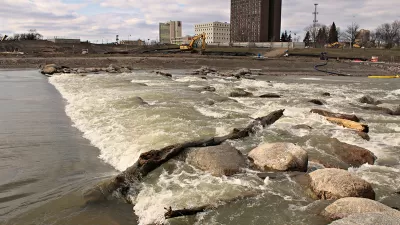
As Lynn E. Broaddus writes for Brookings, "Despite its inland location – seemingly distant from the major storms that dominate national headlines – Minnesota has a variety of institutional frameworks, financial levers, and programmatic tools aimed at accelerating water infrastructure improvements."
Broaddus points to the state's many stormwater utilities and watershed districts, as well as their financial health. "Minnesota contains the most stormwater utilities in the U.S., 197 utilities out of 1,583 utilities nationally. By establishing and supporting these utilities over time, the state has been able to operate from a position of greater technical and financial capacity, generating durable revenues to pay for water upgrades."
Minnesota has also been proactive on the state level, levying a tax to raise about $100 million annually for its Clean Water Fund. "Grants from this fund go toward water assessment, monitoring, and planning, as well as on-the-ground projects like rain gardens, buffer installation, and erosion control."
FULL STORY: How the Land of 10,000 Lakes is planning and paying for cleaner water

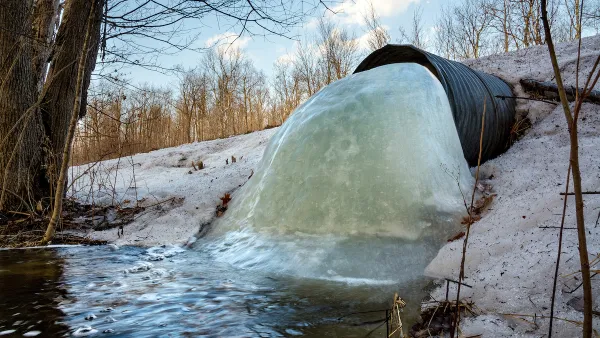
Wisconsin to Invest Over $400M in Water Infrastructure
The state’s Clean Water Fund helps cities improve stormwater management, replace aging infrastructure, and upgrade wastewater treatment facilities.
The Lesser-Known Programs in the Infrastructure Bill
While the focus has been on flashier components of the infrastructure bill, some smaller initiatives could have outsized impacts by shifting priorities and funding resilience efforts.
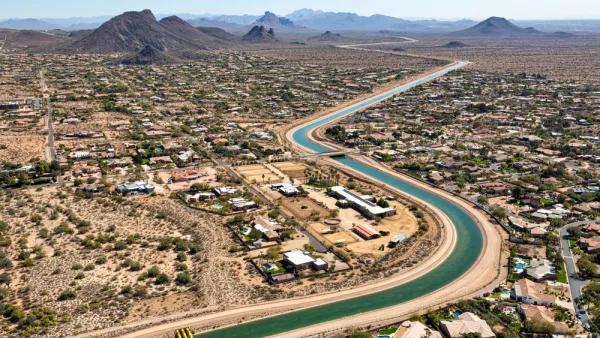
Arizona Governor Pledges $1 Billion to Water Infrastructure
The billion-dollar investment in the state's water supplies sounds good on paper, but lawmakers must also distribute funding effectively to mitigate the state's urgent water shortage.

Planetizen Federal Action Tracker
A weekly monitor of how Trump’s orders and actions are impacting planners and planning in America.

The state-sanctioned urbicide of Austin
People don’t kill cities. Freeways do.

US to reduce Colorado River water deliveries to Mexico
A new Colorado Treaty amendment reduces Mexico’s Colorado River water allocation by 250,000 acre feet.

5 New England states march closer to 800 megawatt wind energy project
Securing federal approval for the project may be complicated under the Trump administration, which has historically been hostile towards domestic wind power.

Baltimore to break ground on $50 million Transit Priority Project
The project will bring faster bus trips, safer streets and better bike connections to Baltimore.

Airbnb launches $250 million 'last-dollar financing' housing accelerator, makes first investment in Austin
The company will put $6.4 million towards affordable housing development in Texas’ capital.

FREE Course: Walkable City 1: Why Walkability?
After describing his path towards focusing on walkability as the essence of good planning, Jeff Speck marches through his five principal reasons for making more walkable places.
Reinventing Malls: Planning Alchemy—Turning Gray Fields Into Gold
The course focuses on the opportunities and imperatives that shape reinvention of mall sites.

Eagle County Government
Harvard University Graduate School of Design
Nashville Planning Department
The Architects Foundation
University of Cincinnati Online
The Pocatello Development Authority
The Urban Renewal Agency of the City of Pocatello
Journal of the American Planning Association