Tory Newmyer and Damian Paletta report that President Trump is changing his tune on the $1 trillion infrastructure plan promised since the campaign.


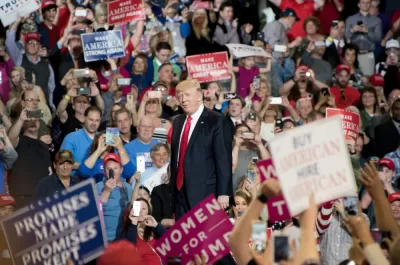
President Trump reportedly made a statement against public-private partnerships while in a meeting with Democrats from the House Ways and Means Committee.
"At the meeting Tuesday, [Rep. Brian Higgins (D-N.Y.)] said Trump indicated the administration instead would seek to pay for infrastructure upgrades through direct federal spending — either by paying for projects with new tax revenue or taking on debt," according to Newmyer and Paletta.
The article includes the backstory of the Trump Infrastructure plan, which evolved from a $500 billion proposal to tax credit scheme to stimulate public-private partnerships that has yet to take official shape. If any new plan is financed by the federal government, it will likely fall short of the $1 trillion figure.
FULL STORY: Trump backs off vow that private sector should help pay for infrastructure package

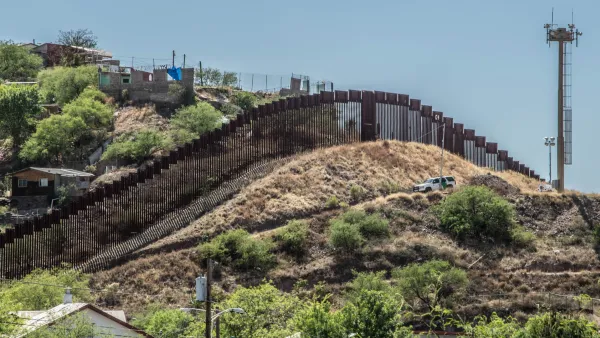
Trump's Infrastructure Accomplishments Fall Short of Promises
President Trump has fallen short of 2016 promises to update and upgrade the key infrastructure of the United States, according to this article.
Pelosi-Schumer-Trump Infrastructure Plan Already Meeting Resistance
Introduced on April 30, the $2 trillion conceptual plan is likely to be dismissed by Congressional Republicans wary of increasing taxes and adding to the deficit, according to an extensive article by The Hill published three days later.

Trump's 25-Cent Infrastructure Tax?
During a closed-door meeting Wednesday with Democratic and Republican lawmakers, President Trump endorsed hiking the gas tax by 25-cents per gallon to help pay for the $200 billion investment and restore solvency to the Highway Trust Fund.

Planetizen Federal Action Tracker
A weekly monitor of how Trump’s orders and actions are impacting planners and planning in America.

The state-sanctioned urbicide of Austin
People don’t kill cities. Freeways do.

US to reduce Colorado River water deliveries to Mexico
A new Colorado Treaty amendment reduces Mexico’s Colorado River water allocation by 250,000 acre feet.

Airbnb launches $250 million 'last-dollar financing' housing accelerator, makes first investment in Austin
The company will put $6.4 million towards affordable housing development in Texas’ capital.

Guerilla urbanists are building DIY bus stop benches in Chicago
A before-and-after of one of the bus stops with a new bench. The new benches are not officially sanctioned or permitted, but the residents who placed them hope they will be the start of a network of DIY benches across the city.

Mamdani overhauls NYC's Vision Zero plan with 100 new policy goals
The overhaul aims to reduce traffic deaths and make streets safer for pedestrians, cyclists and drivers through lower speed limits, new safety infrastructure and more.

FREE Course: Walkable City 1: Why Walkability?
After describing his path towards focusing on walkability as the essence of good planning, Jeff Speck marches through his five principal reasons for making more walkable places.
Reinventing Malls: Planning Alchemy—Turning Gray Fields Into Gold
The course focuses on the opportunities and imperatives that shape reinvention of mall sites.

Eagle County Government
Harvard University Graduate School of Design
Nashville Planning Department
The Architects Foundation
University of Cincinnati Online
The Pocatello Development Authority
The Urban Renewal Agency of the City of Pocatello
Journal of the American Planning Association