The Powellhurst-Gilbert neighborhood of Portland, OR has seen a wave of new development over the past two decades. But without the expansion of basic services and amenities, the area is struggling to integrate newcomers. Is poor planning to blame?


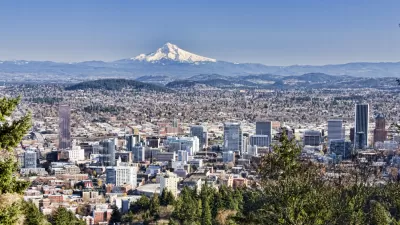
"The Outer Southeast Community Plan was supposed to make east Portland a better place," writes Brad Schmidt. To accommodate the smart growth necessitated by the city's pioneering growth boundary, "[l]arge lots would be divided into small blocks with cozy streetscapes. Roads would be paved, sidewalks built, trees planted, transit service improved, the entire area cleaner and safer, according to the 'perfect vision' that accompanied the plan."
"Today, Powellhurst-Gilbert is the land of cheap, dense housing crammed into a community that still lacks basic public improvements such as paved streets, sidewalks and nearby parks," notes Schmidt. "In a city nationally renowned for smart urban planning, Powellhurst-Gilbert represents all that Portland leaders got wrong – and the legacy of problems that will haunt generations of residents for decades to come."
Read the full story: East Portland's housing explosion tied to city plan without basic services


Planetizen Federal Action Tracker
A weekly monitor of how Trump’s orders and actions are impacting planners and planning in America.

California plans to bury El Niño’s downpour
If the state plays its cards right, it may be able to store a billion acre-feet of El Niño’s water in aquifers.

Desperate measures: Advocates weigh draining Lake Powell to fill Colorado River
Draining the reservoir could reduce evaporation losses by a couple hundred thousand acre-feet.

California city breaks ground on transit connector
The project includes three mobility hubs and a pedestrian bridge.

After public outcry, Massachusetts city releases housing development tracker
Cambridge’s tracker currently shows 250 housing projects in various stages of development.

40 years after approval, Chicago breaks ground on new park
The park honors Jean Baptiste Point du Sable, the city’s first permanent non-native settler.

FREE Course: Walkable City 1: Why Walkability?
After describing his path towards focusing on walkability as the essence of good planning, Jeff Speck marches through his five principal reasons for making more walkable places.
Reinventing Malls: Planning Alchemy—Turning Gray Fields Into Gold
The course focuses on the opportunities and imperatives that shape reinvention of mall sites.

City of Rosemead
Rutgers University, Edward J. Bloustein School of Planning and Public Policy
One Hundred Miles
Hunter College, City University of New York (CUNY)
The Architects Foundation
University of Cincinnati Online
City of Cambridge
Montrose County
The Pocatello Development Authority